单线刚果矮脂鲤 · One-lined African Characin
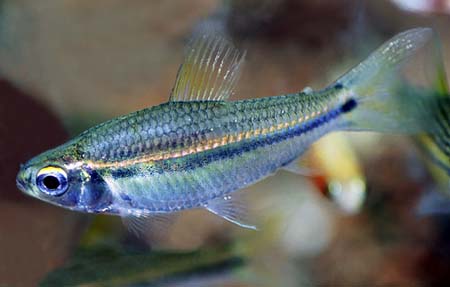
概要
| 字段 | 值 |
|---|---|
| 类别 | 鱼 |
| 学名 | Nannaethiops unitaeniatus |
| 别名 | 單線剛果矮脂鯉 |
| 分类 | 脂鲤目 Characiformes › 琴脂鲤科 Citharinidae › Nannaethiops |
| 水体 | 淡水 |
| 成体体长 | 6.5 cm |
| 饲养难度 | 中等 |
| 最小水体 | 54 L |
| 最小缸长 | 60 cm |
| 群居方式 | 群游 |
| 外部数据 | seriouslyfish nannaethiops-unitaeniatus;fishbase 5261 |
| 原产地 | 喀麦隆、尼日利亚、加蓬、刚果共和国、刚果民主共和国 |
| 食性 | 杂食 |
| 性情 | 温和 |
| 繁殖方式 | 散卵 |
水质参数
| 参数 | 耐受范围 | 最适范围 | 单位 |
|---|---|---|---|
| 水温 | 22–26 | — | °C |
| pH | 6.5–7.5 | — | — |
| 总硬度 | 5–12 | — | dGH |
概述
单线刚果矮脂鲤(Nannaethiops unitaeniatus)是小型、胆怯而温和的非洲脂鲤,需要群体和植被遮蔽才容易安定。成年雄鱼较小、较瘦且更鲜艳,繁殖状态下背鳍及尾鳍上部会出现深红色。
分布与栖息地
记录来自喀麦隆、尼日利亚、加蓬、刚果共和国及刚果民主共和国,包括刚果河、尼日尔河和克罗斯河水系。加纳种群的说法仍有疑问。利用溪流、小河、湖泊与池塘。
饲养环境
约 60 × 30 × 30 cm 可考虑饲养一个小群。密植水草、向水面生长的植物和浮水遮蔽可降低底部光照,沉木及光滑石块增加躲藏处。
明亮而稀疏的布局可能让它长期不安、无法充分显色。可选适于弱光的水榕、莫丝和蕨类等植物,不必以强光换取大量植物种类。
食性与喂食
自然为机会性的杂食鱼,摄食小型无脊椎动物、藻类及其他浮游生物。刚到缸时可能拒绝干粮,多数活饵和冷冻饵较易接受,应观察真实摄食再逐步调整。
习性与混养
可与其他小型温和鱼共同饲养,但同种群体对安全感很重要。不要因它体形小就把少量个体置于缺乏遮蔽的活跃群落中。
雌雄区分
成熟雄鱼比雌鱼小、细瘦且色泽明亮,繁殖时背鳍与尾鳍上部红色增强。雌鱼更饱满。
繁殖
本种散卵,家庭繁殖并不常见。以丰富活饵调养后,选择状态好的雌雄进入软水、偏酸且有莫丝或产卵拖把的环境,可能需等待数天。
黎明时鱼卵散落到植物或拖把间,完成后移出亲鱼。约三十至三十六小时孵化,再经两至三天平游,先喂微型食物,数天后转丰年虾无节幼体或微虫。
补充说明
外形容易与其他小型非洲脂鲤混淆,交易名称和单一体色不足以确定身份。
图片
图片来自 SeriouslyFish,版权归各摄影者所有。
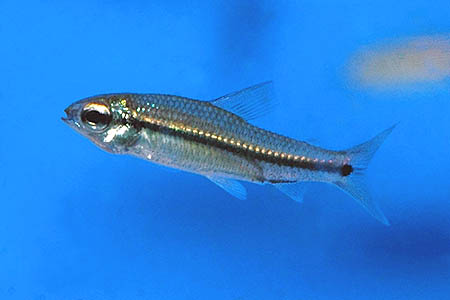
English
Overview
Nannaethiops unitaeniatus is a small, shy, peaceful African characin that settles best with conspecifics and plant cover. Mature males are smaller, slimmer, and brighter, developing deep red on the dorsal and upper tail fins during reproduction.
Distribution & habitat
Records include Cameroon, Nigeria, Gabon, the Republic of the Congo, and the Democratic Republic of the Congo, spanning the Congo, Niger, and Cross systems. A proposed Ghanaian population remains questionable. Streams, small rivers, lakes, and ponds are used.
Aquarium setup
Accommodation around 60 × 30 × 30 cm can support a small group. Dense planting, surface-reaching leaves, floating shade, wood, and smooth stones supply security.
Bright, sparse surroundings can prevent settling and full coloration. Shade-tolerant anubias, mosses, and aquatic ferns allow planting without intense light.
Diet & feeding
Its natural opportunistic omnivory includes small invertebrates, algae, and other plankton. New arrivals may reject dry food, while live and frozen offerings are usually readily accepted. Confirm intake before gradually adjusting the menu.
Behaviour & compatibility
Other small peaceful fishes are possible companions, but a conspecific group is important for confidence. Small size does not justify keeping isolated specimens in an exposed, busy community.
Sexual dimorphism
Mature males are smaller, slimmer, and more colorful, with stronger red dorsal and upper caudal markings during spawning condition. Females are fuller-bodied.
Breeding
This egg scatterer is not commonly bred in aquariums. After conditioning with live food, select a well-developed pair for a soft, acidic setup containing moss or mops. Spawning may take several days to begin.
Eggs are released into the vegetation around dawn. Remove adults afterward. Hatching takes roughly thirty to thirty-six hours, followed by free swimming two or three days later. Start with microscopic foods and progress to brine-shrimp nauplii or microworms after the first few days.
Notes
Confusion with similar small African characins is common. A trade label or one color feature should not settle identification.
来源
- https://www.seriouslyfish.com/species/nannaethiops-unitaeniatus(抓取于 2026-10-10)
nannaethiops-unitaeniatus · 文件: data/species/nannaethiops-unitaeniatus.md · 状态: 草稿