矮丽鱼 · Golden Dwarf Cichlid
概要
| 字段 | 值 |
|---|---|
| 类别 | 鱼 |
| 学名 | Nannacara anomala |
| 别名 | 带纹矮丽鱼、矮麗魚、帶紋矮麗魚 |
| 分类 | 慈鲷目 Cichliformes › 慈鲷科 Cichlidae › Nannacara |
| 水体 | 淡水 |
| 成体体长 | 7.6 cm |
| 饲养难度 | 入门 |
| 最小水体 | 52 L |
| 最小缸长 | 46 cm |
| 领地性 | 是 |
| 外部数据 | seriouslyfish nannacara-anomala;fishbase 11180 |
| 原产地 | 圭亚那阿鲁卡河至苏里南马罗韦讷河下游 |
| 食性 | 肉食 |
| 性情 | 温和 |
水质参数
| 参数 | 耐受范围 | 最适范围 | 单位 |
|---|---|---|---|
| 水温 | 22–27 | — | °C |
| pH | 5–7.5 | — | — |
概述
矮丽鱼(Nannacara anomala)强健且较容易繁殖,平时温和,但雌鱼守幼时会变得非常强势。它适合学习慈鲷育幼行为,前提是为繁殖后的领域变化留出空间,而不是只看日常性情。
分布与栖息地
自然分布从圭亚那阿鲁卡河延伸至苏里南马罗韦讷河下游,常见于沿海低地被水淹没的草地。市场个体多数来自亚洲或东欧的商业繁殖。
饲养环境
布置丰富水草,并用沉木和木根提供遮蔽及潜在产卵位置。若饲养多条雌鱼,每条都需要自己的底部小领域,不能把单对所需空间直接用于一雄多雌。
食性与喂食
自然捕食蠕虫、昆虫及其他小型无脊椎动物。通常能接受肉食型慈鲷颗粒作为主食,搭配红虫、丰年虾等活饵或冷冻饵料,再补充蔬菜或螺旋藻配方、少量黄瓜等植物材料。
习性与混养
平时可与多数温和小鱼共养,繁殖后则必须注意雌鱼对伙伴的驱赶。多雄在狭小环境中容易形成强烈优势关系,弱势雄鱼甚至会表现出雌鱼般的体色与体形。
雌雄区分
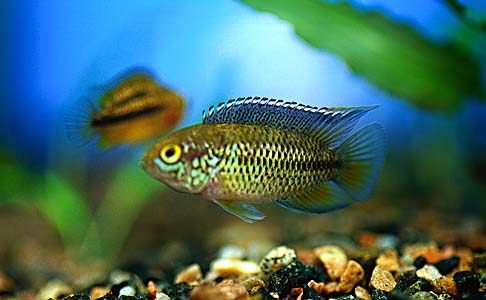
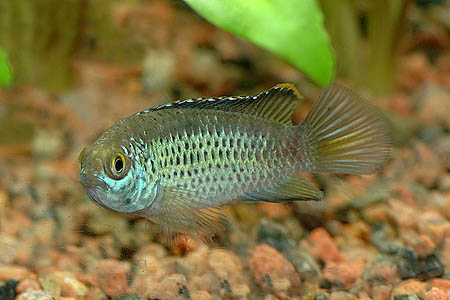
雄鱼明显较大,通常带浅蓝与红色;雌鱼较小,偏黄,体侧有黑色纵纹。繁殖状态的雌鱼会出现类似棋盘的斑纹。受压雄鱼可能伪装成雌鱼外观,因此仅凭某一时刻的颜色并不可靠。
繁殖
一雄一雌在合适环境中通常容易繁殖,更大的缸可安排多雌。每条雌鱼约需四十厘米见方的底部领域。护幼雌鱼能以身体动作影响幼鱼活动,同时会猛烈驱逐靠近者;混养缸发生繁殖后要重新评估空间与伙伴关系。
补充说明
若优势雄鱼消失,原来外观像雌鱼的弱势雄鱼可能在数周内恢复典型雄鱼体形、颜色和行为。这是社会压制相关的外观变化,不应直接描述为已证实的雌雄性别转换。
图片
图片来自 SeriouslyFish,版权归各摄影者所有。
English
Overview
Hardiness and ready breeding make Nannacara anomala an accessible small cichlid. Its peaceful everyday behavior changes sharply when a female guards fry. Space for that transition is essential in any community plan.
Distribution & habitat
The native range extends from Guyana's Aruka River to the lower Marowijne in Suriname. Flooded grassland in coastal lowlands is a typical habitat. Most aquarium stock is commercially bred in Asia or eastern Europe.
Aquarium setup
Provide generous planting and wood cover, including possible spawning locations. Each female in a multi-female arrangement needs her own bottom area; space adequate for one pair is not automatically enough for a larger group.
Diet & feeding
Wild fish take worms, insects, and other small invertebrates. Meaty cichlid pellets can form a captive staple, with live or frozen bloodworms and Artemia plus some vegetable or spirulina foods and small pieces of cucumber.
Behaviour & compatibility
Most peaceful fishes can be suitable companions outside breeding. A guarding female may become extremely aggressive toward them. In restricted multi-male housing, subordinate males can adopt a female-like appearance under social pressure.
Sexual dimorphism
Males are much larger and usually show pale blue and red tones. Females are smaller and yellowish with a dark lateral stripe, developing a checkerboard pattern in breeding condition. Female-like subordinate males make a single color observation unreliable for sexing.
Breeding
A male and female generally breed readily under suitable conditions. Larger aquaria can accommodate several females, each requiring roughly a forty-centimeter-square bottom area. A caring female uses body movements with her fry while strongly repelling approaching fishes. Reassess community space and relationships when brood defense begins.
Notes
After a dominant male is removed, a suppressed male may develop typical male size, color, and behavior within weeks. This socially associated change in appearance should not be presented as proof of sex reversal.
来源
- https://www.seriouslyfish.com/species/nannacara-anomala(抓取于 2026-10-10)
nannacara-anomala · 文件: data/species/nannacara-anomala.md · 状态: 草稿