多棘单须叶鲈 · South American Leaf Fish
概要
| 字段 | 值 |
|---|---|
| 类别 | 鱼 |
| 学名 | Monocirrhus polyacanthus |
| 别名 | 多棘單鬚葉鱸、Amazon Leaf Fish |
| 分类 | 叶鲈科 Polycentridae › Monocirrhus |
| 水体 | 淡水 |
| 成体体长 | 10 cm |
| 饲养难度 | 入门 |
| 最小水体 | 68 L |
| 最小缸长 | 75 cm |
| 外部数据 | seriouslyfish monocirrhus-polyacanthus;fishbase 11015 |
| 原产地 | 巴西、秘鲁、委内瑞拉、哥伦比亚、玻利维亚 |
| 食性 | 肉食 |
| 繁殖方式 | 附着产卵 |
| 特征 | 吃小鱼: 是 |
水质参数
| 参数 | 耐受范围 | 最适范围 | 单位 |
|---|---|---|---|
| 水温 | 23–29 | — | °C |
| pH | 5–6.8 | — | — |
| 总硬度 | 1–10 | — | dGH |
概述
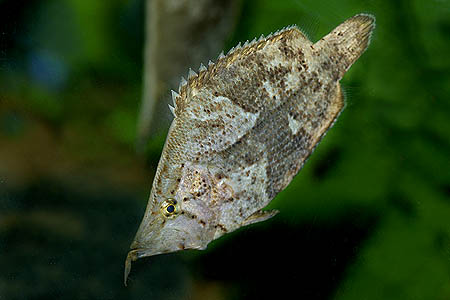
多棘单须叶鲈(Monocirrhus polyacanthus)善于把自己伪装成落叶,接近猎物后突然伸出口部吸入。它既挑食又容易受惊,对水质恶化敏感,不能因为体型不大就当作容易饲养的入门鱼。
分布与栖息地
分布于巴西、秘鲁、委内瑞拉、哥伦比亚和玻利维亚,主要生活在水流很弱、落叶聚集的浅水区域。
饲养环境
可使用至少 75 × 30 × 30 cm 的缸体。软水和酸性水是关键,照明宜弱,并用浮水植物进一步遮光。浓密的大叶水草和沉木藏身处能够增加安全感,水流保持轻缓。维持稳定、洁净的水质比追求观赏时一直可见更重要。
食性与喂食
肉食性且主要接受活饵,小鱼阶段可用活红虫和小蚯蚓,但长期需要以鱼为食。开始饲养前应确保能持续提供健康、适口的活鱼,不能假设买回后自然会接受干粮或冻饵。少数个体可能转吃活河虾,这只是例外。它的摄食量很大,需要持续留意供食和水质。
习性与混养
专缸饲养最合适,有时可与中等体型的异型鲶或铠甲鲶共处。它能吞下几乎与自己一样大的猎物,因此“个头相近”并不能自动保证小型同伴安全。
雌雄区分
外观不易辨别,抱卵雌鱼腹部较为饱满。
繁殖
人工繁殖可以成功。选一对亲鱼,以充足活饵调养,提供大叶水草、较暖的软水和酸性水,环境保持昏暗。求偶时雄鱼颜色加深、雌鱼出现产卵管,二者在水面附近交错游动,随后雌鱼产卵、雄鱼授精。
卵多附着在大叶片或悬垂岩石下方,一窝可达约 300 粒。产后应移走雌鱼,避免雄鱼转而攻击;雄鱼留守并用鳍扇水。卵通常 3–4 天孵化,此时也可移走雄鱼。
鱼苗耗尽卵黄后可吃丰年虾无节幼体,但只摄食在水中游动的食物,不从缸底取食。长大后逐步提供其他鱼类的鱼苗,并按生长差异分组,避免同胞互食。育苗水质恶化会造成较大损失。
补充说明
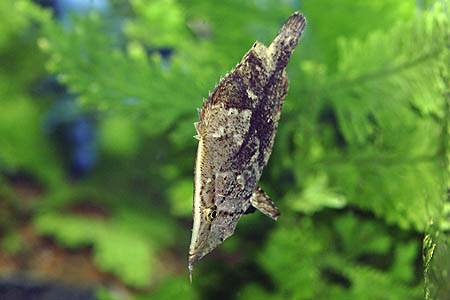
下唇突起像叶柄,身体形状和花纹也模仿枯叶。捕猎时头部朝下,依靠透明鳍的细微摆动缓慢接近;口部能够突然向前伸展成管状,迅速吸入猎物。头朝下的伏击姿势不等同于疾病表现。
图片
图片来自 SeriouslyFish,版权归各摄影者所有。
English
Overview
Dead-leaf camouflage conceals an exceptionally capable predator in Monocirrhus polyacanthus. Its projecting mouth can engulf surprisingly large prey. Nervous behavior, demanding feeding, and sensitivity to declining water quality make it unsuitable as an easy beginner fish.
Distribution & habitat
Records come from Brazil, Peru, Venezuela, Colombia, and Bolivia. Shallow areas with accumulated leaves and almost no current provide its characteristic setting.
Aquarium setup
Suggested dimensions start at 75 by 30 by 30 cm. Soft acidic water is essential. Use low light, floating shade, dense broad-leaved plants, and wood retreats to provide security. Keep water movement slight and conditions consistently clean.
Diet & feeding
Live food is the principal requirement. Small individuals accept live bloodworms or small earthworms, but a fish-based diet becomes necessary over the longer term. Arrange a dependable supply of healthy, appropriately sized live prey before acquisition. A minority may accept live river shrimp, but that exception should not form the feeding plan for an untested specimen. Appetite can be substantial.
Behaviour & compatibility
Dedicated housing is strongly preferred. Some medium-sized armored catfishes can coexist, but nearly equal body size alone does not protect another fish: this leaf fish can swallow prey approaching its own size.
Sexual dimorphism
Sexing by appearance is difficult. An egg-bearing female becomes fuller through the abdomen.
Breeding
Captive reproduction is achievable with a conditioned pair in a dim, densely planted aquarium containing warm, soft acidic water. Males intensify in color, while the female's ovipositor becomes visible. Surface-level passes precede deposition and fertilization.
As many as about 300 eggs may attach beneath a broad leaf or overhanging rock. Remove the female afterward because the male may attack her. He guards and fans the clutch until hatching, usually after three or four days, when he can also be removed.
Once yolk reserves are exhausted, fry accept newly hatched brine shrimp. Food must move through the water because they do not collect it from the bottom. Supply suitable fish fry as they grow, separating markedly different sizes to reduce cannibalism. High water quality is essential throughout rearing.
Notes
A lower-lip projection resembles a leaf stalk, complementing the body's shape and pattern. The fish approaches prey head-down using tiny movements of transparent fins, then extends its mouth into a suction tube. This hunting posture is a normal part of its disguise.
来源
- https://www.seriouslyfish.com/species/monocirrhus-polyacanthus(抓取于 2026-10-10)
monocirrhus-polyacanthus · 文件: data/species/monocirrhus-polyacanthus.md · 状态: 草稿