大眼彩塘鳢 · Southern Purple Spotted Gudgeon
概要
| 字段 | 值 |
|---|---|
| 类别 | 鱼 |
| 学名 | Mogurnda adspersa |
| 别名 | 大眼彩塘鱧 |
| 分类 | 虾虎鱼目 Gobiiformes › 塘鳢科 Eleotridae › Mogurnda |
| 水体 | 淡水 |
| 成体体长 | 14 cm |
| 饲养难度 | 中等 |
| 最小水体 | 108 L |
| 最小缸长 | 120 cm |
| 领地性 | 是 |
| 外部数据 | seriouslyfish mogurnda-adspersa;fishbase 10714 |
| 原产地 | 澳大利亚 |
| 特征 | 会跳缸: 是 |
| 繁殖方式 | 附着产卵 |
水质参数
| 参数 | 耐受范围 | 最适范围 | 单位 |
|---|---|---|---|
| 水温 | 16–24 | — | °C |
| pH | 7–7.5 | — | — |
| 总硬度 | 10–20 | — | dGH |
概述
大眼彩塘鳢(Mogurnda adspersa)性情较害羞,但有领地意识。它与彩塘鳢(Mogurnda mogurnda)外观相近,适合遮蔽充足、光线柔和的环境,不能把温和外观理解为小鱼完全安全。
分布与栖息地
原产澳大利亚,常生活于河流、溪流中缓慢且水草丰富的区域,也见于池塘。
饲养环境
缸长至少约 120 cm、容积约 108 L。装饰样式不拘,沙底、石块、沉木和水草都可提供藏身处;不需要例行加盐。
柔和光线让鱼更愿意离开遮蔽,水流应尽量平缓。它善跳,缸盖需严密贴合。
食性与喂食
通常不挑食,多种常见鱼食都能接受。食谱中搭配活饵和冷冻饵,有助体况与体色。
习性与混养
有领地性,但并非特别强势好动。可能吃掉口能容纳的小鱼,宜选择适宜的彩虹鱼、底层鲶鱼等较强健而平和的同伴。空间和遮蔽足够时,可维持同种小群。
雌雄区分
雄鱼生殖突尖细,有时颜色鲜明;雌鱼产卵管较短、较宽。部分雄鱼出现额部隆起,繁殖时颜色更加鲜艳。
繁殖
以同种专缸尝试较合适,可从幼鱼群中形成自然配对。用多样食物调理,未达到最大体型前就可能成熟。雄鱼增色并展开鳍引诱雌鱼,把卵产在平面上,必要时也利用玻璃。
每次约 20~40 粒卵,通过细黏丝附着。产后雄鱼赶走雌鱼,持续扇水、守护卵,并驱逐靠近者;如果在原缸育苗,应移走其他鱼。
约 5~7 天孵化,雄鱼照护随之停止,应将成鱼与幼鱼分开,减少捕食。卵黄耗尽后的最初几天需草履虫等,再转丰年虾无节幼体。幼鱼生长速度可差异很大,需观察大小分化和互食风险。
补充说明
野外种群受到保育关注,市场中也有商业繁殖个体,但整体仍不算常见。本种侧线鳞约 30~36 枚,彩塘鳢约 37~48 枚,第二背鳍较多红点也是识别线索。
图片
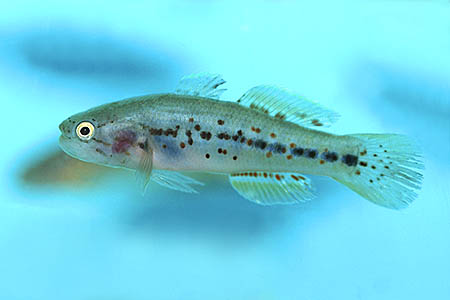
图片来自 SeriouslyFish,版权归各摄影者所有。
English
Overview
Shy but territorial, Mogurnda adspersa resembles Mogurnda mogurnda. It benefits from generous shelter and subdued light. A restrained manner should not be mistaken for guaranteed safety of small companions.
Distribution & habitat
Native to Australia, it occupies slow, weedy sections of rivers and creeks and also occurs in ponds.
Aquarium setup
Provide at least about 120 cm of tank length and 108 L. Sand, stones, wood, and plants create retreats; a particular decorative style is unnecessary. Routine salt addition is not required.
Keep water movement gentle. Dim illumination promotes more visible activity, and a tightly fitted lid is needed because it jumps well.
Diet & feeding
It readily accepts most aquarium foods. Include live and frozen items in a varied diet to support condition and coloration.
Behaviour & compatibility
Territorial without being especially boisterous, it may nevertheless swallow fish small enough to fit its mouth. Suitable rainbowfishes, bottom-dwelling catfishes, and other robust peaceful companions can be considered. A small conspecific group is possible in adequately sized, furnished quarters.
Sexual dimorphism
Males have a pointed genital papilla, sometimes brightly colored. The female's ovipositor is shorter and broader. Some males develop a forehead hump and stronger breeding color.
Breeding
Use a dedicated aquarium, ideally allowing a juvenile group to form pairs. Varied conditioning food helps, and maturity precedes maximum size. A displaying male attracts a female to a flat surface, including glass if necessary.
About 20–40 eggs attach by fine threads. The male excludes the female, fans the clutch, and defends it from intruders. Remove other occupants if rearing will take place in the same tank.
Hatching occurs in roughly five to seven days, ending male care. Separate adults and young to reduce predation. After yolk absorption, offer microscopic food for the first few days before Artemia nauplii. Growth can be uneven, so watch for size differences and sibling predation.
Notes
Wild populations have prompted conservation concern, while commercial breeding also supplies aquarium fish. It remains an uncommon aquarium offering. Around 30–36 lateral-line scales distinguish it from the roughly 37–48 of M. mogurnda, with more red spotting in the second dorsal fin providing another clue.
来源
- https://www.seriouslyfish.com/species/mogurnda-adspersa(抓取于 2026-10-10)
mogurnda-adspersa · 文件: data/species/mogurnda-adspersa.md · 状态: 草稿