角状直线脂鲤 · Ceros Tetra
概要
| 字段 | 值 |
|---|---|
| 类别 | 鱼 |
| 学名 | Moenkhausia ceros |
| 别名 | 角狀直線脂鯉 |
| 分类 | 脂鲤目 Characiformes › 脂鲤科 Characidae › Moenkhausia |
| 水体 | 淡水 |
| 成体体长 | 5 cm |
| 饲养难度 | 中等 |
| 最小水体 | 68 L |
| 最小缸长 | 60 cm |
| 群居方式 | 群游 |
| 性情 | 温和 |
| 外部数据 | seriouslyfish moenkhausia-ceros;fishbase 50879 |
| 原产地 | 秘鲁、巴西 |
水质参数
| 参数 | 耐受范围 | 最适范围 | 单位 |
|---|---|---|---|
| 水温 | 24–26 | — | °C |
| pH | 5.5–7 | — | — |
| 总硬度 | 5–15 | — | dGH |
概述
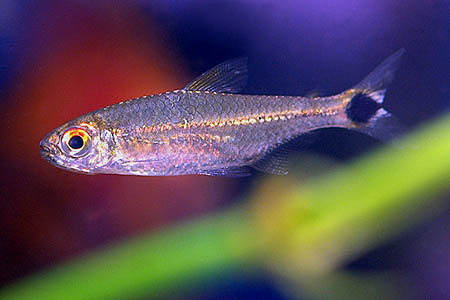
角状直线脂鲤(Moenkhausia ceros)是来自亚马孙流域的温和小型脂鲤,贸易中并不常见,有时混在其他鱼的进口批次中出现。应按群居、偏安静的鱼来安排环境,尤其注意可能为野采个体的适应过程。
分布与栖息地
分布于秘鲁和巴西的亚马孙流域,栖息在水流缓慢的河段、支流及泛滥平原湖泊。
饲养环境
约 60 × 38 × 30 cm、68 L 的缸可饲养一个小群。可用河沙、沉木、树根和干落叶营造昏暗的环境,木材与叶片使水呈淡茶色。应检查落叶状态,定期更换,避免过度腐烂影响水质。也能适应维护良好的密植水草缸。购入个体很可能来自野外,不宜直接放入环境过分随意的混养缸。
食性与喂食
通常容易开口,可接受薄片和颗粒饲料。规律搭配适口的水蚤、丰年虾及摇蚊幼虫等活饵或冷冻饵,有助于维持状态和体色。
习性与混养
性情很温和,难与大型或过分活跃的鱼争食。宜选择体型、活动强度相近的脂鲤、铅笔鱼、小型鲶鱼或温和的小型慈鲷。至少饲养 6 条,以 10 条以上更理想,同类陪伴可改善其表现。
雌雄区分
成年雌鱼通常比雄鱼身体饱满。
繁殖
人工繁殖尚无确认记录,可参照近缘种的方法尝试,但不能把成功率和发育时间视为已知。试繁殖缸宜昏暗,使用偏软、偏酸的水和轻柔的海绵过滤,放入细叶植物、产卵拖把或隔网保护卵。可尝试雌雄混合小群,或将雌雄分开育肥后,于傍晚放入状态良好的一对。
若发现产卵,应将亲鱼移出;鱼苗开始摄食后,可先提供纤毛虫等微小饵料,再随生长转用微虫和丰年虾无节幼体。这些属于借鉴近缘鱼的尝试方案。
补充说明
直线脂鲤属的分类范围长期较宽,多个原成员已被转入其他属。仅凭相似外形或同批进口不能可靠确认身份。
图片
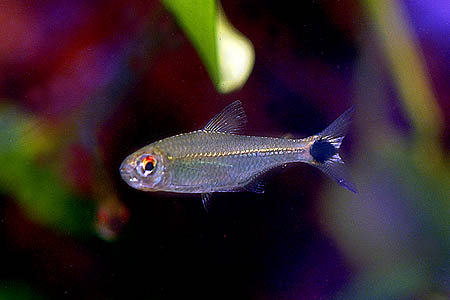
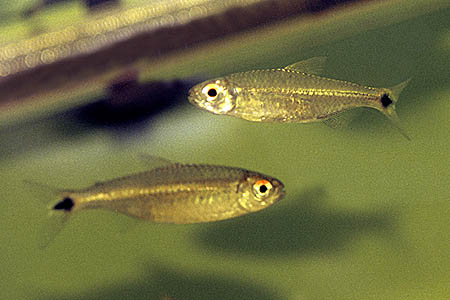
图片来自 SeriouslyFish,版权归各摄影者所有。
English
Overview
Moenkhausia ceros is a peaceful small tetra from the Amazon basin. It is uncommon in the aquarium trade and sometimes arrives mixed with shipments of other fishes. A quiet group setting is appropriate, particularly for specimens likely to have been collected in the wild.
Distribution & habitat
The range includes the Amazon basin in Peru and Brazil. Slow river sections, tributaries, and floodplain lakes provide its habitat.
Aquarium setup
An aquarium around 60 × 38 × 30 cm, holding roughly 68 liters, can accommodate a small group. Sand, driftwood, roots, and dried leaves create a shaded setting, with the wood and leaves giving the water a pale tea tint. Check the litter and replace it periodically before excessive decay damages water quality.
A carefully maintained, densely planted aquarium is another option. Because fish offered for sale are very likely to be wild-caught, an indiscriminately arranged community is a poor choice.
Diet & feeding
Captive specimens usually accept flakes and granules readily. Supplement these with appropriately sized live or frozen foods, including Daphnia, Artemia, and bloodworms, to support condition and color.
Behaviour & compatibility
This gentle species competes poorly with much larger or very boisterous fishes. Suitable companions include similarly sized tetras, pencilfishes, small catfishes, and peaceful dwarf cichlids. Keep at least six individuals, with ten or more preferable; company of its own kind helps it settle and behave naturally.
Sexual dimorphism
Mature females are generally fuller-bodied than males.
Breeding
Captive breeding has not been confirmed. Methods used for related fishes offer a possible approach, but their success and developmental timings should not be treated as established for this species.
A trial aquarium can be dimly lit, softly filtered with a sponge filter, and filled with soft, acidic water. Fine plants, spawning mops, or mesh may protect deposited eggs. Try a mixed group, or condition the sexes separately before transferring a well-conditioned pair in the evening.
If eggs appear, remove the adults. Begin feeding free-swimming fry with infusoria-sized foods and progress to microworms and Artemia nauplii as they grow. These remain suggestions extrapolated from relatives.
Notes
The boundaries of Moenkhausia have long been broad, and several former members have been transferred elsewhere. Similar appearance or arrival in the same import does not establish identification.
来源
- https://www.seriouslyfish.com/species/moenkhausia-ceros(抓取于 2026-10-10)
moenkhausia-ceros · 文件: data/species/moenkhausia-ceros.md · 状态: 草稿