荷兰凤凰 · Ram
概要
| 字段 | 值 |
|---|---|
| 类别 | 鱼 |
| 学名 | Mikrogeophagus ramirezi |
| 别名 | 拉氏小噬土麗鯛、Apistogramma ramirezi、Papiliochromis ramirezi、Microgeophagus ramirezi、拉氏小噬土丽鲷 |
| 分类 | 慈鲷目 Cichliformes › 慈鲷科 Cichlidae › Mikrogeophagus |
| 水体 | 淡水 |
| 原产地 | 哥伦比亚、委内瑞拉 |
| 成体体长 | 4 cm |
| 饲养难度 | 中等 |
| 最小水体 | 54 L |
| 最小缸长 | 60 cm |
| 群居方式 | 成对 |
| 水流偏好 | 低 |
| 外部数据 | seriouslyfish mikrogeophagus-ramirezi;fishbase 12305 |
| 繁殖方式 | 附着产卵 |
| 领地性 | 是 |
水质参数
| 参数 | 耐受范围 | 最适范围 | 单位 |
|---|---|---|---|
| 水温 | 27–30 | — | °C |
| pH | 4–7 | — | — |
| 总硬度 | 1–10 | — | dGH |
概述
荷兰凤凰(Mikrogeophagus ramirezi)是受欢迎的小型南美慈鲷,但对水质要求高,不适合只凭体形小就放进普通混养缸。人工品系繁多,部分鱼体质和繁殖能力较弱;野生鱼对水质与食物的要求又更严格。
分布与栖息地
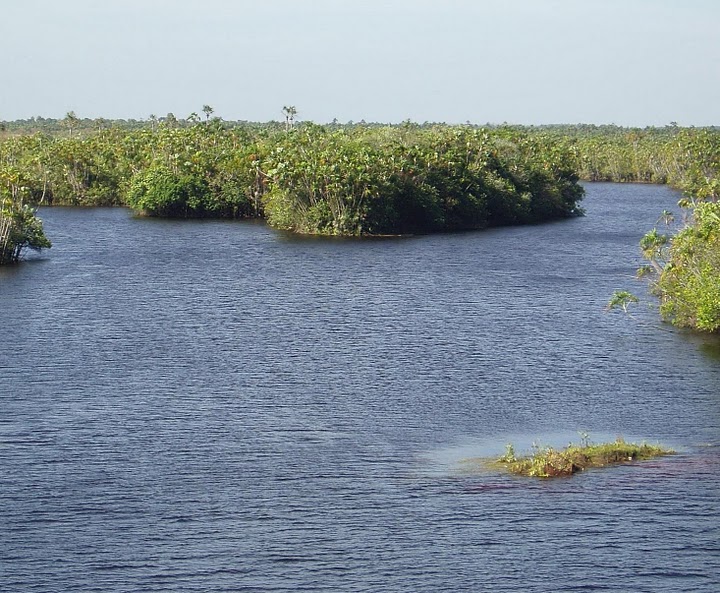
主要分布在委内瑞拉、哥伦比亚的奥里诺科河流域平原。当地有热带草原、季节性淹水地和森林,干湿季分明,全年较温暖。另有来自巴西普鲁斯河的个体来源说法,但尚不足以当作确定分布。
饲养环境
务必使用成熟的过滤系统,不要放入刚建立或生物过滤尚未稳定的鱼缸。细沙、沉木和枝条可构成阴影与洞穴,另放平石或其他平整表面作为产卵位置;水草、陶盆等也能提供遮蔽。
水流宜轻柔,换水采用规律的小幅度方式,建议每次约 10%~15%。水质变差时,头部和侧线附近可能出现组织侵蚀形成的小坑,因此稳定维护比频繁大幅调整更重要。
食性与喂食
它会含入口中的底砂筛取食物,再吐出或从鳃部排出砂粒,也会在硬表面或水中取食。可搭配红虫、丰年虾、水蚤、微型蠕虫等活饵和冷冻饵料,再补充粒径合适的优质下沉饲料。野生鱼起初可能拒绝干粮,需要逐渐适应。
习性与混养
它争食能力较弱,缸友应温和、适应温暖软水,避开攻击性强或领地意识强的鱼。小型群游鱼可充当陪游鱼,帮助它减少紧张,例如宝莲灯(Paracheirodon axelrodi)。幼鱼较合群,成熟配对后在繁殖期会占据领地。
雌雄区分
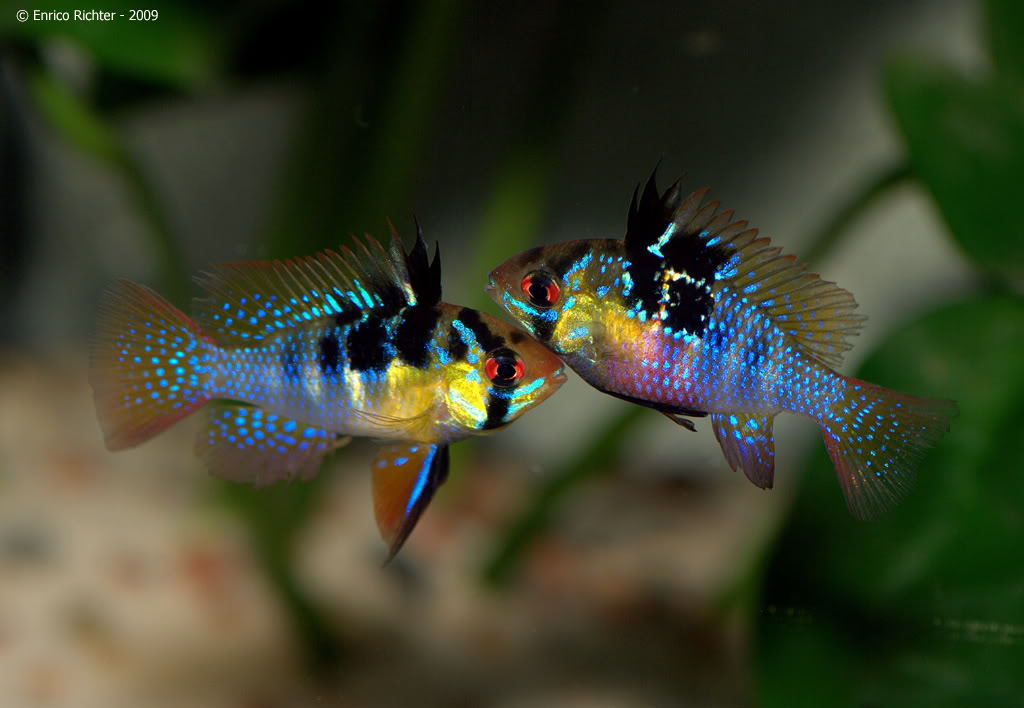
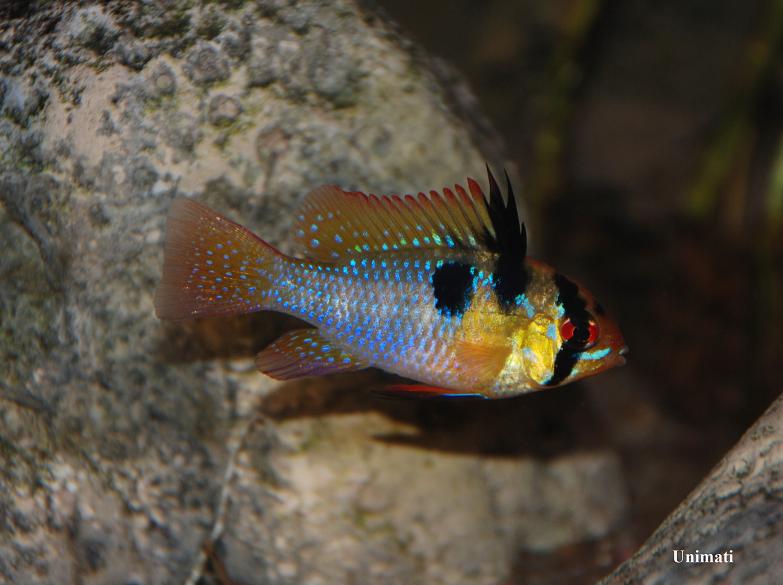
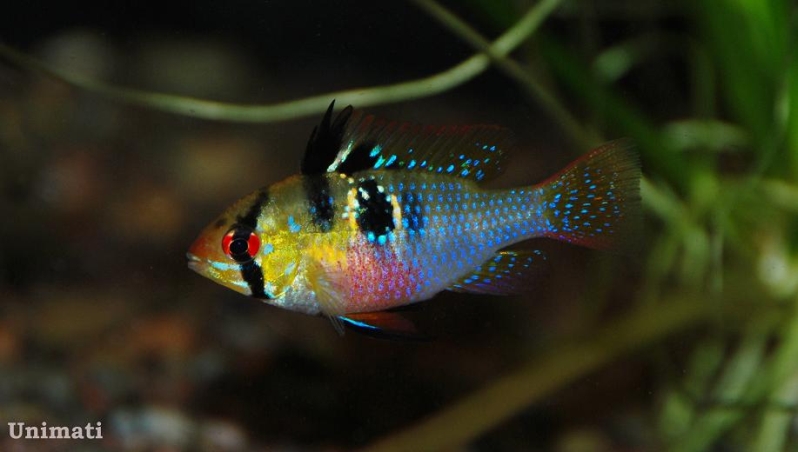
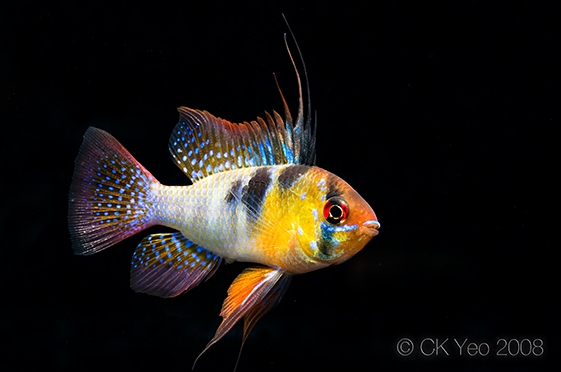
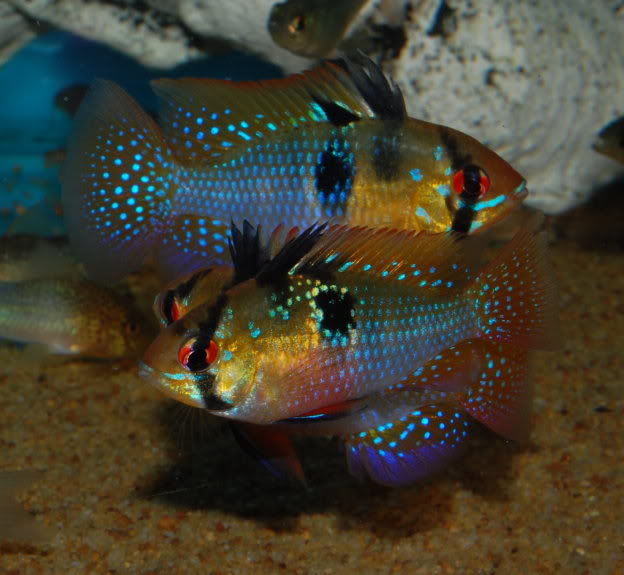
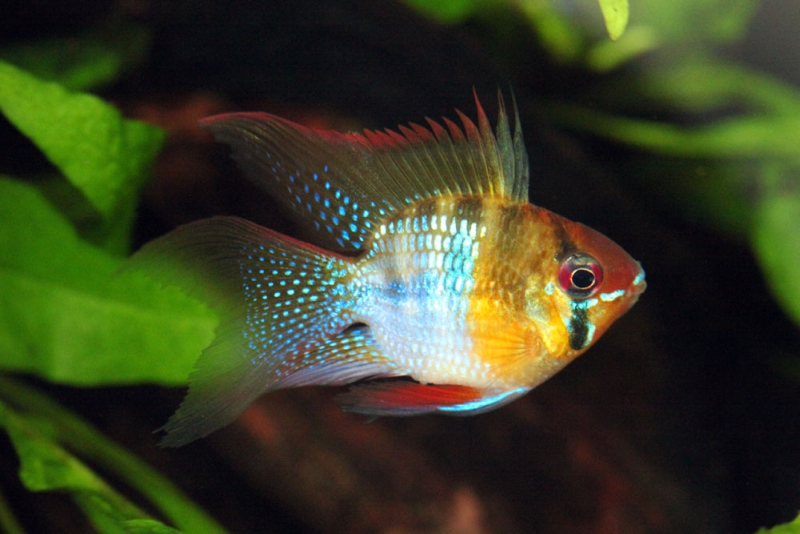
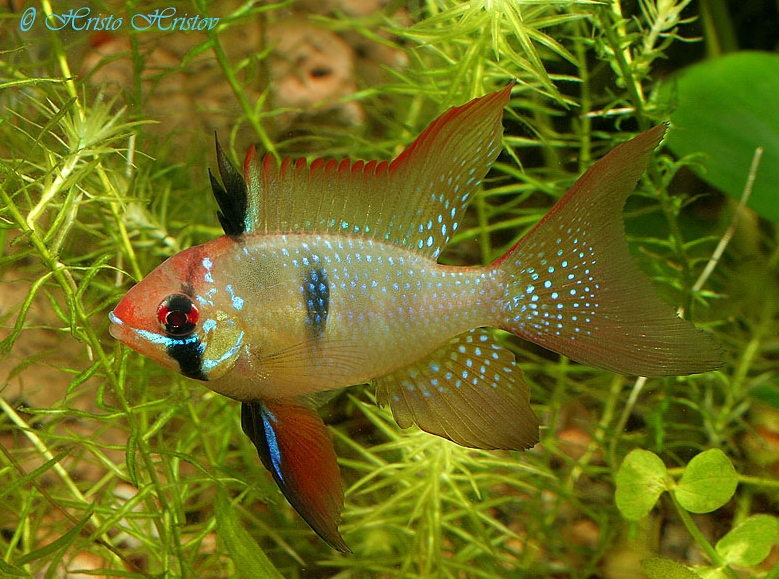
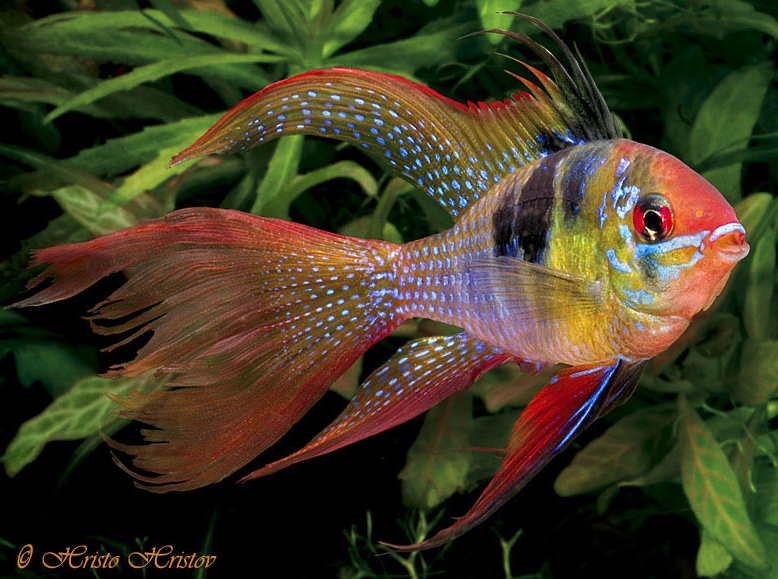
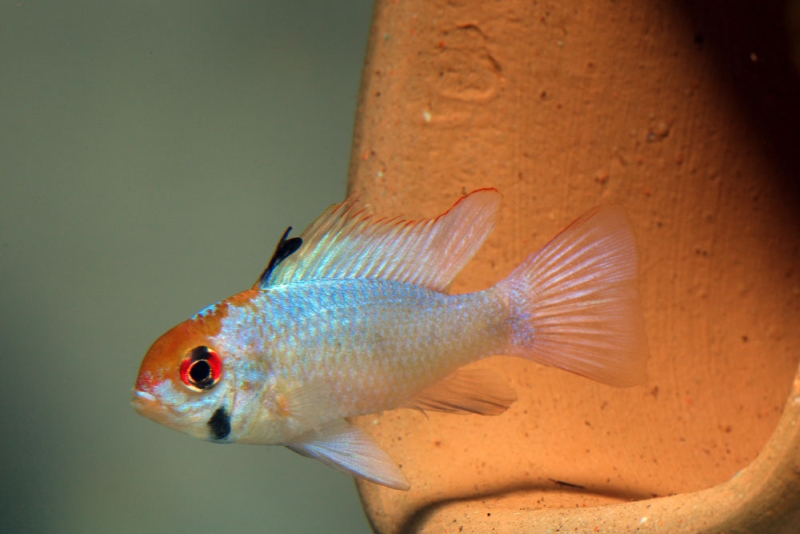
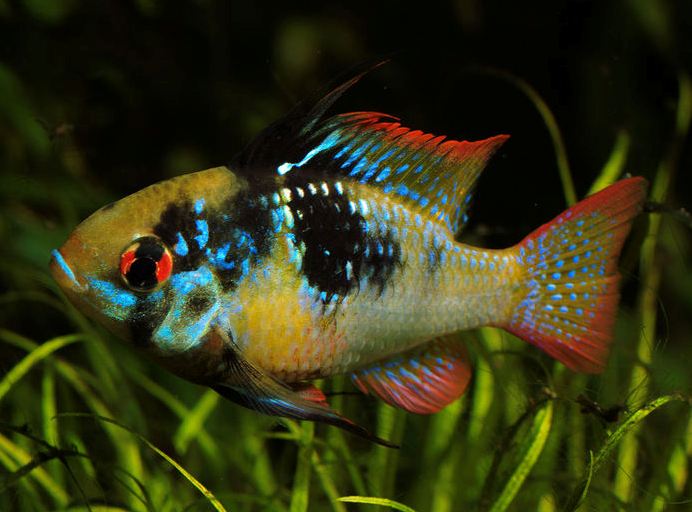
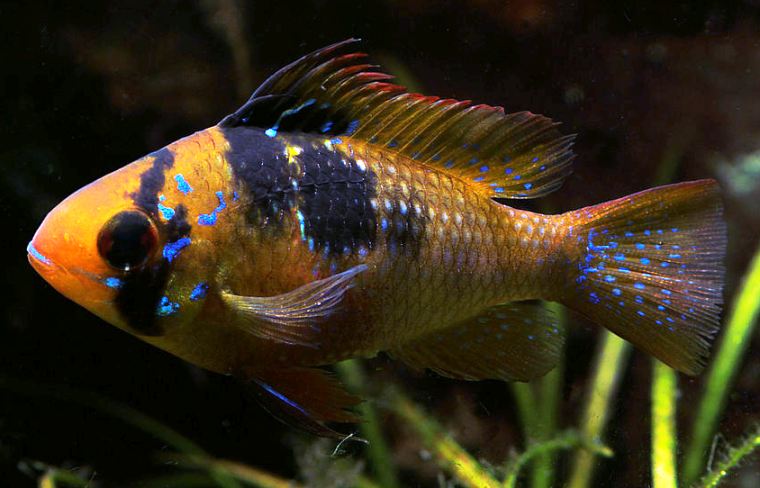
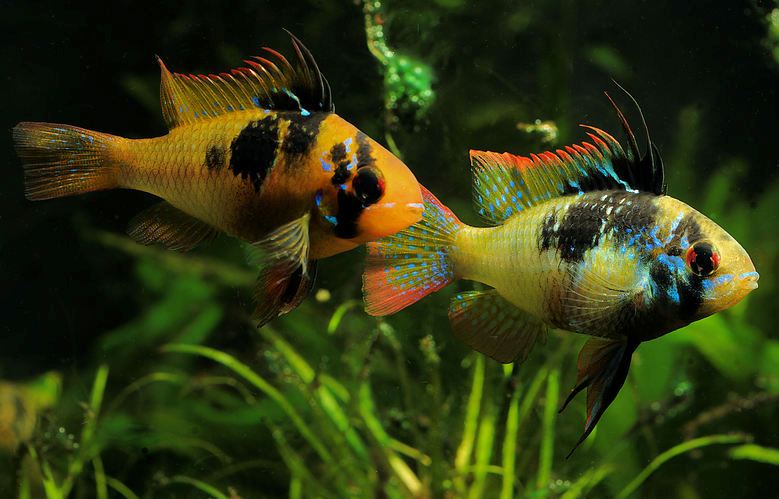
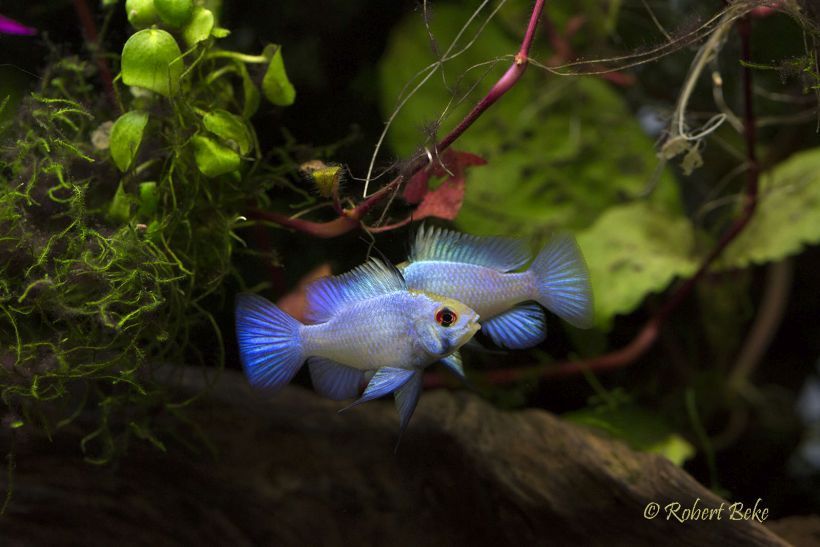
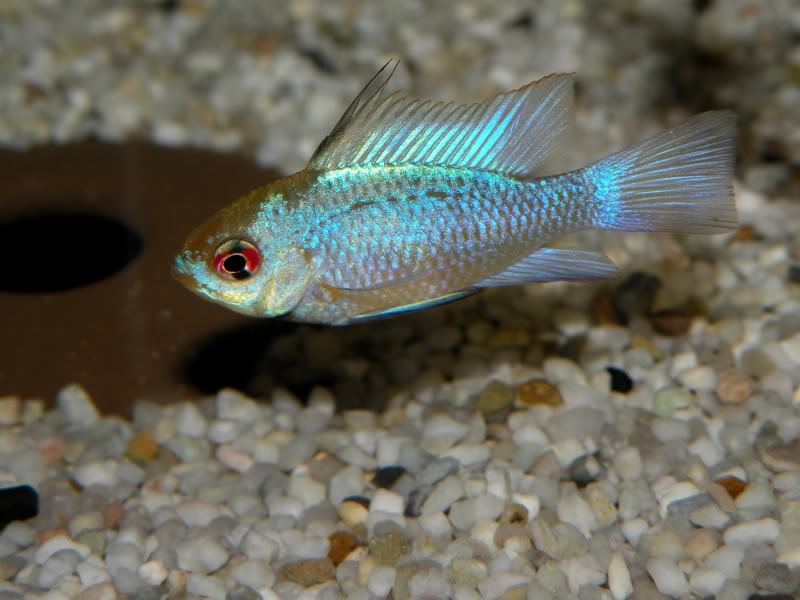
成年雄鱼一般较大,鳍略长,颜色更鲜明。多数雌鱼腹部有粉红色斑,但某些人工品系可能不明显,不能作为唯一依据。
繁殖
在平石、沉木、宽叶或缸壁等表面产卵,双亲共同护卵和照顾鱼苗。独立繁殖缸较便于育苗,可从幼鱼群中等待自然配对,再将成对个体分开饲养。
水必须干净、硬度低,否则鱼卵容易发霉或停止发育。新手亲鱼可能吃卵,有些会在数次尝试后改善,部分人工鱼则持续受精率低或反复吞卵。卵约经 2~3 天孵化,仔鱼还需约 5 天才起游,此前不用额外投喂。起游后先用纤毛虫、微虫等小食物,过 2~3 天再逐步增加丰年虾无节幼体。
补充说明
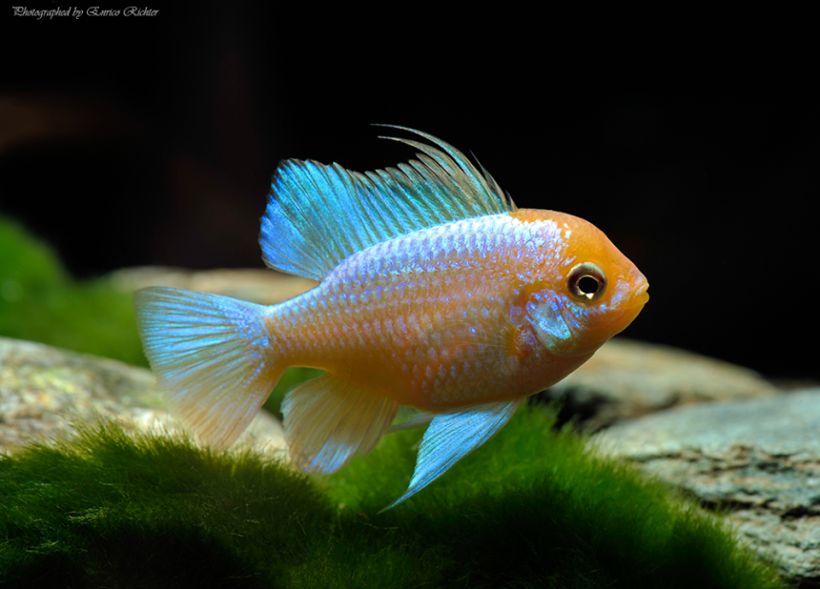
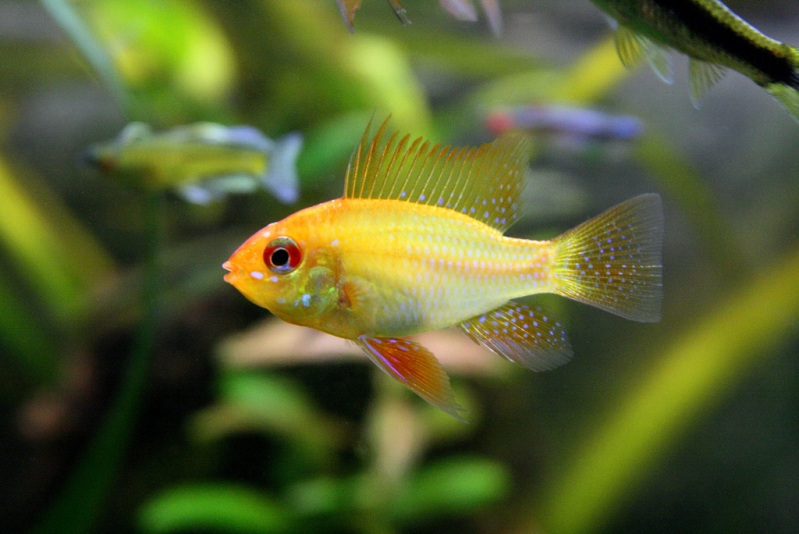
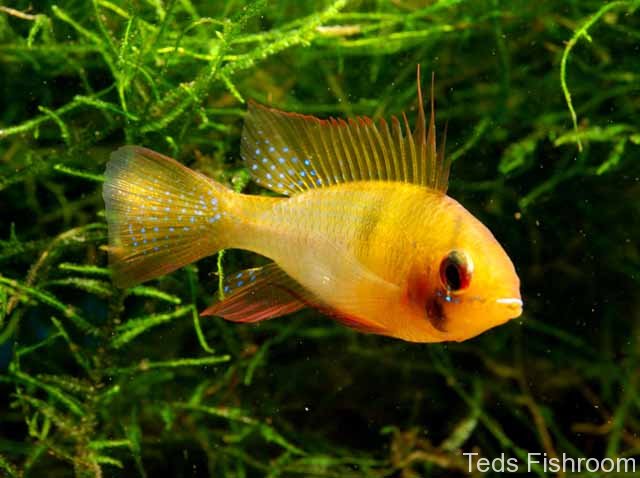
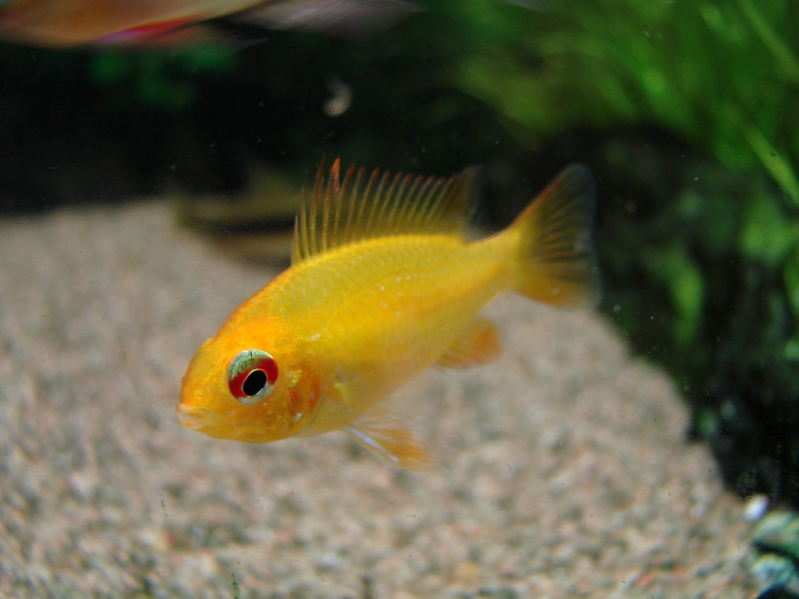
金色、长鳍、电光蓝和球形等人工品系不能只按外观评价质量。部分品系容易患病、寿命缩短或繁殖力下降,选择可靠繁殖者尤为重要。
图片
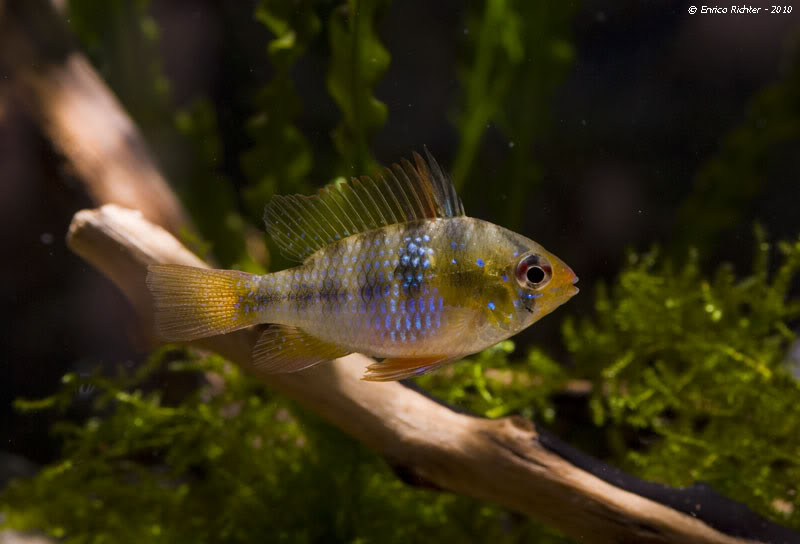
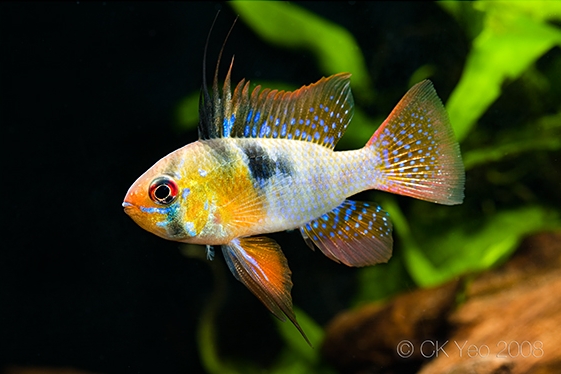
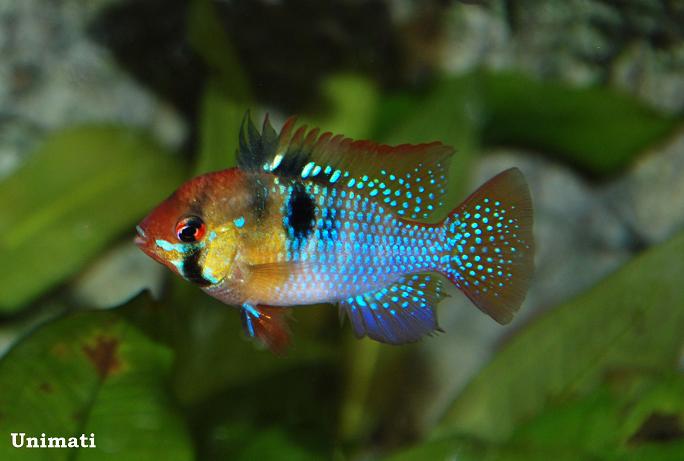
图片来自 SeriouslyFish,版权归各摄影者所有。
English
Overview
The ram, Mikrogeophagus ramirezi, is a popular dwarf cichlid whose small size can disguise demanding care requirements. Excellent water quality is essential. Commercial lines vary in vigor, while wild stock requires particular attention to water and feeding.
Distribution & habitat
The best-supported range lies in the Colombian and Venezuelan llanos within the Orinoco basin. This warm landscape includes savannas, forests, and seasonally flooded plains. A reported specimen from Brazil's Purus system remains an uncertain extension of the range.
Aquarium setup
Use an established aquarium with mature biological filtration. Sand, branching wood, shaded retreats, and a few flat surfaces provide a practical layout. Plants and suitable artificial shelters are also useful.
Avoid strong current and abrupt maintenance changes. Regular water changes of roughly 10–15% are suggested. Deteriorating conditions can be associated with erosive pits around the head and lateral-line pores, making consistent upkeep especially important.
Diet & feeding
Rams sift mouthfuls of sediment for food, ejecting unwanted particles, but also pick items from surfaces and open water. Offer varied small live or frozen prey alongside appropriately sized sinking prepared foods. Wild individuals may need time before accepting dry products.
Behaviour & compatibility
Choose quiet companions that tolerate warm, soft water and will not dominate meals. Small schooling fish can provide reassurance; the cardinal tetra (Paracheirodon axelrodi) is one suitable example. Young rams associate in groups, whereas mature pairs establish breeding territories. Aggressive or strongly territorial tankmates are unsuitable.
Sexual dimorphism
Males usually become larger, more intensely colored, and slightly longer-finned. Most females develop a pink abdominal patch, although ornamental strains do not always show this clearly.
Breeding
Both parents tend eggs laid on a firm surface, such as stone, wood, a leaf, or glass. A separate aquarium is preferable for raising a brood. Juveniles can be allowed to pair naturally before the pairs are separated.
Clean, low-hardness water is important for egg development. Inexperienced parents sometimes consume their spawn, and repeated failure can also occur in poor-quality commercial stock. Eggs normally hatch after two to three days. Larvae remain largely inactive for about five more days without needing added food. Once swimming, offer tiny organisms initially and introduce brine shrimp nauplii after another two to three days.
Notes
Gold, elongated-fin, electric-blue, and balloon forms should be assessed for health rather than appearance alone. Some ornamental lines show reduced disease resistance, shortened survival, or weak reproduction. A reliable breeder is especially valuable with this species.
来源
- https://www.seriouslyfish.com/species/mikrogeophagus-ramirezi(抓取于 2026-10-10)
mikrogeophagus-ramirezi · 文件: data/species/mikrogeophagus-ramirezi.md · 状态: 草稿