玻利维亚凤凰 · Bolivian Ram
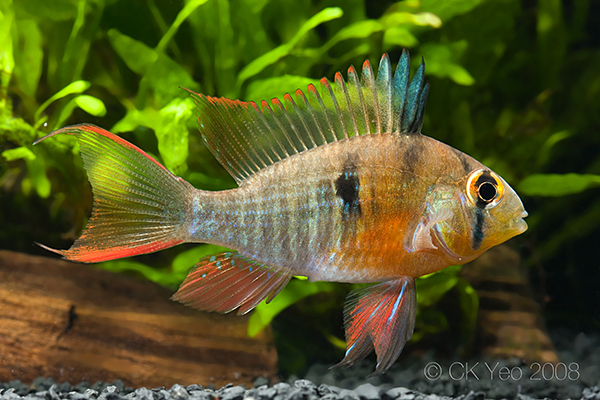
概要
| 字段 | 值 |
|---|---|
| 类别 | 鱼 |
| 学名 | Mikrogeophagus altispinosus |
| 别名 | 高棘小噬土麗鯛、Crenicara altispinosa、Microgeophagus altispinosus、Papiliochromis altispinosus、高棘小噬土丽鲷 |
| 分类 | 慈鲷目 Cichliformes › 慈鲷科 Cichlidae › Mikrogeophagus |
| 水体 | 淡水 |
| 原产地 | 玻利维亚、巴西 |
| 成体体长 | 8 cm |
| 饲养难度 | 中等 |
| 最小水体 | 182 L |
| 最小缸长 | 90 cm |
| 群居方式 | 群游 |
| 外部数据 | seriouslyfish mikrogeophagus-altispinosus;fishbase 15902 |
| 繁殖方式 | 附着产卵 |
| 特征 | 翻底砂: 是 |
水质参数
| 参数 | 耐受范围 | 最适范围 | 单位 |
|---|---|---|---|
| 水温 | 24–28 | — | °C |
| pH | 6–7.5 | — | — |
| 总硬度 | 1–10 | — | dGH |
概述
玻利维亚凤凰(Mikrogeophagus altispinosus)会含砂筛食,是需要清洁水质的小型南美慈鲷。它抢食能力不强,适合与温和伙伴相处;虽然相对容易照顾,也不能当作能适应任何普通混养缸的鱼。
分布与栖息地
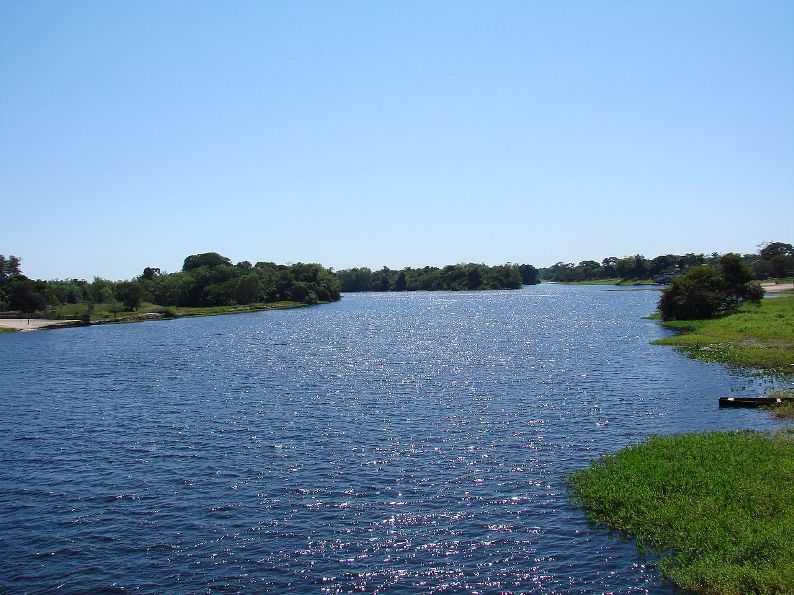
原生于玻利维亚及巴西的马代拉河上游,包括马莫雷河、瓜波雷河及奥尔通河上游流域。可能利用砂泥底的支流、岸边、牛轭湖及湖泊,但具体微环境仍需保留谨慎。
饲养环境
柔软细砂是关键,粗砾可能妨碍筛食、损伤鳃丝,甚至被吞入造成问题。用沉木和枝条形成阴影,放一两块平石供产卵,可搭配附生或耐阴水草。水流宜温和,规律换水约一成至一成半,避免突然大量换水。必须使用成熟系统;水质下降时可能出现类似头部和侧线组织侵蚀的病变。
食性与喂食
主要通过含砂、筛出食物后排砂来觅食,也会啄固体表面或截取水中的食物。提供红虫、丰年虾、水蚤、白线虫等活饵或冷冻饵料,配合适口的下沉干粮。野生鱼起初可能拒绝干粮,需要时间适应。
习性与混养
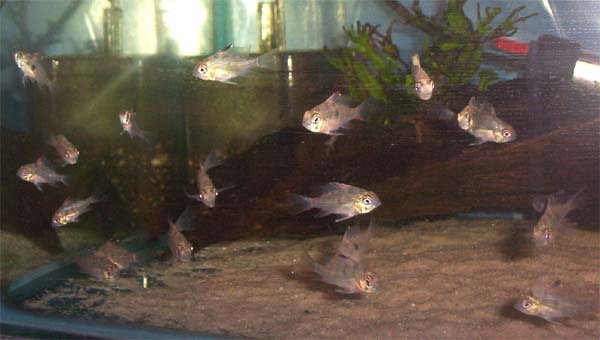
温和的开放水层群游鱼能帮助减轻胆怯,也可考虑温和底栖伙伴。避免抢食强、领地性强或要求明显更硬水的鱼。可以单养或养稳定鱼对;较大的缸也能尝试雌雄混合群体,但狭窄空间会加强雄鱼防卫。野外曾有繁殖期外独处的观察,不能把缸中群养建议当作所有野生个体都会结群。
雌雄区分
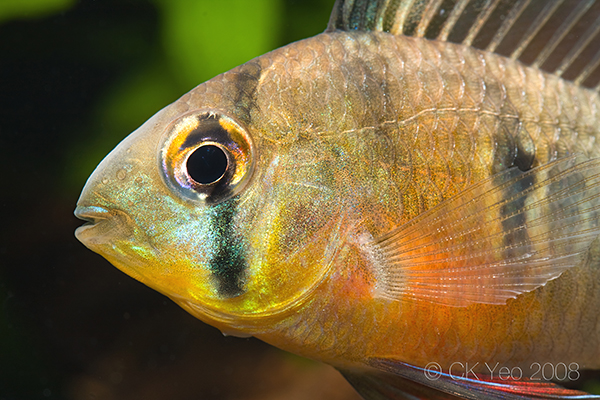
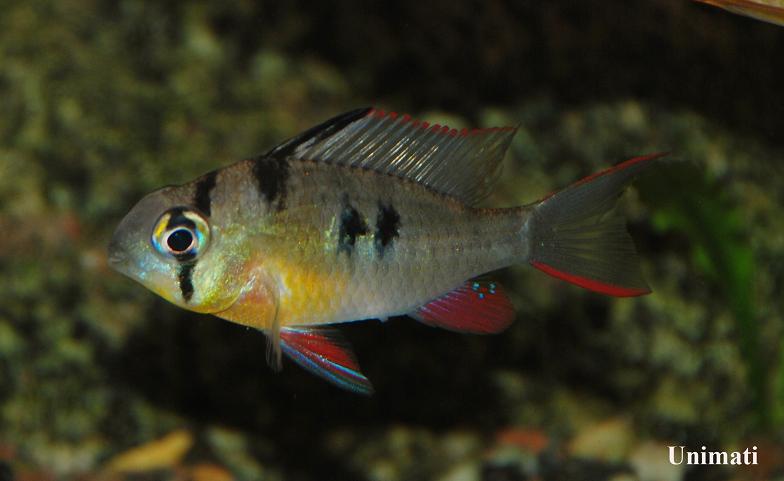
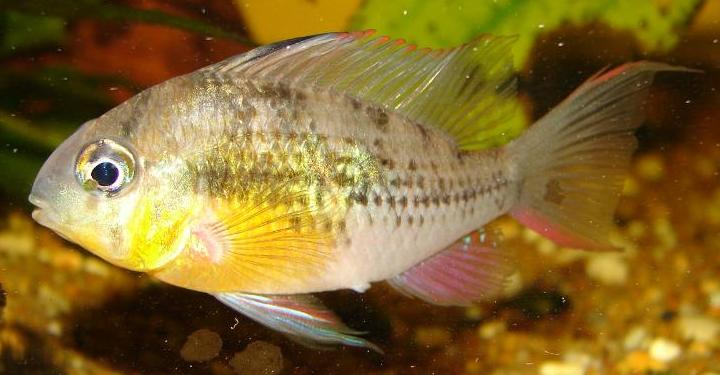
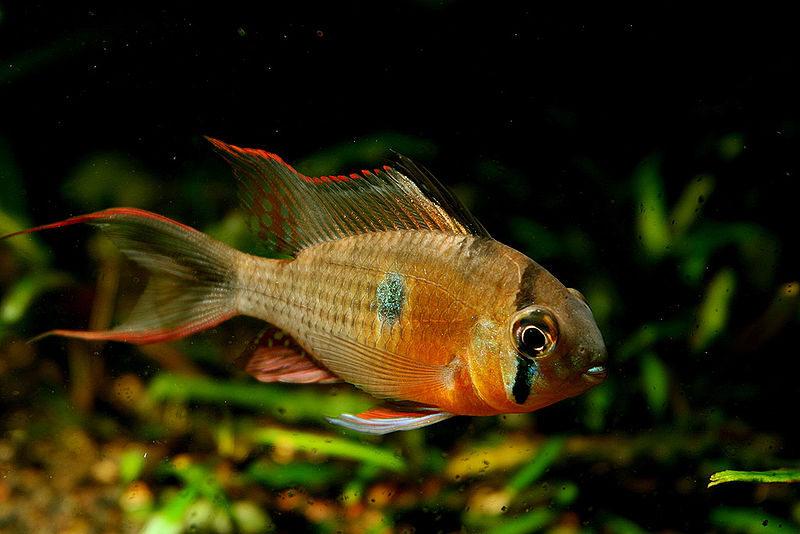
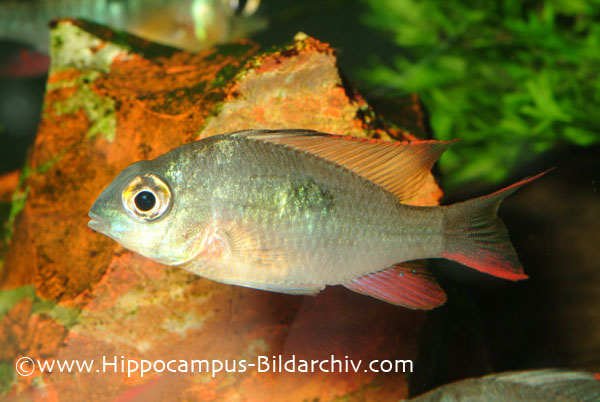
成年雄鱼更大、颜色较浓,鳍略长。
繁殖
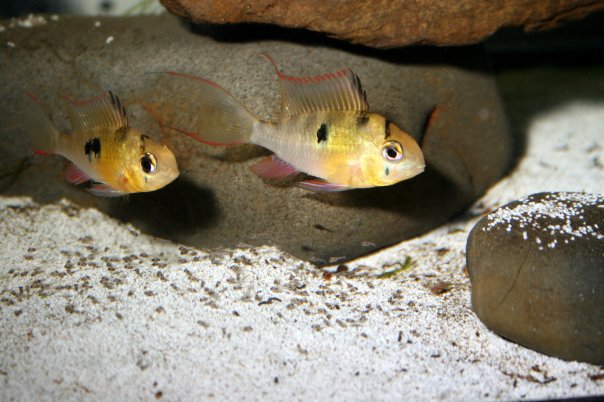
双亲照顾的基质产卵鱼,以单独鱼对繁殖最容易管理。可从幼鱼群等待自然配对,良好饮食和稳定维护比寻找特殊刺激更重要。雌鱼在平石、木材、宽叶或玻璃上分行产卵,雄鱼随后受精。新鱼对可能前几窝吃卵,之后逐渐改善。
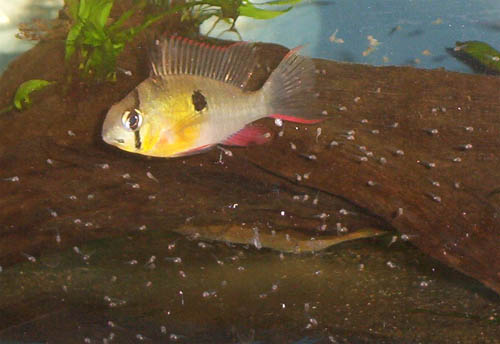
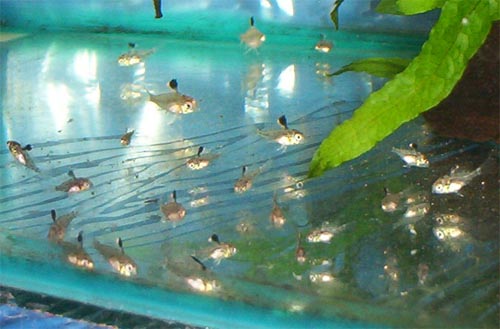
卵约两三天孵化,幼鱼还需五至八天吸收卵黄,此阶段不需额外喂食。亲鱼会把幼鱼搬入预先挖好的坑,有时一天内多次换坑。自由游动后可用微虫、丰年虾无节幼体开口;若在混养缸中想养成更多鱼苗,需把卵或其他伙伴隔开。
补充说明
原有群居标签应结合空间理解,不能忽略个体或鱼对所需的领域。与同属更鲜艳的近亲相比,本种体形较大,缺少那种明显的蓝色虹彩。
图片
图片来自 SeriouslyFish,版权归各摄影者所有。
English
Overview
Mikrogeophagus altispinosus feeds by sifting sand and needs consistently clean water. It is a poor competitor at meals and should live with gentle companions. Relative ease of care does not make it suitable for every general community.
Distribution & habitat
It is native to the upper Madeira basin in Bolivia and Brazil, including the Mamoré, Guaporé, and upper Orthon drainages. Sandy or muddy tributaries, margins, oxbows, and lakes are presumed habitats rather than fully documented microhabitat requirements.
Aquarium setup
Soft fine sand is essential. Coarse gravel can impede feeding, damage gills, or be swallowed. Use roots and branches for shade, a few flat spawning surfaces, and optional attached or shade-tolerant plants. Keep flow gentle and change roughly ten to fifteen percent regularly rather than making abrupt large replacements. Never use an immature system. Deteriorating water can be associated with erosive lesions around the head and lateral line.
Diet & feeding
Mouthfuls of substrate are sifted and expelled, though solid surfaces and suspended food are also browsed. Offer varied live or frozen bloodworms, Artemia, Daphnia, and small worms, supplemented with fine sinking prepared food. Wild fish may initially refuse dry items before learning to accept them.
Behaviour & compatibility
Peaceful open-water schooling fishes can reduce shyness, and gentle bottom dwellers may be suitable. Avoid aggressive competitors and fishes needing much harder water. Individuals or bonded pairs can be kept; mixed-sex groups require substantially more room because cramped males defend areas more vigorously. Observations of solitary wild fish outside reproduction prevent treating aquarium grouping as a universal natural pattern.
Sexual dimorphism
Adult males are larger, more strongly colored, and slightly longer-finned.
Breeding
This substrate spawner shares care between both parents. A dedicated pair setup simplifies management. Allow juveniles to pair naturally, emphasizing diet and maintenance rather than a special trigger. Eggs are laid in rows on stone, wood, leaves, or glass and fertilized afterward. Inexperienced pairs may consume early broods before improving.
Hatching takes two to three days, followed by five to eight days of yolk-supported development without added food. Parents move young among excavated pits, sometimes repeatedly. Once free-swimming, offer microworms and Artemia nauplii. Separate eggs or companions if greater fry survival is desired in a community aquarium.
Notes
A group-housing label must be interpreted alongside space and individual territorial needs. This species is larger and less iridescent than its brightly blue-marked relative.
来源
ID:mikrogeophagus-altispinosus · 文件: data/species/mikrogeophagus-altispinosus.md · 状态: 草稿