十字小条鳅
概要
| 字段 | 值 |
|---|---|
| 类别 | 鱼 |
| 学名 | Micronemacheilus cruciatus |
| 别名 | 十字小條鰍、Yunnanilus cruciatus、Nemacheilus cruciatus、Micronemacheilus curciatus |
| 分类 | 鲤形目 Cypriniformes › 条鳅科 Nemacheilidae › Micronemacheilus |
| 水体 | 淡水 |
| 原产地 | 越南沿海河流,可能为越南特有种 |
| 成体体长 | 4 cm |
| 饲养难度 | 中等 |
| 最小水体 | 54 L |
| 最小缸长 | 60 cm |
| 群居方式 | 群游 |
| 性情 | 温和 |
| 外部数据 | seriouslyfish micronemacheilus-cruciatus;fishbase 26878 |
| 游动层 | 上层、中层、底层 |
| 繁殖方式 | 散卵 |
水质参数
| 参数 | 耐受范围 | 最适范围 | 单位 |
|---|---|---|---|
| 水温 | 22–27 | — | °C |
| pH | 6–7.5 | — | — |
| 总硬度 | 2–12 | — | dGH |
概述
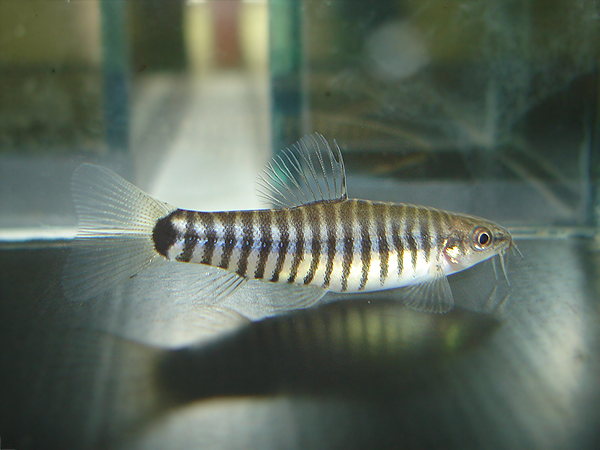
十字小条鳅(Micronemacheilus cruciatus)是体侧纵纹与多条横带相交的小型鳅。它与许多贴底隐居的鳅不同,经常悬停于中层并探索全缸,适合成熟、安静的草缸,至少八至十条、最好更多一起饲养。
分布与栖息地
记录来自越南沿海河流,范围大致在北纬十四度半至十八度之间,可能为越南特有种。商品名中的“老挝”不能直接当成产地证据。
饲养环境
群养缸底面积从约 60 × 30 cm 起步,宜密植水草,并搭配浮水植物、树根、枝木和落叶。若希望幼鱼在成鱼缸中存活,可加入茂密细叶水草或莫丝。
保持充足溶氧,允许适度水流,但不要猛烈翻涌。它对水化学波动较敏感,只能放入生物过滤成熟的缸,并规律少量换水维持水质。
食性与喂食
野外可能主要捕食小昆虫、蠕虫、甲壳类及其他浮游动物。食物大小尤其重要,可提供小型水蚤、丰年虾无节幼体和微虫;也会接受细小或压碎的浮性干饲料,其中最好含少量植物或藻类成分。
习性与混养
性情平和,体型大或过于活跃的鱼容易让它紧张或抢走食物。体型相近的温和群游鱼能增加安全感,其他温和底栖鱼也需确认不会形成竞争。
本种高度群居,八至十条只是起点,更多同伴通常能减少胆怯。它经常在开阔水域悬停并利用各水层;据观察,较老个体可能逐渐更爱躲藏。
雌雄区分
成熟雌鱼通常略大,腹部比雄鱼更圆。
繁殖
散卵且不护幼,成熟密植缸可能自然出现少量幼鱼。想提高成活率,可另用盛成熟水的小繁殖容器,放满细叶植物或产卵拖把,并可配轻柔海绵过滤。
调养后放入一对或少量雌雄,鱼越多,吃卵风险也越高。雄鱼把雌鱼引入植物间,卵逐粒释放,有时落在叶面或玻璃等硬表面。发现卵后应移出亲鱼。孵化速度随温度变化,幼鱼自由游动后先喂草履虫或极细开口饵,再按口径加入丰年虾无节幼体和微虫。
补充说明
旧记录可能使用 Yunnanilus cruciatus。横带和纵带相交的图案很醒目,贸易名称多样并不表示都是不同种。
图片
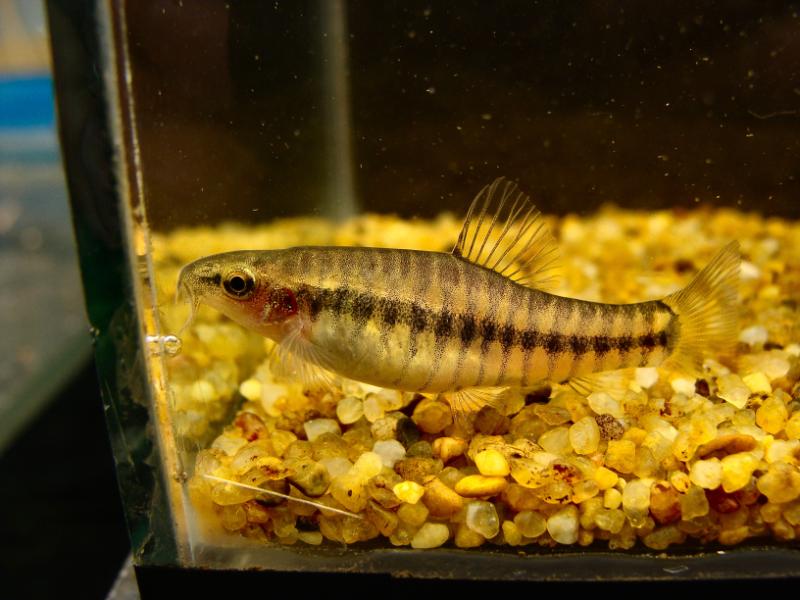
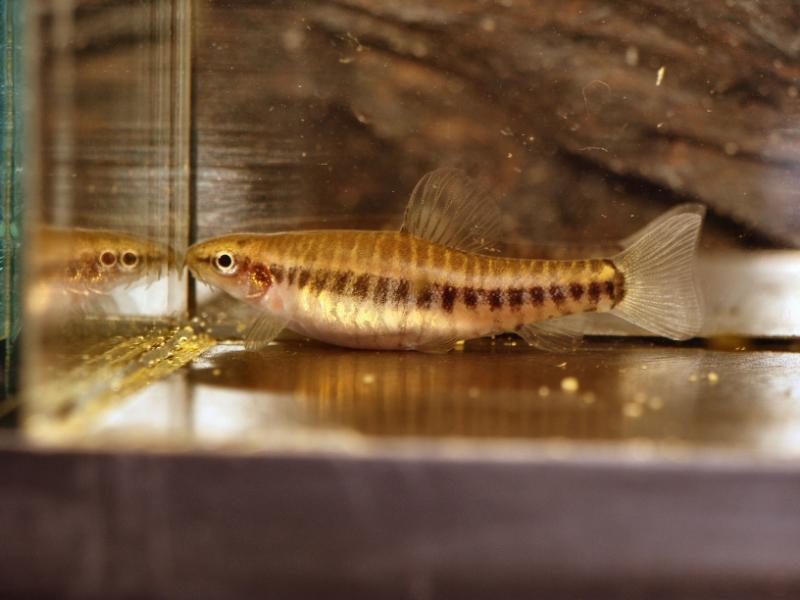
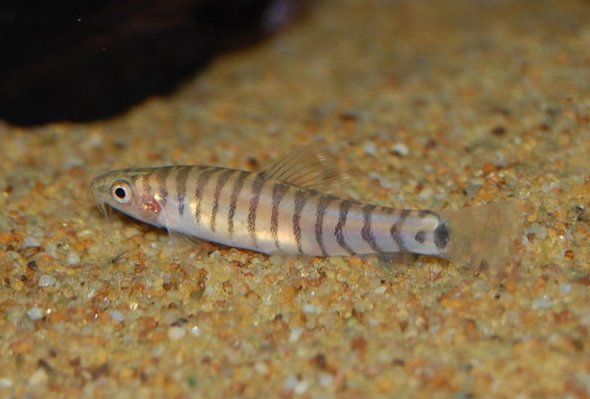
图片来自 SeriouslyFish,版权归各摄影者所有。
English
Overview
Micronemacheilus cruciatus is a small barred loach that frequently hovers in open water rather than remaining hidden on the bottom. A mature, quiet planted aquarium and a group of at least eight to ten, preferably more, bring out its distinctive behavior.
Distribution & habitat
Records come from coastal rivers of Vietnam between approximately 14.5 and 18 degrees north. It appears to be endemic to Vietnam; trade names suggesting Laos should not be treated as locality evidence.
Aquarium setup
Provide a footprint around 60 × 30 cm or larger for a group. Dense planting, floating cover, roots, branches, and leaves create a suitable setting. Add plentiful fine vegetation or moss if fry are to grow alongside adults.
Maintain good oxygenation with moderate circulation and no turbulence. Introduce the fish only to an aquarium with mature biological filtration, since shifts in water chemistry can cause problems. Regular partial water changes help keep conditions stable.
Diet & feeding
The wild diet probably centers on tiny insects, worms, crustaceans, and other zooplankton. Food size matters: offer small water fleas, brine shrimp nauplii, and microworms. Fine or crushed floating dry food is also accepted and should ideally include plant or algal ingredients.
Behaviour & compatibility
Larger or boisterous companions may intimidate these peaceful loaches or monopolize food. Similarly sized, gentle schooling fishes can provide reassurance. Other peaceful bottom dwellers still need to be checked for compatibility.
This strongly social species benefits from eight to ten or more companions. Individuals frequently hover in midwater and explore all levels, although older fish reportedly become more inclined to hide.
Sexual dimorphism
Mature females are usually slightly larger and rounder-bellied than males.
Breeding
Eggs are scattered without parental care, and a mature planted tank may produce occasional surviving fry. For more control, prepare a small separate container with established water and abundant fine plants or spawning mops; gentle sponge filtration can be used.
Introduce a conditioned pair or small mixed group. More adults increase egg predation risk. Males drive females into vegetation, where eggs are released individually, sometimes onto leaves or glass. Remove adults when eggs appear. Incubation varies with temperature. Feed free-swimming fry infusoria or extremely fine starter food, adding brine shrimp nauplii and microworms when suitable.
Notes
Older accounts may use Yunnanilus cruciatus. Multiple trade names refer to the same conspicuous pattern of crossing horizontal and vertical bands.
来源
- https://www.seriouslyfish.com/species/micronemacheilus-cruciatus(抓取于 2026-10-10)
micronemacheilus-cruciatus · 文件: data/species/micronemacheilus-cruciatus.md · 状态: 草稿