安氏细梳攀鲈 · Ornate ctenopoma
概要
| 字段 | 值 |
|---|---|
| 类别 | 鱼 |
| 学名 | Microctenopoma ansorgii |
| 别名 | 达维非洲攀鲈、安氏非洲攀鲈、安氏細梳攀鱸、達維非洲攀鱸、安氏非洲攀鱸 |
| 分类 | 攀鲈目 Anabantiformes › 攀鲈科 Anabantidae › Microctenopoma |
| 水体 | 淡水 |
| 成体体长 | 7 cm |
| 饲养难度 | 入门 |
| 外部数据 | seriouslyfish microctenopoma-ansorgii;fishbase 10030 |
| 原产地 | 刚果共和国、刚果民主共和国 |
| 繁殖方式 | 吐泡筑巢 |
水质参数
| 参数 | 耐受范围 | 最适范围 | 单位 |
|---|---|---|---|
| 水温 | 20–27 | — | °C |
| pH | 5.5–7.5 | — | — |
| 总硬度 | 5–20 | — | dGH |
概述
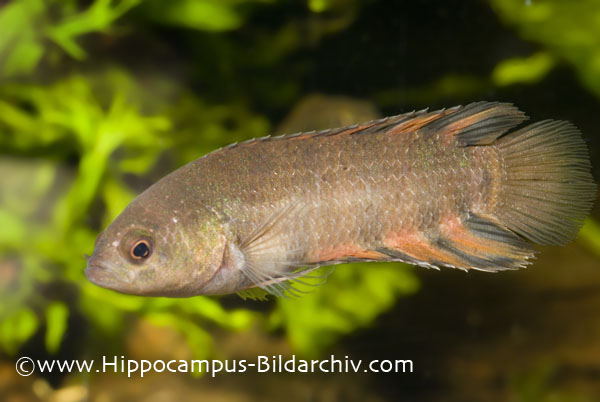
安氏细梳攀鲈(Microctenopoma ansorgii)色彩鲜明,繁殖雄鱼尤其漂亮,但动作缓慢,容易被活跃同伴抢走食物。初入缸适应可能不顺利,稳定后则较强健,适合耐心维护的密植单养缸。
分布与栖息地
原产刚果共和国及刚果民主共和国境内部分刚果河流域。马达加斯加据称存在逸生种群,不属于原生分布。
自然环境为小溪岸边植被密集处,这类位置不易大量采集,也是它在观赏鱼贸易中较少见的原因之一。
饲养环境
可采用长约 76 cm 的缸,密植水草并有充分浮水遮蔽。偏茶色的水环境较合适,泥炭过滤可帮助形成这类条件,但水化学仍需处在适用范围内。温度可选在适温范围较高一端。
缸盖必须严密,它有较强逃逸能力。遮蔽和安静环境也有利于初入缸的适应。
食性与喂食
以小型活饵和冷冻饵为主,干粮通常难以被接受。投喂时观察是否真正吃到,不能只看食物已投进缸中。
习性与混养
缓慢的进食节奏使它不适合与抢食强的鱼竞争。若混养,可考虑温和小型、主要活动在上层或底层的同伴;同种专缸更便于观察和喂养。
雄鱼之间可能攻击,繁殖时尤其明显,不能把艳丽外表当作温和群养的保证。
雌雄区分
雄鱼更大、更鲜艳,背鳍和臀鳍边缘呈白色。
繁殖
有人工繁殖记录,但有一定难度。使用昏暗、密植且浮草丰富的缸,水偏软、偏酸,并用活饵调理。雄鱼在浮草间或宽叶下筑较小、松散的泡巢,泡较大。
雌雄在巢下缠抱产卵,一次可达约 600 粒。卵约 24 小时孵化,幼鱼约 2~3 天后自由游动,宜在孵化后移走亲鱼。鱼苗很小,第一周以草履虫等开口,再转丰年虾无节幼体。
补充说明
稳定适应后在缸中寿命可达约 5 年。颜色表现与健康、稳定环境同样重要,不能因其被归为较耐养鱼而忽略最初适应及抢食问题。
图片
图片来自 SeriouslyFish,版权归各摄影者所有。
English
Overview
Bright Microctenopoma ansorgii can be especially striking in breeding condition, but its slow movements make feeding competition a concern. Initial adjustment may be difficult; settled fish are hardy. A quiet, densely planted dedicated aquarium is well suited to it.
Distribution & habitat
It is native to parts of the Congo basin in the Republic of the Congo and Democratic Republic of the Congo. A feral population is reported tentatively from Madagascar.
Dense bankside vegetation in small streams provides natural shelter. Difficulty collecting large numbers in such habitats contributes to limited aquarium availability.
Aquarium setup
A tank around 76 cm long can be used, with substantial planting and floating cover. Tinted water is preferred; peat filtration can contribute to those conditions while chemistry remains within the established range. Temperatures toward the warmer portion of that range are favored.
Fit a secure lid against escape. Shelter and quiet surroundings also help during acclimation.
Diet & feeding
Offer mainly small live and frozen foods. Dry preparations are seldom accepted. Confirm that fish actually obtain their share rather than assuming that adding food is sufficient.
Behaviour & compatibility
Boisterous feeders are poor companions. If using a community, choose small peaceful fishes mainly occupying upper or lower levels. A species-only aquarium makes observation and feeding easier.
Males may attack one another, particularly during breeding. Colorful appearance does not establish uncomplicated group compatibility.
Sexual dimorphism
Males are larger and more colorful, with white borders on the dorsal and anal fins.
Breeding
Captive reproduction is possible but challenging. Use subdued light, dense plants, ample floating vegetation, and soft acidic conditions within the established range. Condition adults with live food. The male makes a small loose nest of large bubbles among floating growth or beneath a broad leaf.
Spawning embraces occur under the nest, producing as many as about 600 eggs. Hatching takes around 24 hours, with free swimming approximately two or three days later. Remove adults after hatching. Tiny fry need microscopic food during their first week before progressing to Artemia nauplii.
Notes
Settled individuals can live for up to about five years in aquariums. Hardiness after acclimation does not remove the need to manage initial adjustment and food competition.
来源
- https://www.seriouslyfish.com/species/microctenopoma-ansorgii(抓取于 2026-10-10)
microctenopoma-ansorgii · 文件: data/species/microctenopoma-ansorgii.md · 状态: 草稿