斑点银板鱼 · Spotted Metynnis
概要
| 字段 | 值 |
|---|---|
| 类别 | 鱼 |
| 学名 | Metynnis maculatus |
| 别名 | 斑點銀板魚、Myletes maculatus |
| 分类 | 脂鲤目 Characiformes › 锯鲑脂鲤科 Serrasalmidae › Metynnis |
| 水体 | 淡水 |
| 原产地 | 可能主要限于玻利维亚、巴西的马德拉河上游及巴西巴拉圭河上游 |
| 成体体长 | 14.8 cm |
| 饲养难度 | 中等 |
| 最小水体 | 365 L |
| 最小缸长 | 180 cm |
| 群居方式 | 群游 |
| 外部数据 | seriouslyfish metynnis-maculatus;fishbase 11940 |
| 繁殖方式 | 产卵 |
水质参数
| 参数 | 耐受范围 | 最适范围 | 单位 |
|---|---|---|---|
| 水温 | 20–28 | — | °C |
| pH | 5–7.5 | — | — |
| 总硬度 | 1–12 | — | dGH |
概述
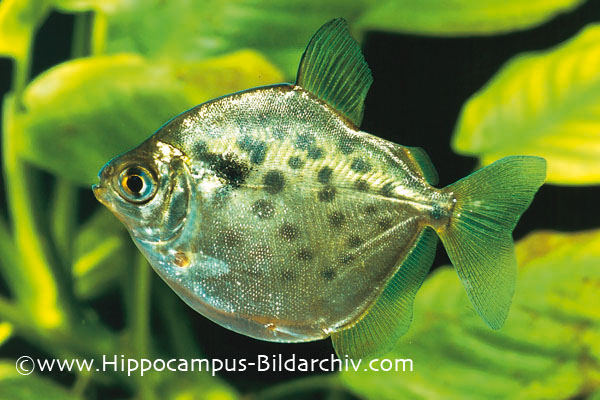
斑点银板鱼(Metynnis maculatus)是需要大群活动空间的银板类,体侧通常有小圆暗斑。它容易与其他银板鱼混淆,少养几条或压缩空间可能让个体变得紧张,甚至出现攻击行为。
分布与栖息地
真实范围尚有疑问,可能主要局限于玻利维亚及巴西西部的马德拉河上游,以及巴西巴拉圭河上游。许多记录来自瓜波雷河一带,不能把所有旧记录都视为已经确认的本种分布。
饲养环境
至少约 180 × 45 cm 底面积,保持足够的开阔游动区。砂底、树根、沉木和圆滑石块可构成自然式布景,水草则很可能被吃掉。
水质和空间比造景复杂程度更重要。不能容忍有机废物堆积,保持适当供氧和水流,每周换水约三至五成。
食性与喂食
同属鱼属于机会性取食者,摄食动物、藻类、果实和植物材料。缸内应以多样化活饵、冷冻饵及优质干饲料配大量蔬食,如去壳豌豆、焯西葫芦、菠菜和切碎水果。大个体也会吃切碎蚯蚓、虾肉及贻贝,注意别喂过量。
习性与混养
通常并不好斗,但只适合足够大的缸和体形相近、较强壮的缸友。野外成大群游动,缸内至少六条;数量不足时,部分个体会受惊或表现出攻击性。
雌雄区分
雄鱼臀鳍前方鳍条延长,使鳍缘中部像有缺口;胸鳍基部上方有暗斑,背鳍可带小暗点,头下方呈橙红色,繁殖状态更明显。雌鱼臀鳍边缘较平直,也缺少这些额外色斑。
繁殖
缸内尚无记录。巴西东南部拉热斯水库的引入种群表现出较长繁殖期,能反复产下小批、细小的卵。这个特定野外种群的观察不能直接变成家庭繁殖流程。
补充说明
体斑有时不明显甚至缺失。鉴别近似种还需看侧中线鳞片数量和腹棱刺等细节,不能仅凭“斑点深浅”确定身份。
图片
图片来自 SeriouslyFish,版权归各摄影者所有。
English
Overview
Metynnis maculatus is a silver dollar that needs room for a substantial group. Small round flank spots are usual, but identification against other silver dollars can be difficult. Inadequate numbers or restricted housing may encourage nervousness or aggression.
Distribution & habitat
Its true range remains uncertain. It is probably concentrated in the upper Madeira of Bolivia and western Brazil and the upper Paraguay in Brazil. Many records come from the Guaporé region. Historical reports from other areas should not all be accepted as confirmed occurrences.
Aquarium setup
Allow a footprint of at least about 180 × 45 cm with ample unobstructed swimming space. Sand, roots, wood, and rounded rocks can create a natural-looking setting. Living plants are very likely to be eaten.
Space and clean water matter more than elaborate decoration. Organic accumulation is poorly tolerated. Maintain adequate oxygen and circulation, with approximately 30–50% water replacement each week.
Diet & feeding
Members of the genus feed opportunistically on animal items, algae, fruits, and plant material. A captive menu should combine varied live and frozen foods, quality dry products, and plenty of vegetables. Shelled peas, blanched zucchini, spinach, and chopped fruit are useful. Larger fish also take chopped earthworms, shrimp flesh, and mussels; avoid excessive feeding.
Behaviour & compatibility
It is not normally aggressive, but requires a large aquarium and robust companions of similar size. Wild fish form large groups. Maintain at least six, as insufficient company can leave individuals skittish or even aggressive.
Sexual dimorphism
Extended front anal-fin rays give males a notched-looking fin outline. They also show a dark mark above the pectoral base, small dorsal spots, and orange-red under the head, especially in breeding condition. Females have a straighter anal-fin edge and lack these additional markings.
Breeding
Aquarium spawning is unrecorded. An introduced population in southeastern Brazil's Lajes reservoir showed a long reproductive season with repeated small batches of tiny eggs. That observation concerns a particular wild population and is not a home-aquarium breeding procedure.
Notes
Body spots can be faint or absent. Reliable separation from similar fishes may require scale counts and details of the abdominal keel rather than simply judging how dark the spots appear.
来源
- https://www.seriouslyfish.com/species/metynnis-maculatus(抓取于 2026-10-10)
metynnis-maculatus · 文件: data/species/metynnis-maculatus.md · 状态: 草稿