施氏银板鱼 · Silver Dollar
概要
| 字段 | 值 |
|---|---|
| 类别 | 鱼 |
| 学名 | Metynnis hypsauchen |
| 别名 | 高身银板鱼、施氏銀板魚、高身銀板魚 |
| 分类 | 脂鲤目 Characiformes › 锯鲑脂鲤科 Serrasalmidae › Metynnis |
| 水体 | 淡水 |
| 成体体长 | 15 cm |
| 饲养难度 | 困难 |
| 最小水体 | 260 L |
| 最小缸长 | 180 cm |
| 群居方式 | 群游 |
| 特征 | 吃小鱼: 是;啃水草: 是 |
| 外部数据 | seriouslyfish metynnis-hypsauchen;fishbase 11937 |
| 原产地 | 圭亚那、巴西、秘鲁和玻利维亚部分水系,包括亚马孙河、巴拉圭河及圭亚那地盾北部河流 |
水质参数
| 参数 | 耐受范围 | 最适范围 | 单位 |
|---|---|---|---|
| 水温 | 24–28 | — | °C |
| pH | 6–7 | — | — |
| 总硬度 | 0–10 | — | dGH |
概述
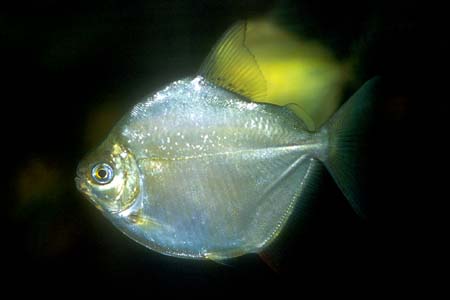
施氏银板鱼(Metynnis hypsauchen)是侧扁、银色的群居鱼,眼睛后上方黑斑可帮助区别近似银板鱼。虽然与食人鱼近缘,饲养中的主要挑战是群体空间、水草被啃和易紧张的性格。
分布与栖息地
分布在圭亚那、巴西、秘鲁、玻利维亚的部分地区,记录涉及亚马孙河、巴拉圭河以及圭亚那地盾北部河流,分布并不连续。栖地为植物密集的支流。
饲养环境
成年群体至少需约 180 × 38 cm 底面积,长度、宽度比增加高度更有用。至少五条一起饲养,弱光和适当遮蔽能减少紧张。
它爱啃水草,即使较耐啃的种类也可能需要替换。可以利用柔软安全的仿真水草形成藏身区,避免把维持精细草景当作可轻易兼顾的目标。
食性与喂食
应有大量蔬食,可用黄瓜、西葫芦、豌豆及绿叶菜,搭配藻片、螺旋藻和植物配方薄片。多数其他水族饲料也能接受,红虫和丰年虾适合作为补充。
习性与混养
银板类通常温和,主要利用中上层空间。体形较大的温和鲶鱼可作为不同水层的候选缸友,但特别小的鱼仍可能被吃。
雌雄区分
雄鱼臀鳍更延长,颜色也较鲜明。
繁殖
银板类的繁殖常以群体进行,应先调养成鱼,并准备足够大的繁殖缸。水质向已有范围内较软、较酸的一端调整,温度可约 28 °C;稍暖的换水有时能刺激繁殖。
雄鱼发情时体色尤其鳍区加深,胸部更红,会追雌、贴身颤动。卵排出受精后沉底,产完移走成鱼便于后续育苗。约三天孵化,吸收卵黄囊后先供微型活饵,长大后转为丰年虾无节幼体和粉饵。一对可能产下约两千粒卵,需事先安排育苗空间。
补充说明
与银板鱼(Metynnis argenteus)在外观及需求上很接近,眼后上方黑斑是实用区别。本种也有条纹型,不应仅凭这一花纹就认定为独立物种。
图片
图片来自 SeriouslyFish,版权归各摄影者所有。
English
Overview
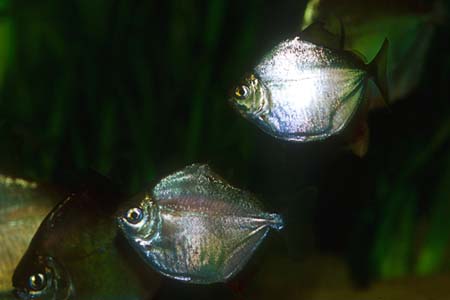
Metynnis hypsauchen is a deep-bodied silver fish whose dark mark above and behind each eye helps distinguish it from similar silver dollars. Although related to piranhas, its practical care challenges include group space, plant damage, and nervous behavior.
Distribution & habitat
It has a discontinuous range in parts of Guyana, Brazil, Peru, and Bolivia. Records include the Amazon, Paraguay, and northern rivers of the Guiana Shield. Densely vegetated tributaries provide habitat.
Aquarium setup
An adult group needs a footprint around 180 × 38 cm or larger. Floor dimensions matter more than additional height. Keep at least five and provide subdued light with sheltered areas to encourage confidence.
Living vegetation is readily eaten, including plants that initially appear durable. Soft, suitable artificial plants can provide cover when repeated replacement of real plants becomes impractical.
Diet & feeding
Offer abundant plant material, including cucumber, zucchini, peas, and greens, alongside algae tablets, spirulina foods, or vegetable flakes. Most other aquarium foods are accepted too, with worms and brine shrimp suitable as supplements.
Behaviour & compatibility
Silver dollars are generally peaceful and use the middle and upper parts of the aquarium. Larger placid catfishes are possible companions for the lower space, while very small fishes may still be eaten.
Sexual dimorphism
The male's anal fin is longer and more brightly colored.
Breeding
Group spawning in silver dollars calls for conditioned adults and a spacious breeding setup. Aim toward the softer, more acidic part of the established range, at about 28 °C. A change using slightly warmer water may stimulate activity.
Males darken, particularly around the fins, and intensify red on the chest before pursuing and trembling beside females. Eggs are released, fertilized, and settle to the bottom. Remove adults after spawning to simplify nursery care. Hatching takes roughly three days. Offer microscopic live food after yolk absorption, progressing to newly hatched brine shrimp and powdered food as growth permits. A pair may produce around two thousand eggs, requiring adequate rearing space.
Notes
It closely resembles Metynnis argenteus in appearance and care. The dark mark behind and above each eye is a useful distinction. A striped form also occurs, but that pattern alone does not establish a separate species.
来源
- https://www.seriouslyfish.com/species/metynnis-hypsauchen(抓取于 2026-10-10)
metynnis-hypsauchen · 文件: data/species/metynnis-hypsauchen.md · 状态: 草稿