佩特勒条鳅
概要
| 字段 | 值 |
|---|---|
| 类别 | 鱼 |
| 学名 | Mesonoemacheilus petrubanarescui |
| 别名 | 佩特勒條鰍、Noemacheilus petrubanarescui、Nemacheilus petrubanarescui |
| 分类 | 鲤形目 Cypriniformes › 条鳅科 Nemacheilidae › Mesonoemacheilus |
| 水体 | 淡水 |
| 原产地 | 印度西高止山脉内特拉瓦蒂河及卡比尼河流域,可能限于这两个水系 |
| 成体体长 | 5 cm |
| 饲养难度 | 中等 |
| 最小水体 | 54 L |
| 最小缸长 | 60 cm |
| 群居方式 | 群游 |
| 性情 | 温和 |
| 水流偏好 | 高 |
| 外部数据 | seriouslyfish mesonoemacheilus-petrubanarescui;fishbase 24588 |
水质参数
| 参数 | 耐受范围 | 最适范围 | 单位 |
|---|---|---|---|
| 水温 | 18–25.5 | — | °C |
| pH | 6–7.5 | — | — |
| 总硬度 | 2–12 | — | dGH |
概述
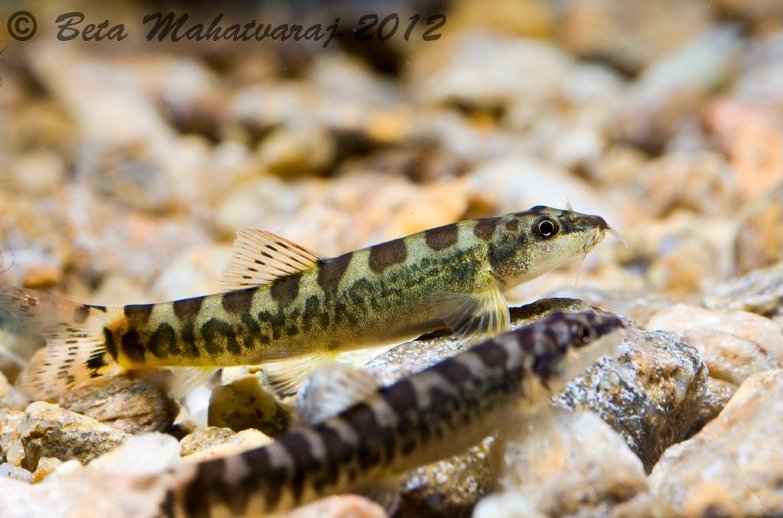
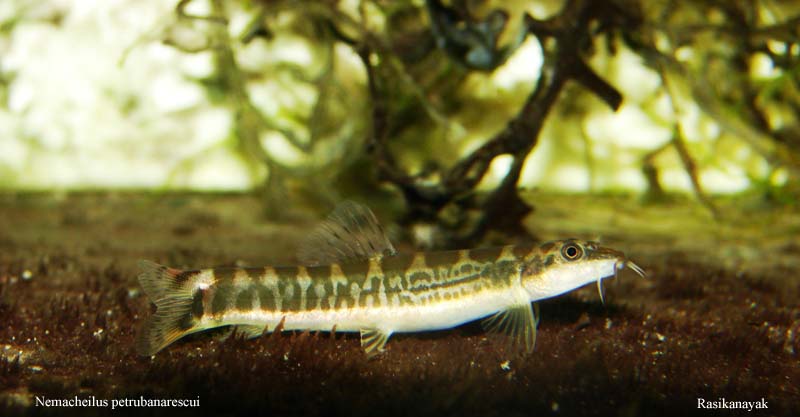
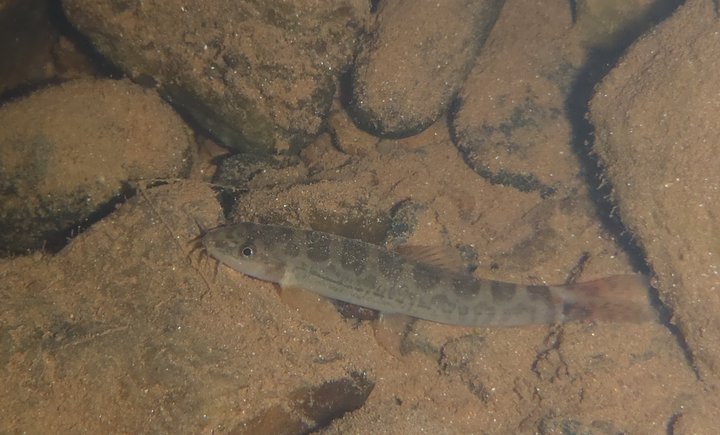
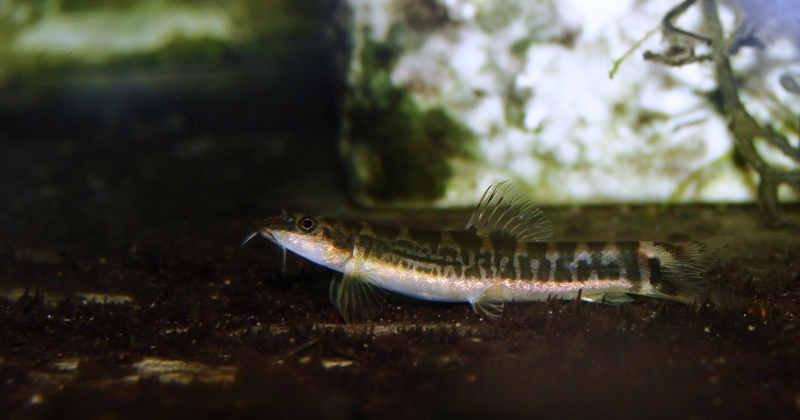
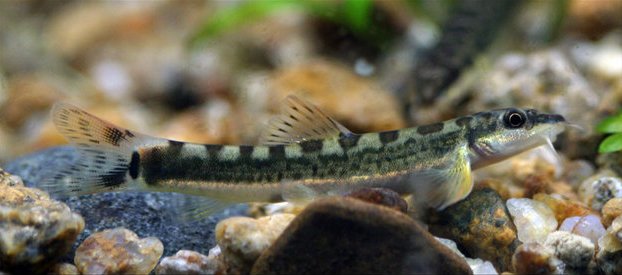
佩特勒条鳅(Mesonoemacheilus petrubanarescui)背部有七至八个深色鞍状斑,体侧带断续横纹。它是一种喜欢遮蔽的山溪鳅,饲养时应把水质、溶氧和躲避空间放在首位,群体比单条更合适。
分布与栖息地
已知分布在印度西高止山脉的内特拉瓦蒂河及卡比尼河流域,可能仅限这两个水系。前者流向阿拉伯海,后者属于向东流的高韦里河水系;是否还分布在高韦里河其他地区尚不明确。
栖息于森林遮阴的清澈源头溪流和小河,水中溶氧高,底部有粗砂、砾石、岩块和附着微生物。多数地点水草不多,雨季水流和浑浊度变化明显。
饲养环境
底面积约 60 × 30 cm 起步,砂砾与大小圆石组合,加入枝木形成隐蔽缝隙、阴影和视线屏障。耐受种类的水草可附着在硬景上。需要充足溶氧和适当水流,无须猛烈激流;每周换水约三至五成,避免有机污染积累。
食性与喂食
同属鱼为杂食,以小昆虫、蠕虫、甲壳类和其他浮游动物为主,植物成分相对少。缸内可接受适口干饲料,但应每天轮换提供水蚤、丰年虾、红虫等活饵或冷冻饵。
习性与混养
同类相处通常较平和,建议至少四条。与适应相似环境、游在开阔水域的小型鱼同养,可以帮助这种隐蔽型鳅安心活动。
可考虑强健的喜流鱼,避免娇弱种类、太安静的底栖鱼,以及体形相近的其他条鳅;混合近似鳅类需要更大的空间,仍须观察冲突。
雌雄区分
雌鱼可能略大,抱卵时腹部较圆,不能只凭平时体形就确信性别。
补充说明
侧线不完整、止于臀鳍起点上方,背部鞍斑及前窄后宽的断续体纹可辅助辨识。是否正式进入印度以外贸易尚不明确,偶尔可能混在近似种运输批次中。
图片
图片来自 SeriouslyFish,版权归各摄影者所有。
English
Overview
Mesonoemacheilus petrubanarescui is a retiring stream loach with seven or eight dark saddles across the back and broken bars along its sides. Oxygenation, water quality, and plentiful shelter are more important than elaborate planting, and company of its own kind is beneficial.
Distribution & habitat
Known localities lie in the Netravati and Kabini basins of India's Western Ghats; the species may be restricted to these two drainages. The Netravati flows west to the Arabian Sea, whereas the Kabini belongs to the eastward-flowing Cauvery system. Occurrence elsewhere in the Cauvery remains uncertain.
Habitats are clear, oxygenated headwaters and small rivers shaded by forest. Coarse sand, gravel, and rocks support attached microorganisms. Aquatic plants are often scarce, and seasonal rains alter both flow and turbidity.
Aquarium setup
Start with a footprint around 60 × 30 cm. Combine sand and gravel with rounded rocks and wood, creating crevices, shade, and barriers between lines of sight. Hardy plants can be attached to the structure. Provide high oxygen levels and some circulation without a constant torrent. Weekly changes of roughly 30–50 percent help prevent organic pollution.
Diet & feeding
Members of the genus are omnivorous, consuming mostly small insects, worms, crustaceans, and other zooplankton, with less plant matter. Offer suitable dry foods alongside daily small live or frozen meals such as water fleas, brine shrimp, and bloodworms.
Behaviour & compatibility
Groups of at least four are recommended, since individuals are generally peaceful toward their own species. Small open-water fishes with matching habitat requirements can encourage this secretive loach to emerge.
Robust current-loving fishes are possibilities. Avoid delicate species, overly placid bottom dwellers, and similarly shaped loaches. Mixing close lookalikes requires more space and careful observation.
Sexual dimorphism
Females may be slightly larger and become rounder when carrying eggs; ordinary body shape is not a definitive guide.
Notes
The incomplete lateral line ends above the anal fin origin. Dark dorsal saddles and broken flank bars that narrow toward the front provide further identification clues. Its history in trade outside India is unclear, though it may occur in mixed shipments.
来源
ID:mesonoemacheilus-petrubanarescui · 文件: data/species/mesonoemacheilus-petrubanarescui.md · 状态: 草稿