花边中丽鱼 · Flag Cichlid
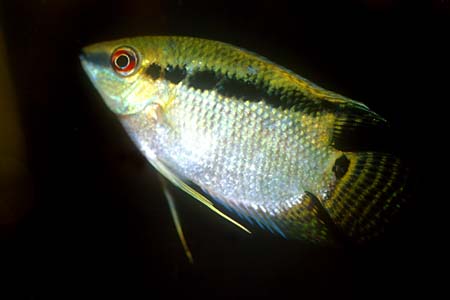
概要
| 字段 | 值 |
|---|---|
| 类别 | 鱼 |
| 学名 | Mesonauta festivus |
| 别名 | 花邊中麗魚 |
| 分类 | 慈鲷目 Cichliformes › 慈鲷科 Cichlidae › Mesonauta |
| 水体 | 淡水 |
| 原产地 | 玻利维亚、巴西、巴拉圭、秘鲁 |
| 成体体长 | 10 cm |
| 最小水体 | 137 L |
| 最小缸长 | 120 cm |
| 外部数据 | seriouslyfish mesonauta-festivus;fishbase 11140 |
| 食性 | 杂食 |
| 性情 | 温和 |
| 繁殖方式 | 附着产卵 |
水质参数
| 参数 | 耐受范围 | 最适范围 | 单位 |
|---|---|---|---|
| pH | 6–8 | — | — |
| 总硬度 | 0–5 | — | dGH |
概述
花边中丽鱼(Mesonauta festivus)是较温和的南美慈鲷,适合水草和遮蔽物丰富的环境,但繁殖时会增强防卫。贸易中的旗帜慈鲷名称经常包含近似种,不能只靠通用商品名判断所买的鱼就是本种。
分布与栖息地
在秘鲁、巴西、玻利维亚及巴拉圭有记录,涉及亚马孙及巴拉圭—巴拉那等多个流域。通常出现在植被茂密、水流较缓的地点。
饲养环境
使用密植水草、沉木和枝条,底床以砂质为宜,照明不要太强,水流保持适度。计划繁殖时,应选择安静的位置,减少亲鱼受到突然惊扰。
食性与喂食
自然食性为杂食,摄食蠕虫、甲壳类、植物材料及其他底栖小动物。通常接受大多数人工饲料,再搭配红虫、丰年虾等活饵以及植物性食物,维持多样化。
习性与混养
可与性情温和、需求相符的慈鲷及其他温和鱼共养,例如合适的小型脂鲤、鲤科鱼和鲶类。繁殖时的攻击性会增强,不能把平时和平的表现当作整个育幼阶段的保证。
雌雄区分
雄鱼一般较大,背鳍和臀鳍有较长延伸。
繁殖
鱼对先准备平石或类似产卵表面,雌鱼排卵、雄鱼受精,一窝可超过二百粒。双方守卵,约两三天孵化后将幼鱼转移至坑中,再过三四天开始自由游动。双亲继续照顾,但受惊时可能吃掉幼鱼,因此繁殖缸应安静且尽量少打扰。开口可用丰年虾无节幼体和粉状鱼苗粮,随后逐渐增大食物规格。
补充说明
市面上以本种名称出售的鱼,常实际是粗中丽鱼(Mesonauta insignis)。两种外观接近,饲养和繁殖记录应保留鉴定的不确定性。
图片
图片来自 SeriouslyFish,版权归各摄影者所有。
English
Overview
The generally peaceful Mesonauta festivus suits a planted aquarium with ample cover, although defense intensifies during breeding. The commercial label “flag cichlid” is applied to similar species and does not by itself confirm identity.
Distribution & habitat
Records span Peru, Brazil, Bolivia, and Paraguay across several drainages, including Amazonian rivers and the Paraguay–Paraná system. Vegetated, slow-moving habitats are typical.
Aquarium setup
Combine substantial planting with roots and branches over sand. Use moderate circulation and avoid excessively bright light. A breeding aquarium should stand in a quiet position with little disturbance.
Diet & feeding
This natural omnivore eats worms, crustaceans, plant material, and other small bottom animals. Most prepared foods are accepted. Supplement them with live foods such as bloodworms and Artemia, together with vegetable material.
Behaviour & compatibility
Peaceful cichlids and compatible small characins, cyprinids, or catfishes are possible companions. Increased defense during spawning means an otherwise calm community may not remain equally calm during brood care.
Sexual dimorphism
Males are generally larger and have more extended dorsal and anal fins.
Breeding
A pair prepares a flat stone or similar surface before laying and fertilizing more than two hundred eggs in some broods. Both guard them. Hatching takes around two to three days, after which young are moved to a pit for another three or four days before free swimming. Both adults provide care but can eat the brood when frightened. Keep disturbance low. Newly swimming fry take Artemia nauplii and powdered fry foods before progressing to larger items.
Notes
Fish sold under this name are often the similar Mesonauta insignis. Preserve identification uncertainty in husbandry and breeding records when origin is unclear.
来源
- https://www.seriouslyfish.com/species/mesonauta-festivus(抓取于 2026-10-10)
mesonauta-festivus · 文件: data/species/mesonauta-festivus.md · 状态: 草稿