三带虹银汉鱼 · Banded Rainbowfish
概要
| 字段 | 值 |
|---|---|
| 类别 | 鱼 |
| 学名 | Melanotaenia trifasciata |
| 别名 | 三帶虹銀漢魚 |
| 分类 | 银汉鱼目 Atheriniformes › 黑带银汉鱼科 Melanotaeniidae › Melanotaenia |
| 水体 | 淡水 |
| 成体体长 | 15 cm |
| 饲养难度 | 入门 |
| 最小水体 | 108 L |
| 最小缸长 | 120 cm |
| 群居方式 | 群游 |
| 性情 | 温和 |
| 外部数据 | seriouslyfish melanotaenia-trifasciata;fishbase 22717 |
| 原产地 | 澳大利亚 |
| 繁殖方式 | 散卵 |
水质参数
| 参数 | 耐受范围 | 最适范围 | 单位 |
|---|---|---|---|
| 水温 | 24–33 | — | °C |
| pH | 6.5–8 | — | — |
| 总硬度 | 8–20 | — | dGH |
概述
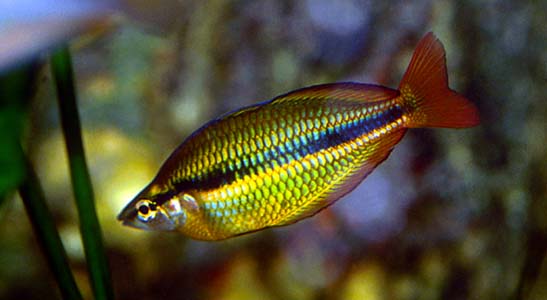
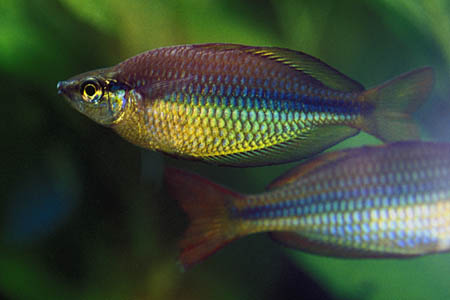
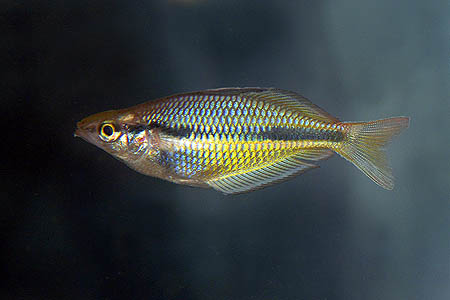
三带虹银汉鱼(Melanotaenia trifasciata)是体形较大、游动活跃的温和彩虹鱼。不同产地型的颜色和花纹差异很大,饲养繁殖应保留产地信息并分开维持,幼鱼也可能要一年以上才充分发色。
分布与栖息地
分布于澳大利亚,最常见于流动的溪流和支流,也利用沼泽、潟湖、湖泊及河道。多数栖地的温度、水位及泥沙状况会随季节变化,鱼常在植物、沉木等掩护附近活动。
饲养环境
底面积至少约 120 × 30 cm,局部密植水草,留下宽阔泳道。水流可缓至中等,布置时兼顾水草需要。自然水温的季节跨度不代表应让鱼缸频繁大幅波动;水质通常以略偏碱的一侧较合适。
食性与喂食
多数干饲料、活饵和冷冻饵均可接受,规律提供适口活饵有利于良好体色。
习性与混养
性情温和,但体形与快速游动可能扰动小鱼和慢游鱼。选择大小相近、温和且水质适配的缸友,至少六至八条同种一起养,更多个体应配更大空间。
不同产地型容易相互杂交,应分开群养和繁殖,不能只按共同学名合群。
雌雄区分
成熟雄鱼一般更大、更鲜艳,背鳍和臀鳍更长,体高也明显增加。但昆士兰帕斯科河、克劳迪河和麦基沃河的种群不形成典型高背,不能只依赖这一项判断。
繁殖
属于散卵型,产卵相对容易,育苗更费心。亲鱼先群体调养,再选状态好的一对,提供细叶水草或产卵拖把与温和气动过滤。水宜略硬、偏碱,繁殖温度约 26.5–29 °C,底砂非必需。
少量卵可连续数周每天产出,并以细丝附着。虽然成鱼通常不积极吃卵,仍可定期收卵至水质相同的育苗缸。约七至十二天孵化,初期用微型饵开口,一周左右逐步增加丰年虾无节幼体等游动小饵。鱼苗近水面活动,沉底食物不合适。
补充说明
贸易中常用产地名区分不同型。某些差异可能涉及物种边界,但尚不能把预期的分类调整当作既成事实。
图片
图片来自 SeriouslyFish,版权归各摄影者所有。
English
Overview
Melanotaenia trifasciata is a substantial, active rainbowfish with a peaceful disposition. Geographic forms can differ strongly in color and pattern, so locality information and separate breeding groups matter. Juveniles may take more than a year to reach full color.
Distribution & habitat
It occurs in Australia, especially in flowing streams and tributaries, but also in swamps, lagoons, lakes, and rivers. Seasonal changes affect temperature, depth, and suspended sediment in many habitats. Fish commonly remain near vegetation, submerged wood, or other cover.
Aquarium setup
Use a base around 120 × 30 cm or larger, with dense planted patches and broad swimming lanes. Slow to moderate circulation is suitable, adjusted to the planting. Natural seasonal temperature variation should not be interpreted as a need for repeated large aquarium fluctuations. Slightly alkaline water is commonly associated with its habitats.
Diet & feeding
Most dry, live, and frozen foods are readily accepted. Regular suitable live offerings help maintain good color.
Behaviour & compatibility
Its rapid movement and size can disturb small or slow fishes despite its peaceful nature. Select similarly sized placid companions with compatible requirements. Keep at least six to eight conspecifics, increasing accommodation for larger groups.
Geographic forms interbreed readily and should be maintained separately rather than combined under their shared scientific name.
Sexual dimorphism
Males generally become larger and brighter, with longer dorsal and anal fins and a deeper body. Populations from the Pascoe, Claudie, and McIvor rivers in Queensland do not develop the usual deep-backed outline, so that feature alone is unreliable.
Breeding
This egg scatterer breeds comparatively readily, while fry care requires more attention. Condition adults together before selecting a strong pair. Fine plants or mops provide egg sites in a gently filtered setup without an essential need for substrate. Slightly hard, alkaline water around 26.5–29 °C is suitable for breeding.
Daily batches may continue for weeks, with eggs attached by fine threads. Adults generally do not target them, but regular collection into matching water simplifies rearing. Hatching takes approximately seven to twelve days. Offer microscopic foods initially, then small swimming prey after about a week. Early fry stay near the surface, making sinking food unsuitable.
Notes
Locality names are often used to distinguish forms in trade. Some differences may reflect unresolved species boundaries, but anticipated taxonomic changes should not be presented as completed revisions.
来源
- https://www.seriouslyfish.com/species/melanotaenia-trifasciata(抓取于 2026-10-10)
melanotaenia-trifasciata · 文件: data/species/melanotaenia-trifasciata.md · 状态: 草稿