麦氏虹银汉鱼 · Dwarf Rainbowfish
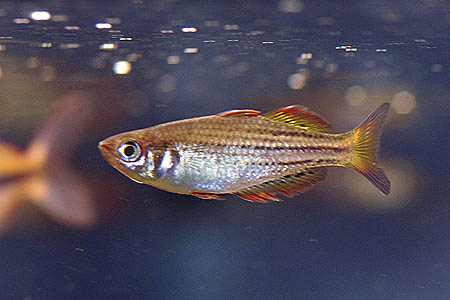
概要
| 字段 | 值 |
|---|---|
| 类别 | 鱼 |
| 学名 | Melanotaenia maccullochi |
| 别名 | 麦氏点鳍鱼、麥氏虹銀漢魚、麥氏點鰭魚 |
| 分类 | 银汉鱼目 Atheriniformes › 黑带银汉鱼科 Melanotaeniidae › Melanotaenia |
| 水体 | 淡水 |
| 成体体长 | 7 cm |
| 饲养难度 | 入门 |
| 最小水体 | 54 L |
| 最小缸长 | 60 cm |
| 群居方式 | 群游 |
| 性情 | 温和 |
| 外部数据 | seriouslyfish melanotaenia-maccullochi;fishbase 11306 |
| 原产地 | 巴布亚新几内亚、澳大利亚 |
| 食性 | 杂食 |
| 繁殖方式 | 散卵 |
水质参数
| 参数 | 耐受范围 | 最适范围 | 单位 |
|---|---|---|---|
| 水温 | 20–30 | — | °C |
| pH | 5.5–8 | — | — |
| 总硬度 | 8–15 | — | dGH |
概述
麦氏虹银汉鱼(Melanotaenia maccullochi)体形较小、温和,适合有足够同伴的水草缸。不同产地型的颜色、花纹甚至体形有差异,应保留来源信息,避免混养繁殖造成杂交。
分布与栖息地
分布于巴布亚新几内亚和澳大利亚。栖地跨度很大,从清澈流动的溪水到静止、浑浊且带单宁染色的池塘都有。常聚集在水草、沉木和枝条附近,各产地水质也不相同。
饲养环境
底面积至少约 60 × 30 cm,可密植水草,但应在草丛间留下泳道及雄鱼展示空间。保持缓和水流,并每周部分换水维持高水质。
整体适应范围较宽,不等于每一产地型都适合范围内的所有条件,安排水质时应考虑个体来源。
食性与喂食
属于杂食鱼,可接受多数干饲料、冷冻饵和活饵,规律提供适口活饵有利于体色。
习性与混养
温和且体形不大,可考虑与水质适配、大小相仿的温和鱼混养。至少六至八条同种成群,更多同伴需要配套空间;单薄的小群容易紧张。
不同产地型应分开饲养和繁殖,不能因同用一个学名就随意混群。
雌雄区分
雄鱼颜色更鲜明,背鳍和臀鳍更长;本种雌鱼反而体形更高深,不宜套用其他彩虹鱼常见的雄鱼高背判断。
繁殖
散卵相对容易,鱼苗初期养成较难。先群养调养,再选一对体况好的亲鱼,以细叶水草或产卵拖把收卵,配合温和气动过滤。繁殖水宜略硬、偏碱,约 26.5–29 °C;可不铺底砂。
亲鱼可连续数周每天产少量带附着丝的卵。虽然通常不积极吃卵,将卵定期转入水质相同的育苗缸更便于管理。卵约七至十二天孵化,先喂微型饵,一周左右改加丰年虾无节幼体等游动小饵。鱼苗近水面活动,沉底食物并不合适。
补充说明
部分产地型差别很明显,可能涉及尚待厘清的物种边界;这仍是可能性,不代表已经完成分类调整。
图片
图片来自 SeriouslyFish,版权归各摄影者所有。
English
Overview
The small, peaceful Melanotaenia maccullochi suits a planted aquarium with a proper social group. Geographic forms differ in color, pattern, and occasionally size. Their origins should be tracked and breeding lines kept separate to avoid hybridization.
Distribution & habitat
It occurs in Papua New Guinea and Australia. Habitats range from clear running streams to still, turbid ponds stained by tannins. Fish gather around plants, submerged logs, and branches, with substantial differences in water chemistry between locations.
Aquarium setup
A footprint around 60 × 30 cm is the starting point. Dense plants should leave open corridors for swimming and displaying. Gentle circulation and weekly partial water changes help maintain the high water quality it needs.
The broad overall range of suitable conditions should not be read as proof that every geographic population has identical preferences. Consider origin when selecting water conditions.
Diet & feeding
This omnivore accepts most dry, frozen, and live foods. Regular suitable live prey helps maintain vivid coloration.
Behaviour & compatibility
Its peaceful nature and modest size allow a range of similarly sized, placid companions with matching needs. Keep at least six to eight conspecifics, with more where space allows, to reduce nervousness and encourage displays.
Separate geographic forms for both maintenance and breeding rather than mixing them simply because they share a scientific name.
Sexual dimorphism
Males have brighter color and longer dorsal and anal fins. Females are deeper-bodied, so the familiar deep-backed male pattern of some other rainbowfishes should not be applied here.
Breeding
Spawning is relatively straightforward, while early fry care is more demanding. Condition adults together, then select a strong pair. Use fine plants or mops with gentle air-driven filtration in slightly hard, alkaline water around 26.5–29 °C. Substrate is unnecessary.
Small daily batches may be deposited for weeks, attaching by threads. Adults generally do not seek out eggs, but transferring them regularly into matching water simplifies rearing. Hatching takes approximately seven to twelve days. Begin with microscopic foods and add small swimming prey after about a week. Fry remain near the surface, so sinking food is unsuitable initially.
Notes
Some geographic forms differ enough to raise questions about species boundaries. Those possibilities should not be treated as completed taxonomic changes.
来源
- https://www.seriouslyfish.com/species/melanotaenia-maccullochi(抓取于 2026-10-10)
melanotaenia-maccullochi · 文件: data/species/melanotaenia-maccullochi.md · 状态: 草稿