贝氏虹银汉鱼 · Boeseman's rainbowfish
概要
| 字段 | 值 |
|---|---|
| 类别 | 鱼 |
| 学名 | Melanotaenia boesemani |
| 别名 | 貝氏虹銀漢魚 |
| 分类 | 银汉鱼目 Atheriniformes › 黑带银汉鱼科 Melanotaeniidae › Melanotaenia |
| 水体 | 淡水 |
| 成体体长 | 11 cm |
| 饲养难度 | 中等 |
| 最小水体 | 108 L |
| 最小缸长 | 120 cm |
| 群居方式 | 群游 |
| 性情 | 温和 |
| 外部数据 | seriouslyfish melanotaenia-boesemani;fishbase 10489 |
| 原产地 | 印度尼西亚新几内亚岛西部阿亚马鲁湖群及附近海恩湖、艾廷乔湖 |
| 繁殖方式 | 散卵 |
水质参数
| 参数 | 耐受范围 | 最适范围 | 单位 |
|---|---|---|---|
| 水温 | 27–30 | — | °C |
| pH | 7–8 | — | — |
| 总硬度 | 10–20 | — | dGH |
概述
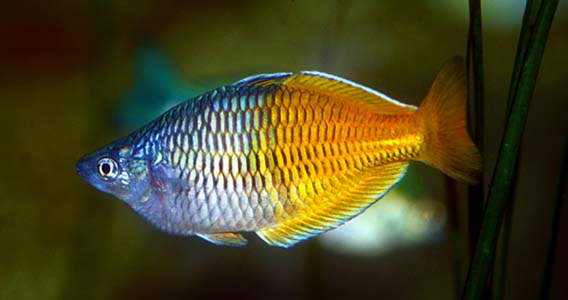
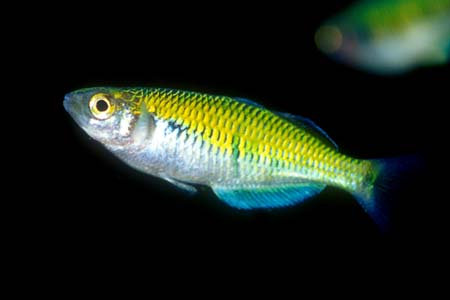
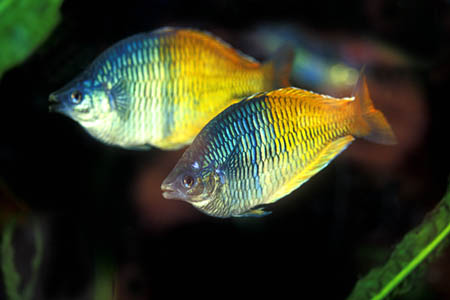
贝氏虹银汉鱼(Melanotaenia boesemani)是颜色独特的彩虹鱼,成熟雄鱼发色亮丽,市售幼鱼却常很朴素。达到完整成鱼颜色可能需要一年以上,群体、饮食和水质比短期追求发色更重要。
分布与栖息地
来自印度尼西亚新几内亚岛西部阿亚马鲁湖群及附近海恩湖、艾廷乔湖,原生范围很有限。常在清澈湖岸浅水和浓密水草中聚集;湖体多为硬、碱性水,周围一些支流的水化学却有明显差异。
饲养环境
底面积至少约 120 × 30 cm,密植区与开阔泳道并存。水草也应适合偏硬、偏碱条件。高效过滤和认真维护有助于雄鱼保持良好发色,不宜按软酸水鱼管理。
食性与喂食
可接受多数干饲料、冷冻饵及活饵,适口活饵作为常规菜单的一部分,有助于保持色泽。
习性与混养
至少六至八条,更大的群体需要相应空间。它很温和,却可能以较大的体形和快速泳姿扰动小型、慢游鱼,宜选择体形及水质需求相近的平和缸友。
雌雄区分
成熟雄鱼更大、更鲜艳,随成熟背部和身体高度明显增加。
繁殖
为散卵型,产卵相对容易,育苗更需细心。调养群体后选状态良好的亲鱼配对,繁殖缸设细叶植物或产卵拖把,并用气动过滤。略硬、偏碱水适合,轻微升温有时能促使求偶。
可连续数周每天产少量附着卵。成鱼通常不积极吃卵,但转移到水质相同的育苗容器更便于管理。卵约七至十二天孵化,先喂微型饵,一周左右渐转为丰年虾无节幼体等。鱼苗靠近水面,沉底饲料难以利用。
补充说明
人工商业繁殖鱼很普遍,野外种群却曾因大量采集繁殖亲本而受影响。不能从市场供应充足推断原生种群也繁盛,关于当前数量和保护等级不宜仅凭旧贸易印象判断。
图片
图片来自 SeriouslyFish,版权归各摄影者所有。
English
Overview
Melanotaenia boesemani is a distinctively patterned rainbowfish whose mature males can be brilliant while shop juveniles appear plain. Full adult color may take more than a year. Group housing, varied feeding, and water quality matter more than expecting immediate displays.
Distribution & habitat
Its restricted native range includes the Ajamaru lakes and nearby Hain and Aitinjo in western Indonesian New Guinea. Groups gather in clear, densely planted lake shallows. Lake water is generally hard and alkaline, although neighboring tributaries can differ substantially in chemistry.
Aquarium setup
Provide a footprint around 120 × 30 cm or more, combining planted shelter with open lanes. Plants should tolerate relatively hard, alkaline conditions. Efficient filtration and consistent maintenance support male coloration. Soft, acidic husbandry is inappropriate.
Diet & feeding
Most dry, frozen, and live foods are accepted. Suitable live offerings as part of a varied menu help maintain color.
Behaviour & compatibility
Keep at least six to eight, increasing space for larger groups. It is very peaceful, but size and rapid movement can unsettle small or slow fishes. Favor placid companions with comparable size and water requirements.
Sexual dimorphism
Mature males are larger and brighter, developing a considerably deeper body as they grow.
Breeding
It is an egg scatterer that spawns comparatively readily, while fry care is more demanding. Condition adults together, then select a good pair for a setup with fine plants or spawning mops and gentle air-driven filtration. Slightly hard, alkaline water is appropriate; a modest temperature increase may stimulate courtship.
Attached eggs can be deposited daily over several weeks. Adults do not usually target them, but transfer into matching water simplifies rearing. Hatching takes around seven to twelve days. Begin with microscopic foods, progressing toward brine-shrimp nauplii after approximately a week. Fry remain near the surface and cannot make good use of sinking diets.
Notes
Commercially produced fish are widespread, while collection of breeding adults has historically affected native populations. Abundant aquarium supply should not be interpreted as evidence of abundant wild stock.
来源
- https://www.seriouslyfish.com/species/melanotaenia-boesemani(抓取于 2026-10-10)
melanotaenia-boesemani · 文件: data/species/melanotaenia-boesemani.md · 状态: 草稿