奇普黑丽鱼
概要
| 字段 | 值 |
|---|---|
| 类别 | 鱼 |
| 学名 | Melanochromis chipokae |
| 别名 | 奇普黑麗魚 |
| 分类 | 慈鲷目 Cichliformes › 慈鲷科 Cichlidae › Melanochromis |
| 水体 | 淡水 |
| 成体体长 | 12 cm |
| 饲养难度 | 中等 |
| 最小水体 | 205 L |
| 最小缸长 | 120 cm |
| 外部数据 | seriouslyfish melanochromis-chipokae;fishbase 2344 |
| 原产地 | 马拉维湖西南部 Chipoka 岛附近 Chindunga 礁 |
| 食性 | 杂食 |
| 特征 | 吃小鱼: 是 |
| 性情 | 攻击性 |
| 领地性 | 是 |
| 繁殖方式 | 口孵 |
水质参数
| 参数 | 耐受范围 | 最适范围 | 单位 |
|---|---|---|---|
| 水温 | 24–28 | — | °C |
| pH | 7.6–8.8 | — | — |
| 总硬度 | 10–25 | — | dGH |
概述
奇普黑丽鱼(Melanochromis chipokae)是攻击性非常强的马湖慈鲷,优势雄鱼常会控制整缸。它会捕食其他鱼的幼鱼,也摄取甲壳动物和藻类;黄色雌鱼及幼雄鱼容易被误认,不能按幼时颜色温和就放心购买。
分布与栖息地
本种为马拉维湖特有鱼,仅见于西南部 Chipoka 岛附近的 Chindunga Rocks 礁区。常在沙底、散布岩石的过渡区域活动。
饲养环境
至少约 120 × 45 × 38 厘米只是最低参考,更大空间更利于处理冲突。岩堆要形成大量洞穴与退避点,中间留小片开阔区域,沙底适合,水需充分供氧。雌鱼也需要能脱离雄鱼视线的藏身处。
食性与喂食
食物范围包括鱼苗、甲壳动物和藻类。人工饲养可用活饵、冻饵和优质干粮混合,补充螺旋藻薄片、烫菠菜等植物性食物,保持多样而不是只喂一种肉食。
习性与混养
不宜与温和孔雀类、Utaka 或较安静岩栖鱼组合。只有体型相近、强健且花纹不相似的岩栖鱼才有尝试余地;即使最后加入群体,也仍可能变成过度优势鱼。较密群养有时用于分散冲突,却不能代替空间和过滤。
同种间攻击很强,多雄即使在大缸也可能杀死弱势者。一雄配多雌可分散追逐,但小缸里雌鱼仍可能被骚扰致死。它不适合初养者,也不宜与其他黑丽鱼属混繁,以免杂交。
雌雄区分
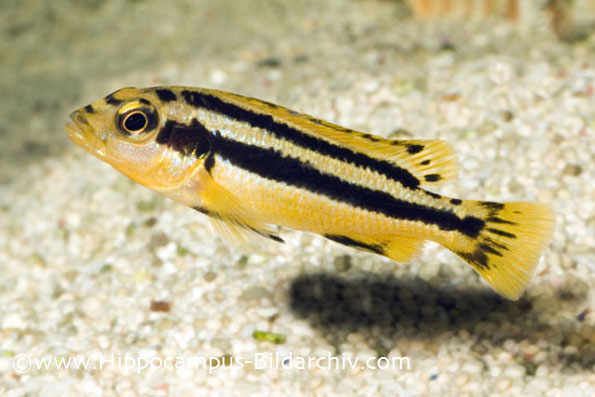
成熟雄鱼更大,呈黑蓝色;雌鱼、幼鱼和弱势雄鱼偏金黄色。
繁殖
由雌鱼口孵,难点是暴烈的个体关系。建议专缸一雄至少三雌,约 120 厘米长或更大,准备平石、沙面及大量洞穴。繁殖参考 pH 8.2~8.5、25~26.5 °C。
雄鱼清理地点并展示追求,雌鱼产卵后含入口中,再被雄鱼臀鳍卵斑吸引而接受精液。每窝约 20~40 枚,雌鱼含卵约三周,期间不进食。受惊搬动可能造成提前吐卵或吞卵,离群太久也可能影响等级位置;除非被骚扰,应减少不必要移动。释出的仔鱼可吃丰年虾无节幼体。
补充说明
与纵带黑丽鱼(Melanochromis auratus)相比,本种嘴更尖,尾鳍条纹覆盖整片尾鳍,而前者约只覆盖一半。市场有时以 Melanochromis loriae 名义出售,但后者是相似的另一种,并非可直接互换的异名。
图片
图片来自 SeriouslyFish,版权归各摄影者所有。
English
Overview
Melanochromis chipokae is an exceptionally aggressive Malawi cichlid whose dominant male may control the entire aquarium. It eats other fishes' fry as well as crustaceans and algae. Golden females and young males are easily confused with related fishes, so juvenile appearance should not obscure its adult behavior.
Distribution & habitat
Endemic to Lake Malawi, it is restricted to Chindunga Rocks near Chipoka Island in the southwest. It commonly uses transitional areas of sand and scattered rocks around the reef.
Aquarium setup
Approximately 120 × 45 × 38 cm is only a minimum reference; greater space is preferable for managing conflict. Extensive rockwork should supply many retreats, with small open areas between. Sand and strong oxygenation are appropriate. Females need places that break the male's line of sight.
Diet & feeding
Natural foods include fry, crustaceans and algae. Offer a varied combination of live, frozen and quality dry foods, supplemented with spirulina flakes, blanched spinach or similar plant ingredients.
Behaviour & compatibility
Exclude peaceful peacocks, utaka and quieter mbuna. Only similarly sized robust mbuna with different patterns offer plausible community options. Adding this fish last may lessen immediate dominance, but does not prevent it from becoming overbearing. Denser communities sometimes disperse aggression, yet cannot replace adequate space and filtration.
Conspecific aggression is extreme. Multiple males may result in subordinate deaths even in a large tank. Several females per male distribute pursuit, but females can still be harassed to death in small quarters. This is not a beginner species, and other Melanochromis should be excluded to avoid hybridization.
Sexual dimorphism
Mature males are larger and black-and-blue; females, juveniles and subordinate males remain golden.
Breeding
Females mouthbrood, with violent pair interactions the main obstacle. Use a dedicated aquarium around 120 cm long or larger for one male and at least three females, providing flat stones, sand and many retreats. Approximately pH 8.2–8.5 and 25–26.5 °C are breeding references.
The male prepares a site and courts. The female collects eggs immediately after laying and receives sperm while responding to his anal-fin egg spots. A brood contains approximately 20–40 eggs and is held for about three weeks without feeding. Stressful moves can cause premature release or consumption; prolonged absence also affects social rank. Limit unnecessary relocation unless harassment demands it. Released fry take brine-shrimp nauplii.
Notes
Compared with Melanochromis auratus, this fish has a more pointed mouth and striping across the entire tail fin rather than approximately half. The trade name Melanochromis loriae is sometimes misapplied, but that name belongs to a similar distinct species, not an interchangeable synonym.
来源
- https://www.seriouslyfish.com/species/melanochromis-chipokae(抓取于 2026-10-10)
melanochromis-chipokae · 文件: data/species/melanochromis-chipokae.md · 状态: 草稿