纵带黑丽鱼 · Golden Mbuna
概要
| 字段 | 值 |
|---|---|
| 类别 | 鱼 |
| 学名 | Melanochromis auratus |
| 别名 | 金拟丽鱼、縱帶黑麗魚、金擬麗魚 |
| 分类 | 慈鲷目 Cichliformes › 慈鲷科 Cichlidae › Melanochromis |
| 水体 | 淡水 |
| 成体体长 | 11 cm |
| 饲养难度 | 中等 |
| 最小水体 | 205 L |
| 最小缸长 | 120 cm |
| 领地性 | 是 |
| 外部数据 | seriouslyfish melanochromis-auratus;fishbase 2343 |
| 原产地 | 马拉维湖西岸、南端及东岸南部 |
| 性情 | 攻击性 |
| 繁殖方式 | 口孵 |
水质参数
| 参数 | 耐受范围 | 最适范围 | 单位 |
|---|---|---|---|
| 水温 | 24–28 | — | °C |
| pH | 7.6–8.8 | — | — |
| 总硬度 | 10–25 | — | dGH |
概述
纵带黑丽鱼(Melanochromis auratus)虽常见于市场,却是攻击性和领地性都很强的马湖岩栖鱼,不适合初养者。金黄色幼鱼和雌鱼与深色成年雄鱼外观差异很大,购买时不能只凭颜色判断群体组成。
分布与栖息地
本种为马拉维湖特有鱼,主要分布沿西岸 Jalo Reef 至 Crocodile Rocks,再经南端延伸到东岸南部 Nkhomo Reef。栖息于湖岸、礁区和岛屿周围的岩石环境。
饲养环境
至少需要约 120 × 45 × 38 厘米的缸,这只是应对强攻击性的起点。以大量岩堆构成洞穴,中间保留少量开阔空间,沙底较适合,并保证充分供氧。多雄需要远大于此的空间,且仍可能有弱势雄鱼死亡。
食性与喂食
多数食物都会接受,但螺旋藻薄片、烫菠菜等植物性食物应占较大比例,再以活饵及冻饵补充。保持营养多样,不能只追求肉类投喂带来的快速进食。
习性与混养
避开温和孔雀类、Utaka 等,可谨慎选择体型和花纹不相似的强健岩栖鱼。较密群养有时用于分散攻击,但必须结合空间、过滤及供氧管理;它对同种的攻击尤其猛烈,多雄即使在大缸也可能失败。一雄多雌能分散骚扰,但雌鱼本身也会排斥同属近缘鱼,不能把增加雌鱼视为彻底解决。
雌雄区分
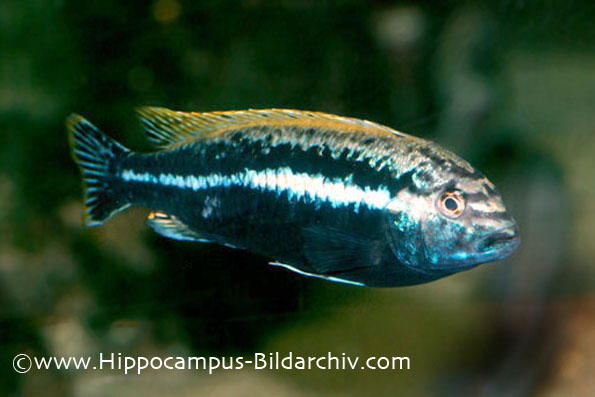
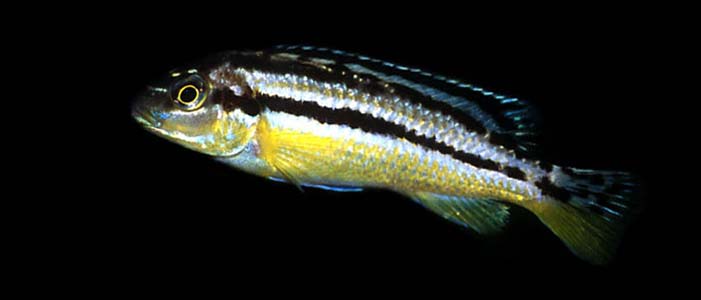
成熟雄鱼较大,通常转为深色;雌鱼、幼鱼及弱势雄鱼多呈金黄色。雄鱼受压时可重新变金,老雌鱼也可能变暗,因此颜色并非绝对性别证据。
繁殖
由雌鱼口孵,宜专缸一雄至少三雌,缸长约 120 厘米或更大,并有足够洞穴供雌鱼逃避。未准备产卵的雌鱼可能被雄鱼杀死。繁殖参考 pH 8.2~8.5、25~26.5 °C,提供平石或开阔底面。
雄鱼清理产卵点并追求雌鱼,雌鱼产卵后含入口中。与许多岩栖鱼不同,她并非追逐臀鳍卵斑,而是把嘴直接靠近雄鱼泄殖孔接受精液。
雌鱼含卵数周,期间不吃,口部鼓起;应尽量减少受惊和无必要搬动,避免吐卵、吞卵或离群后等级下降。释出的仔鱼可吃丰年虾无节幼体,雌鱼通常再保护约一周,受惊时把幼鱼收入口中。
补充说明
不要与其他黑丽鱼属鱼混养繁殖,存在杂交可能。老雌鱼和受压雄鱼的颜色变化,也是只凭金色或黑色分缸容易出错的原因。
图片
图片来自 SeriouslyFish,版权归各摄影者所有。
English
Overview
Melanochromis auratus is widely sold but has strong aggression and territoriality that make it unsuitable for beginners. Golden juveniles and females differ markedly from dark adult males, yet color alone is not a dependable basis for assembling a group.
Distribution & habitat
Endemic to Lake Malawi, it occurs down the western shore from Jalo Reef to Crocodile Rocks, around the southern end and up the lower eastern shore to Nkhomo Reef. Rocky shores, reefs and islands provide its habitat.
Aquarium setup
At least approximately 120 × 45 × 38 cm is needed as a starting point for this aggressive fish. Extensive rock piles should create caves with small open gaps, preferably over sand. Maintain good oxygenation. Multiple males require substantially more space, and subordinate males may still be killed.
Diet & feeding
Most foods are accepted, but plant ingredients such as spirulina flakes and blanched spinach should make up a large share, with live and frozen foods used as supplements. Keep the diet varied rather than equating enthusiasm for meaty foods with balanced feeding.
Behaviour & compatibility
Avoid peaceful peacocks and utaka. Robust mbuna with dissimilar patterns are more plausible companions. Denser stocking is sometimes used to distribute aggression, but requires matching space, filtration and oxygen management. Conspecific conflict is especially severe. Several females per male spread harassment, yet females themselves can be intolerant of related fishes, so this does not solve every problem.
Sexual dimorphism
Mature males are larger and normally dark, while females, juveniles and subordinate males are golden. Stressed males can return to gold and older females may darken, making color-based sexing fallible.
Breeding
Females mouthbrood. Use a dedicated group of one male and at least three females in a tank around 120 cm long or larger, with abundant retreats. Males may kill females that are not ready to spawn. Approximately pH 8.2–8.5 and 25–26.5 °C are breeding references, with flat stones or open bottom available.
After the male prepares a site and courts, the female lays and collects the eggs. Unlike many mbuna, she does not rely on following anal-fin egg spots; she places her mouth directly near the male's vent to receive sperm.
Brooding lasts several weeks without feeding. Stress and unnecessary relocation can cause premature release, clutch consumption or loss of social rank after absence. Released fry accept brine-shrimp nauplii. The female usually guards them for about another week, taking them back into her mouth when threatened.
Notes
Avoid mixing it with other Melanochromis for breeding because hybridization is possible. Color changes in old females and stressed males are an additional reason not to sort fish simply into golden and dark groups.
来源
- https://www.seriouslyfish.com/species/melanochromis-auratus(抓取于 2026-10-10)
melanochromis-auratus · 文件: data/species/melanochromis-auratus.md · 状态: 草稿