玫瑰魮脂鲤 · Rosy Tetra
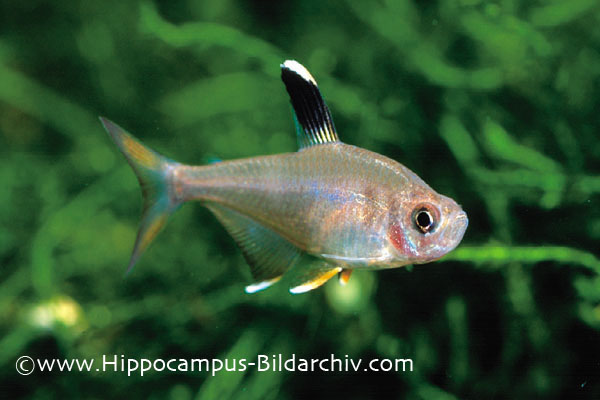
概要
| 字段 | 值 |
|---|---|
| 类别 | 鱼 |
| 学名 | Megalamphodus rosaceus |
| 别名 | 饰魮脂鲤、特氏宝莲灯鱼、玫瑰魮脂鯉、飾魮脂鯉、特氏寶蓮燈魚、Hyphessobrycon rosaceus |
| 分类 | 脂鲤目 Characiformes › 脂鲤科 Characidae › Megalamphodus |
| 水体 | 淡水 |
| 成体体长 | 4 cm |
| 饲养难度 | 入门 |
| 最小水体 | 68 L |
| 最小缸长 | 60 cm |
| 群居方式 | 群游 |
| 性情 | 温和 |
| 外部数据 | seriouslyfish megalamphodus-rosaceus;fishbase 12383 |
| 原产地 | 圭亚那、苏里南、巴西 |
| 食性 | 肉食 |
| 繁殖方式 | 产卵 |
水质参数
| 参数 | 耐受范围 | 最适范围 | 单位 |
|---|---|---|---|
| 水温 | 24–28 | — | °C |
| pH | 5.5–7.5 | — | — |
| 总硬度 | 1–12 | — | dGH |
概述
玫瑰魮脂鲤(Megalamphodus rosaceus)是温和的小型灯鱼,大多数商品鱼来自商业繁殖。它在有遮蔽的群体环境中更安定、更容易显色,稀疏空旷布景往往使它胆小、颜色淡。
分布与栖息地
分布于圭亚那、苏里南和巴西,包括 Essequibo、Corantijn、Suriname 等水系。主要生活在森林地区的缓流支流,腐植物释放物使水体常呈褐色、偏酸。
饲养环境
小群至少使用约 60 cm 长的缸。河沙、沉木根枝和干落叶可构成自然风格,较暗照明更合适,落叶定期更换以防腐败污染。虽然原生环境不以水草为主要特征,它同样适合管理良好的茂密水草缸。
人工鱼可适应一定水质范围,但在偏酸条件下通常更容易显示鲜明体色。
食性与喂食
野外主要吃小型无脊椎动物。人工不太挑食,用薄片、颗粒和小型活饵、冻饵搭配即可,保持菜单多样。
习性与混养
至少 6 条,最好 10 条或更多,有同伴时状态更好,多雄还会出现展鳍展示。它不擅长与过大或过于躁动的鱼争食,宜搭配温和小型灯鱼、铅笔鱼、小型慈鲷及底层鲶类,或其他环境相容的小鱼。
雌雄区分
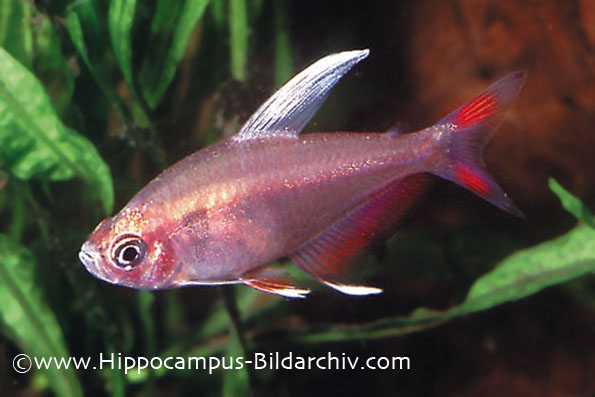
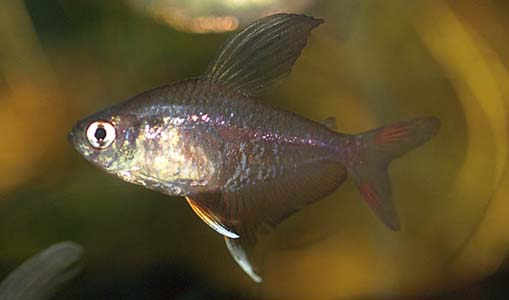
雄鱼成熟后背鳍、臀鳍明显延长,通常较大、更修长、颜色稍鲜艳。雌鱼较丰满。
繁殖
提高保苗率宜另设暗光小缸,软酸水配轻缓海绵过滤,细叶植物或产卵拖把供产卵,也可用底网让卵落下而亲鱼接触不到。可雌雄各约六条群繁,或将雌雄分开调养后,挑抱卵雌鱼与发色最好的雄鱼,傍晚合缸,通常次晨产卵。
亲鱼会吃卵,发现卵后立即移出。卵约 24~36 小时孵化,再过约 3~4 天鱼苗自由游动。最初几天喂草履虫等微小开口饵,长大后再用微虫和丰年虾无节幼体。卵和早期鱼苗对光敏感,应尽量保持暗处。
补充说明
与 Megalamphodus bentosi 很相似,过去甚至被当作其亚种。本种缺少鳃盖后方的暗色斑块,这是较容易观察的区别。
图片
图片来自 SeriouslyFish,版权归各摄影者所有。
English
Overview
The peaceful Megalamphodus rosaceus is supplied mainly by commercial farms. It feels more secure and shows stronger color in a sheltered group setting; sparse, exposed layouts often leave it shy and pale.
Distribution & habitat
It occurs in Guyana, Suriname, and Brazil, including the Essequibo, Corantijn, and Suriname systems. Forest tributaries with slow water are typical, often brown and acidic from decomposing organic material.
Aquarium setup
A small group needs a tank at least about 60 cm long. Sand, branches, roots, and dried leaves form a natural arrangement under subdued light. Replace old leaves periodically before they foul the water. A carefully maintained planted aquarium also works well, even though aquatic plants are not prominent in its typical natural waters.
Commercial stock tolerates a range of conditions, with acidic water generally bringing out better color.
Diet & feeding
Small invertebrates make up most of the wild diet. Captive fish are undemanding and can receive a mixture of flakes, granules, and small live or frozen foods.
Behaviour & compatibility
Keep at least six, preferably ten or more. Groups provide security, and several males produce attractive fin displays. Avoid very large or boisterous companions that dominate feeding. Mild small tetras, pencilfishes, dwarf cichlids, bottom-dwelling catfishes, and other suitably matched small species are possibilities.
Sexual dimorphism
Mature males have extended dorsal and anal fins and tend to be larger, slimmer, and more colorful. Females are fuller-bodied.
Breeding
Use a separate dim tank for better fry survival, with soft acidic water and gentle sponge filtration. Fine plants or mops provide spawning sites, while mesh can let eggs fall beyond adult reach. Groups of around six of each sex can be used. Alternatively, condition the sexes separately, then introduce a ripe female and brightly colored male in the evening for likely spawning the next morning.
Remove adults as soon as eggs are seen because they will eat them. Hatching takes approximately 24–36 hours, followed by another 3–4 days to free swimming. Begin with infusoria-sized food and progress to microworms and Artemia nauplii. Eggs and early fry are light-sensitive, so maintain darkness where practical.
Notes
The species closely resembles Megalamphodus bentosi and was once treated as its subspecies. Absence of the dark mark immediately behind the gill cover is a useful visible distinction.
来源
- https://www.seriouslyfish.com/species/megalamphodus-rosaceus(抓取于 2026-10-10)
megalamphodus-rosaceus · 文件: data/species/megalamphodus-rosaceus.md · 状态: 草稿