本氏魮脂鲤 · Ornate Tetra
概要
| 字段 | 值 |
|---|---|
| 类别 | 鱼 |
| 学名 | Megalamphodus bentosi |
| 别名 | 本氏魮脂鯉、Hyphessobrycon bentosi、Hyphessobrycon robertsi |
| 分类 | 脂鲤目 Characiformes › 脂鲤科 Characidae › Megalamphodus |
| 水体 | 淡水 |
| 原产地 | 巴西亚马逊河下游奥比杜斯一带 |
| 成体体长 | 4.5 cm |
| 饲养难度 | 中等 |
| 最小水体 | 81 L |
| 最小缸长 | 90 cm |
| 群居方式 | 群游 |
| 性情 | 温和 |
| 外部数据 | seriouslyfish megalamphodus-bentosi;fishbase 12378 |
| 繁殖方式 | 散卵 |
水质参数
| 参数 | 耐受范围 | 最适范围 | 单位 |
|---|---|---|---|
| 水温 | 20–28 | — | °C |
| pH | 5–7.5 | — | — |
| 总硬度 | 1–12 | — | dGH |
概述
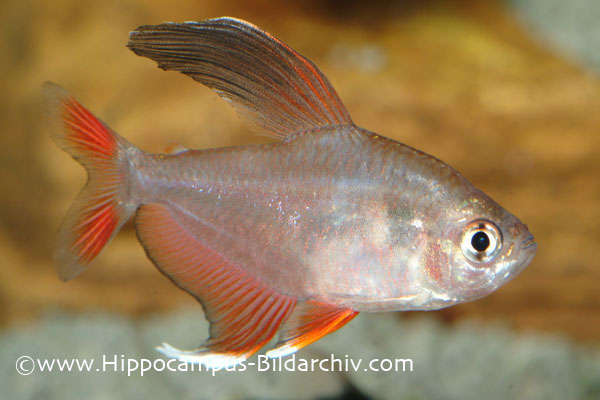
本氏魮脂鲤(Megalamphodus bentosi)是温和的群居灯鱼,适合有阴影、植被和洁净水质的环境。它与多种近似鱼外形很接近,贸易中的白鳍尖等称呼并不能单独确认身份。
分布与栖息地
模式产地位于巴西帕拉州奥比杜斯的亚马逊河下游,处于特龙贝塔斯河口和塔帕若斯河口之间。常见栖息环境为缓流支流、河汊和森林湖泊,鱼群在树根、倒枝、岸边植物或水草附近活动。
水通常受腐殖物染成褐色,矿物含量低,缓冲能力弱。
饲养环境
底面积至少约 90 × 30 cm。深色底床、活水草与丰富遮蔽有助于发色,也可用软砂、根木和枝条形成多个阴影区。光照宜柔和,浮水植物可以帮助遮光。
落叶提供躲藏处及微生物食物,可按维护情况留其分解或定期更换。它不耐有机污染积累,必须放入过滤成熟的缸,并将每周换水作为固定维护。
食性与喂食
野外可能混合取食小型无脊椎动物、甲壳类、藻类及落果。干粮之外应轮换供应适口红虫、蚊幼虫、水蚤等活饵或冷冻饵。
习性与混养
至少八至十条雌雄混养,雄鱼会在临时优势顺序中展示并争取雌鱼注意,群体完整时表现更自然。邻居可选择体型相近的温和灯鱼、小型鲶鱼和不捕食小鱼的中小型慈鲷。
雌雄区分
成年雄鱼通常略小、身体较窄,背鳍和臀鳍的颜色更浓;雌鱼相对更高、更饱满。
繁殖
散卵且不照顾后代。成熟缸偶尔会有少量幼鱼自然存活;专门繁殖可另设昏暗小缸,使用成熟水体、轻柔充氧,配网格、玻璃珠、细叶植物或产卵拖把保护卵。
用水略酸至中性,温度取适宜范围偏高端。充分调养的亲鱼可按一对,或一两条雄鱼配数条雌鱼入缸,通常翌晨检查卵。幼鱼先吃草履虫或足够细的微粒饵,长大后转喂丰年虾无节幼体、微虫。
补充说明
本种与玫瑰色体型相似的多个近缘种曾按体色和鳍形分组,这类历史分组不能代替种级鉴定;同一贸易标签下也可能出现不同种。
图片
图片来自 SeriouslyFish,版权归各摄影者所有。
English
Overview
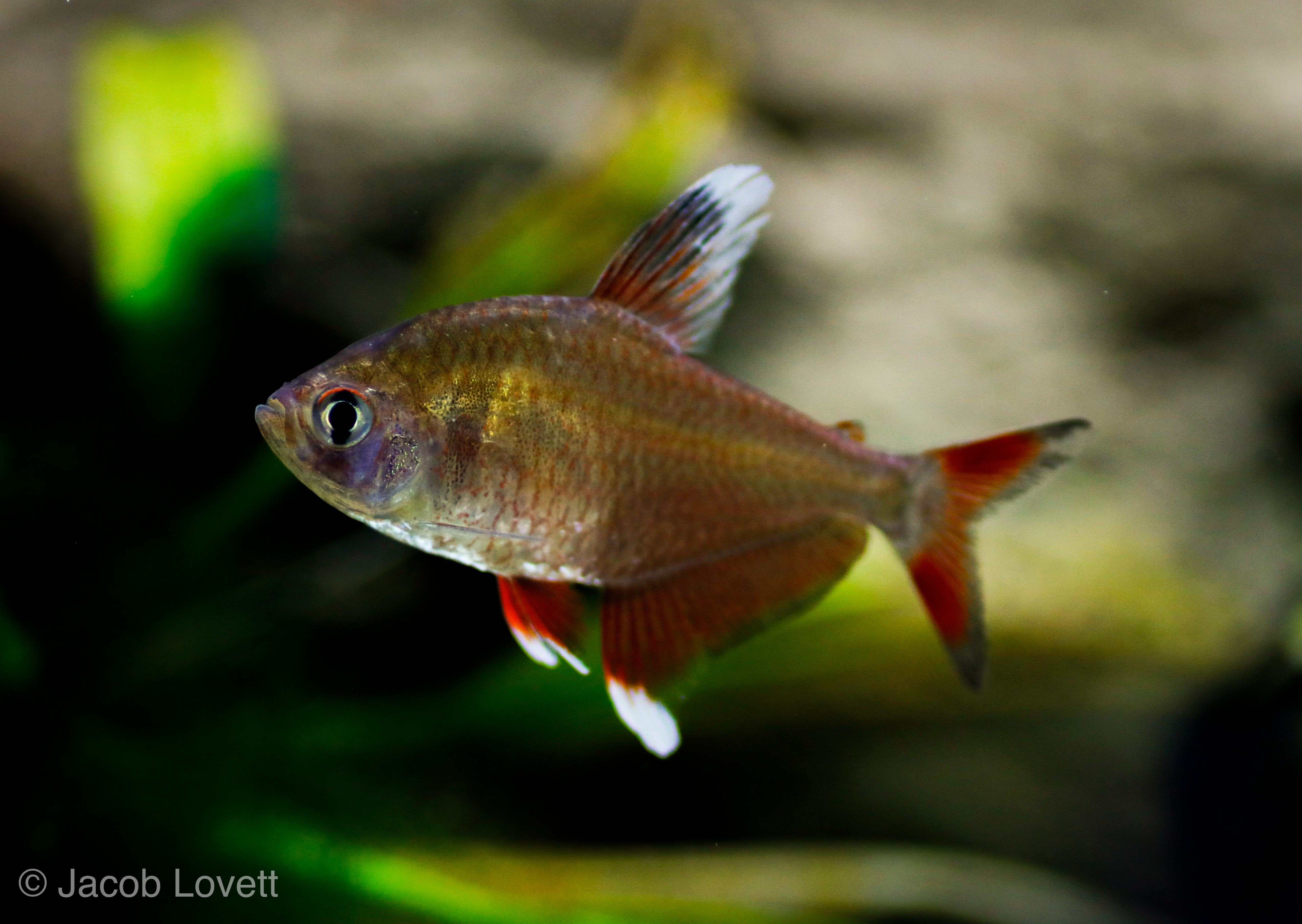
Ornate tetras (Megalamphodus bentosi) are peaceful schooling fishes suited to clean, shaded aquariums with plenty of cover. Several similar species can be confused with them, and names referring to white fin tips do not establish identity.
Distribution & habitat
The type locality lies at Óbidos in Pará, Brazil, on the lower Amazon between the Trombetas and Tapajós river mouths. Typical habitats include sluggish tributaries, side channels, and forest lakes, with the fish gathering around roots, fallen branches, riverside vegetation, or aquatic plants.
The water is usually brown from decomposing plant material, low in dissolved minerals, and weakly buffered.
Aquarium setup
Provide a footprint of about 90 × 30 cm or larger. Dark substrate, living plants, and abundant cover encourage good coloration. Soft sand with roots and branches can create numerous shaded retreats, supplemented by floating plants under subdued lighting.
Leaves offer shelter and support microorganisms useful to fry; they can be allowed to break down or replaced as maintenance requires. Avoid organic waste accumulation. Use an aquarium with established biological filtration and make weekly water changes routine.
Diet & feeding
Their wild diet probably combines small invertebrates, crustaceans, algae, and fallen fruit. Supplement dried foods with varied, appropriately sized live or frozen foods such as bloodworms, mosquito larvae, and water fleas.
Behaviour & compatibility
Keep at least eight to ten of both sexes. Males establish temporary dominance relationships and display while competing for females, so a substantial group produces more natural behavior. Suitable neighbors include peaceful tetras of comparable size, small catfishes, and appropriate nonpredatory cichlids.
Sexual dimorphism
Adult males tend to be slightly smaller and slimmer, with stronger coloration in the dorsal and anal fins. Females are deeper and fuller-bodied.
Breeding
Eggs are scattered without parental care. A few fry may survive in a mature tank. For controlled breeding, use a separate dim setup with established water, gentle aeration, and mesh, marbles, fine plants, or spawning mops that protect eggs.
Use slightly acidic to neutral water toward the warmer end of the suitable range. Introduce a conditioned pair or one or two males with several females, checking for eggs the next morning. Begin fry on infusoria or very fine prepared food, moving to brine shrimp nauplii and microworms as they grow.
Notes
Historical groupings of rosy-colored tetras rely partly on color and fin shape and cannot replace species identification. Different species may share a trade label.
来源
- https://www.seriouslyfish.com/species/megalamphodus-bentosi(抓取于 2026-10-10)
megalamphodus-bentosi · 文件: data/species/megalamphodus-bentosi.md · 状态: 草稿