格氏拟丽鱼 · Red Top Ice Blue Zebra
概要
| 字段 | 值 |
|---|---|
| 类别 | 鱼 |
| 学名 | Maylandia greshakei |
| 别名 | 格氏擬麗魚 |
| 分类 | 慈鲷目 Cichliformes › 慈鲷科 Cichlidae › Maylandia |
| 水体 | 淡水 |
| 成体体长 | 13.5 cm |
| 饲养难度 | 中等 |
| 最小水体 | 154 L |
| 最小缸长 | 90 cm |
| 领地性 | 是 |
| 外部数据 | seriouslyfish maylandia-greshakei;fishbase 2369 |
| 原产地 | 马拉维湖东南部 Makokola 一带 |
| 性情 | 攻击性 |
| 特征 | 啃水草: 是 |
| 繁殖方式 | 口孵 |
水质参数
| 参数 | 耐受范围 | 最适范围 | 单位 |
|---|---|---|---|
| 水温 | 24–28 | — | °C |
| pH | 7.6–8.8 | — | — |
| 总硬度 | 10–25 | — | dGH |
概述
格氏拟丽鱼(Maylandia greshakei)是攻击性和领地性都较强的马拉维湖岩栖慈鲷。雄鱼色彩明显胜过雌鱼,同种冲突却也突出,饲养时应优先处理群体组成、视线隔断和追逐压力。
分布与栖息地
本种为马拉维湖特有鱼,仅见于湖东南部 Makokola 一带。它利用靠近开阔水域的礁岩上部,也会离开岩区到水中摄取浮游植物。
饲养环境
可参考约 90 × 45 × 38 厘米的缸,繁殖群体可采用更长空间。大部分区域以岩堆形成洞穴,中间留少量开阔游动区,沙底较合适。保持充分供氧,水草可能被吃掉,不宜作为主要造景。
食性与喂食
多数合口食物都会接受,但螺旋藻薄片、烫菠菜等植物性食物应占较大比例,再用活饵、冻饵补充。自然摄取浮游植物的习性不意味着只靠缸内水中悬浮物就能吃饱。
习性与混养
不要与孔雀类或其他温和马湖鱼随意组合,更适合经过选择的其他岩栖慈鲷。同种攻击很强,一雄配多雌能分散雄鱼骚扰。较密的岩栖群养有时用于分散攻击、削弱固定领地,但必须与足够空间、过滤和供氧相匹配,不能把拥挤本身当作安全保证。
雌雄区分
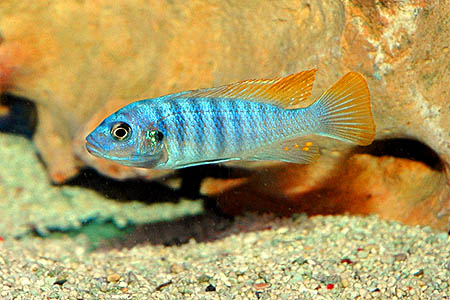
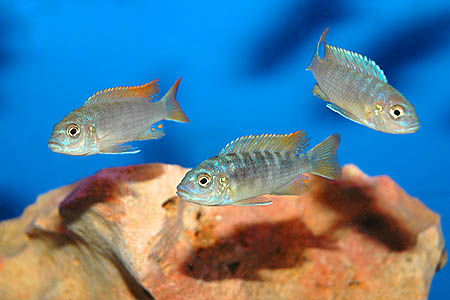
雄鱼比雌鱼鲜艳得多。
繁殖
由雌鱼口孵,可用一雄至少三雌的专缸,约 120 厘米长的空间配平石及开阔底面。繁殖参考 pH 8.2~8.5、25~26.5 °C。雄鱼清理产卵点并展示求偶,雌鱼产卵后立即含入口中;随后追逐雄鱼臀鳍卵斑时接受精液,使卵受精。
雌鱼口孵可持续约三至四周,期间通常不进食,嘴部明显鼓起。受惊可能提前吐卵或吞卵,移动时尤其谨慎;离开原群过久,也可能失去原有等级位置。除非持续受扰,宜尽量减少过早搬动。仔鱼释出后可直接吃丰年虾无节幼体。
补充说明
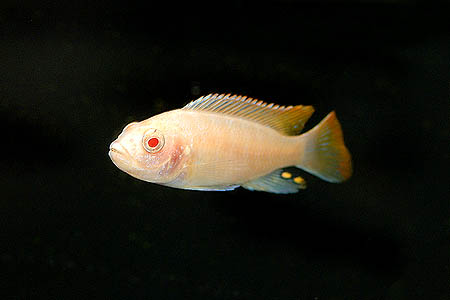
旧属名 Pseudotropheus 和 Metriaclima 仍可能出现在标签上,另有人工白化型。不同标签需结合完整种名核对,白化本身不是新的物种。
图片
图片来自 SeriouslyFish,版权归各摄影者所有。
English
Overview
Maylandia greshakei is an aggressive, territorial Malawian mbuna. Males are much more colorful than females, but strong conspecific conflict makes group composition, barriers and pursuit pressure central management issues.
Distribution & habitat
Endemic to Lake Malawi, it is known only around Makokola in the southeast. It uses upper reef areas beside open water and leaves the rocks to feed on phytoplankton.
Aquarium setup
A tank around 90 × 45 × 38 cm provides a reference, with a longer aquarium useful for a breeding group. Rock piles should occupy much of the layout and create caves, leaving some open swimming gaps. Sand is suitable and oxygenation should be strong. Plants are likely to be eaten and should not form the basis of the layout.
Diet & feeding
Most offered foods are accepted, but plant ingredients should make up a substantial share. Spirulina flakes and blanched spinach are examples, supplemented with live and frozen foods. Natural phytoplankton feeding does not mean suspended material in an aquarium supplies a complete diet.
Behaviour & compatibility
Avoid peaceful peacocks or similar gentle Malawi fishes. Carefully selected mbuna are more appropriate. Keep several females per male to distribute harassment. Denser mbuna communities are sometimes used to disperse aggression and reduce fixed territories, but depend on sufficient space, filtration and oxygen; crowding alone is not a safety measure.
Sexual dimorphism
Males are markedly more colorful than females.
Breeding
Females mouthbrood. A dedicated group of one male with at least three females can use an aquarium around 120 cm long with flat stones and open bottom. Approximately pH 8.2–8.5 and 25–26.5 °C are breeding references. The male cleans a site and displays. The female lays, collects the eggs and then receives sperm while attempting to collect the male's anal-fin egg spots.
Brooding can last three to four weeks, during which the female normally does not eat and develops a visibly swollen mouth. Stress may cause premature release or consumption of the clutch. Moving her also risks loss of social position if she remains away too long. Unless she is being harassed, avoid unnecessarily early relocation. Released fry can take brine-shrimp nauplii immediately.
Notes
Labels may still use the former genera Pseudotropheus or Metriaclima. An albino aquarium form also exists. Check the full species name across older labels; albinism does not indicate a separate species.
来源
- https://www.seriouslyfish.com/species/maylandia-greshakei(抓取于 2026-10-10)
maylandia-greshakei · 文件: data/species/maylandia-greshakei.md · 状态: 草稿