Maylandia callainos · Cobalt Blue Zebra
概要
| 字段 | 值 |
|---|---|
| 类别 | 鱼 |
| 学名 | Maylandia callainos |
| 分类 | 慈鲷目 Cichliformes › 慈鲷科 Cichlidae › Maylandia |
| 水体 | 淡水 |
| 成体体长 | 13.5 cm |
| 饲养难度 | 中等 |
| 最小水体 | 108 L |
| 最小缸长 | 120 cm |
| 领地性 | 是 |
| 外部数据 | seriouslyfish maylandia-callainos;fishbase 47109 |
| 原产地 | 马拉维湖 |
| 性情 | 攻击性 |
| 繁殖方式 | 口孵 |
水质参数
| 参数 | 耐受范围 | 最适范围 | 单位 |
|---|---|---|---|
| 水温 | 24–28 | — | °C |
| pH | 7.6–8.8 | — | — |
| 总硬度 | 8–25 | — | dGH |
概述
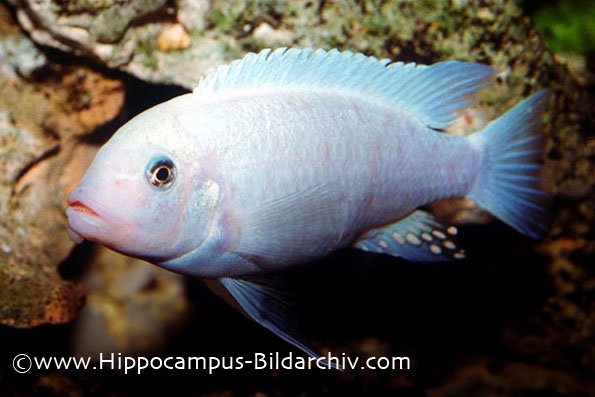
Maylandia callainos 是马拉维湖的岩栖慈鲷,常见钴蓝色型,但外形相近的其他种很容易混淆。它好斗且有领域性,适合按岩栖慈鲷的群体关系安排,不能因颜色柔和而搭配胆小的鱼。
分布与栖息地
原生于马拉维湖北部,东岸记录从 Ikombe 至 Ruhuhu 河,西岸从 Kande 岛至 Ngara。Namalenje、Thumbi 与 Likoma 等岛附近的种群属于引入范围。主要生活在岩石区。
饲养环境
至少以 120 cm 长缸起步,用稳固石堆形成洞穴,在其间保留少量开阔水域。砂底较合适,水中需有充足氧气。岩洞和视线遮挡应与群体数量相配,而不是只放一块孤立石头供优势鱼独占。
食性与喂食
通常接受多种饲料,螺旋藻薄片、烫软菠菜等植物性食物应占较大比例,再补充活饵或冻饵。能吃动物饵不代表应以肉食作为全部菜单。
习性与混养
本种对同种尤其强势,较适合同样能应对压力的岩栖慈鲷,不宜与温和的孔雀类或 utaka 类慈鲷同缸。每雄配数尾雌鱼可分散追逐。较密集混养有时能分散攻击,但同时需要良好过滤、足够岩洞及对弱鱼的持续观察。
雌雄区分
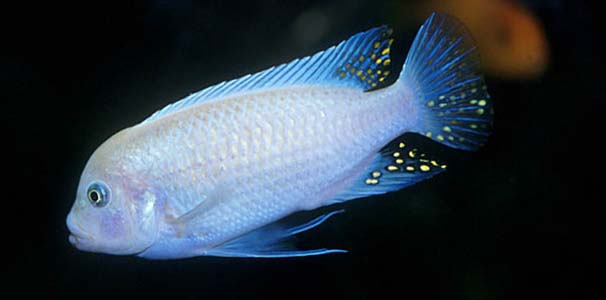
雄鱼通常比雌鱼鲜艳得多;判断时仍须考虑体色型和成熟程度。
繁殖
雌性口孵,可在约 120 cm 长的单种繁殖缸中安排一雄至少三雌。提供平石和开阔砂面,繁殖条件可用 pH 8.2–8.5、25–26.5 °C,并用优质活饵、冻饵调理。
雄鱼清理产卵点后展示求偶,追逐可能很强。雌鱼产卵后立即含入口中,追啄雄鱼臀鳍卵斑时完成口内受精。雌鱼可持续含卵育仔 3–4 周,期间不进食。幼鱼释放时已能吃丰年虾无节幼体。
受惊可能导致提前吐卵或吞卵;过早隔离和长期离群也可能影响雌鱼重新回群的地位。除非持续受压,尽量减少搬动。人工提前取仔属于需要经验的繁殖处理,不是必需步骤。
补充说明
旧记录可能采用 Pseudotropheus callainos 或 Metriaclima callainos,pearly 等商品名称也曾使用。钴蓝、橙斑及珍珠色标签不能取代鉴定,尤其应防止与外形近似的 Maylandia estherae 或 Maylandia benetos 混淆。
图片
图片来自 SeriouslyFish,版权归各摄影者所有。
English
Overview
Maylandia callainos is a Lake Malawi mbuna often seen in a cobalt-blue form. Similar species are easily confused with it. Strong territorial and aggressive behavior makes social planning essential; a pale or attractive color does not make it suitable for timid companions.
Distribution & habitat
The native range lies in northern Lake Malawi, from Ikombe to the Ruhuhu River on the east and from Kande Island to Ngara on the west. Populations around Namalenje, Thumbi, and Likoma islands were introduced. It occupies rocky habitat.
Aquarium setup
Begin with an aquarium at least 120 cm long. Secure rock piles should provide numerous caves, separated by some open water. Sand is suitable, and oxygenation should be good. Shelter and visual barriers need to serve the whole group instead of leaving one isolated structure for a dominant fish to monopolize.
Diet & feeding
It accepts varied foods. Plant matter should form a substantial part of the menu, including spirulina flakes or blanched spinach, supplemented with live or frozen foods. Acceptance of animal foods does not justify an exclusively meaty diet.
Behaviour & compatibility
Aggression is particularly strong toward conspecifics. Appropriate mbuna are more suitable companions than peaceful peacocks or utaka. Several females per male help distribute pursuit. Denser community stocking can sometimes spread aggression but also demands effective filtration, abundant refuges, and observation of subordinate fish.
Sexual dimorphism
Males are usually much more colorful, although maturity and color form must also be considered.
Breeding
Females mouthbrood. A species breeding aquarium around 120 cm long can house one male with at least three females. Provide flat stones and open sand. Suggested breeding conditions are pH 8.2–8.5 and 25–26.5 °C, with quality live and frozen foods for conditioning.
The male cleans a site and displays vigorously. The female gathers laid eggs immediately, and attention to the male's anal-fin egg spots facilitates fertilization inside her mouth. She may hold the brood without eating for three to four weeks. Released fry can eat brine shrimp nauplii.
Stress may cause early release or consumption of the brood. Early isolation and a long absence can also affect a female's position when returned to the group. Minimize transfers unless harassment persists. Artificial early removal of young is an experienced breeder's intervention, not an obligatory step.
Notes
Older accounts may use Pseudotropheus callainos or Metriaclima callainos. Pearly and other color labels have also been used. These do not replace identification, especially when distinguishing similar Maylandia estherae or Maylandia benetos.
来源
- https://www.seriouslyfish.com/species/maylandia-callainos(抓取于 2026-10-10)
maylandia-callainos · 文件: data/species/maylandia-callainos.md · 状态: 草稿