红纹刺鳅 · Fire Eel
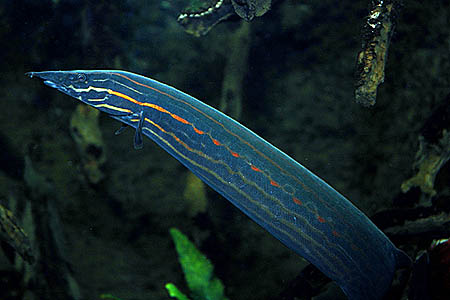
概要
| 字段 | 值 |
|---|---|
| 类别 | 鱼 |
| 学名 | Mastacembelus erythrotaenia |
| 别名 | 紅紋刺鰍 |
| 分类 | 合鳃鱼目 Synbranchiformes › 刺鳅科 Mastacembelidae › Mastacembelus |
| 水体 | 淡水 |
| 原产地 | 柬埔寨、印度尼西亚、老挝、马来西亚、泰国、越南 |
| 成体体长 | 100 cm |
| 饲养难度 | 中等 |
| 最小水体 | 432 L |
| 最小缸长 | 120 cm |
| 群居方式 | 群游 |
| 外部数据 | seriouslyfish mastacembelus-erythrotaenia;fishbase 12026 |
| 食性 | 杂食 |
| 特征 | 吃小鱼: 是;翻底砂: 是 |
水质参数
| 参数 | 耐受范围 | 最适范围 | 单位 |
|---|---|---|---|
| 水温 | 24–28 | — | °C |
| pH | 6–7 | — | — |
| 总硬度 | 5–12 | — | dGH |
概述
红纹刺鳅(Mastacembelus erythrotaenia)体型可长得很大,白天喜欢躲藏并常埋入沙底。它需要宽敞、遮蔽充足的环境,不应因购买时体型小而忽略长期空间与饵料需求。
分布与栖息地
原产老挝、越南、柬埔寨、泰国、马来西亚和印度尼西亚,通常生活在低地缓流水域,包括洪泛平原和缓慢河流。部分原产地区也把它作为食用鱼。
饲养环境
基础缸体至少约 120 × 60 × 60 cm、432 L,实际布置需考虑成年体型与同伴占用的空间。用水草、浮水遮蔽、沉木、石洞或塑料管提供大量白天藏身处。
铺柔软沙底,弱光有助它更常出现。水流保持柔和,缸盖和管线周围应严密,因为它能通过很小的开口逃出。
食性与喂食
野生鱼为杂食,摄食小鱼、水生无脊椎动物、植物材料和碎屑。缸内偏好虾、磷虾、小型海鱼等动物性食物,大个体应得到与体型相符的充足食物。少数个体也接受植物材料,但并不普遍。
习性与混养
总体对合适同伴较平和,但会吃小鱼,混养对象必须大到不会成为食物。通常建议每缸单条,因为同种可能发生攻击;有时足够大的空间中维持至少 5 条可分散冲突,但这不是普通缸的简单解决办法。
雌雄区分
待产雌鱼通常腹部更丰满。
繁殖
有过偶发的水族箱繁殖,但尚不是容易重复的常规方法,不能据此列出未经确认的繁殖参数。
补充说明
它是贸易中较常见的亚洲刺鳅。背部硬棘是“刺鳅”名称的由来。看见它长时间躲藏未必代表异常,应结合是否进食、环境遮蔽和水质观察,避免为了白天展示而移走所有藏身处。
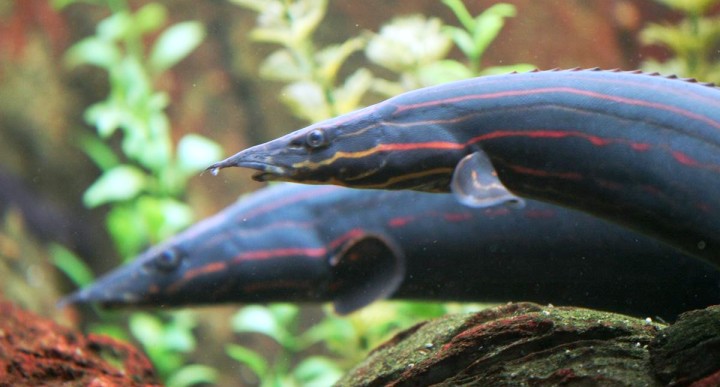
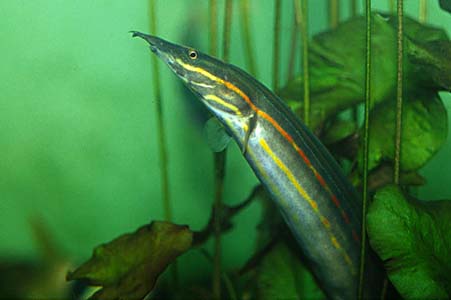
图片
图片来自 SeriouslyFish,版权归各摄影者所有。
English
Overview
Adult Mastacembelus erythrotaenia can become very large. Daytime hiding and frequent burial in sand call for spacious, well-sheltered housing, with long-term room and feeding needs considered before buying a juvenile.
Distribution & habitat
Records span Laos, Vietnam, Cambodia, Thailand, Malaysia, and Indonesia. Sluggish lowland habitats include floodplains and slow rivers. It is also used as a food fish in parts of its native range.
Aquarium setup
The stated baseline is approximately 120 × 60 × 60 cm and 432 L, with usable space assessed for adult size and companions. Dense plants, floating shade, wood, rock caves, and plastic tubes provide daytime retreats.
Use soft sand and subdued lighting, which encourages more visible activity. Circulation should be gentle. Seal the lid and equipment gaps carefully because even small openings can provide an escape route.
Diet & feeding
Wild fish are omnivorous, consuming small fishes, aquatic invertebrates, plant material, and debris. Captive individuals favor shrimp, krill, small marine fishes, and other animal foods. Large adults need appropriately substantial meals. Some also accept plant material, although this is uncommon.
Behaviour & compatibility
Generally tolerant of appropriate companions, it still eats small fishes. Select tankmates beyond its prey size. A single specimen is usually advised because conspecific aggression can occur. Groups of at least five sometimes reduce conflict, but require substantial space and are not a simple solution for an ordinary tank.
Sexual dimorphism
Ripe females tend to have a fuller abdomen.
Breeding
Occasional aquarium reproduction has been accidental. This does not establish a readily repeatable method or justify supplying unverified breeding parameters.
Notes
It is one of the more commonly traded Asian spiny eels, named for the hardened rays along the back. Extended hiding should be evaluated alongside feeding, cover, and water conditions rather than automatically treated as abnormal. Removing all retreats for daytime display is inappropriate for its habits.
来源
ID:mastacembelus-erythrotaenia · 文件: data/species/mastacembelus-erythrotaenia.md · 状态: 草稿