钻石灯 · Diamond Tetra
概要
| 字段 | 值 |
|---|---|
| 类别 | 鱼 |
| 学名 | Makunaima pittieri |
| 别名 | 閃光直線脂鯉、Moenkhausia pittieri、闪光直线脂鲤 |
| 分类 | 脂鲤目 Characiformes › 脂鲤科 Characidae › Makunaima |
| 水体 | 淡水 |
| 成体体长 | 6 cm |
| 饲养难度 | 中等 |
| 最小水体 | 68 L |
| 最小缸长 | 60 cm |
| 群居方式 | 群游 |
| 外部数据 | seriouslyfish makunaima-pittieri;fishbase 10664 |
| 原产地 | 委内瑞拉巴伦西亚湖及周边水域 |
| 性情 | 温和 |
| 繁殖方式 | 产卵 |
水质参数
| 参数 | 耐受范围 | 最适范围 | 单位 |
|---|---|---|---|
| 水温 | 24–28 | — | °C |
| pH | 5.5–7 | — | — |
| 总硬度 | 5–12 | — | dGH |
概述
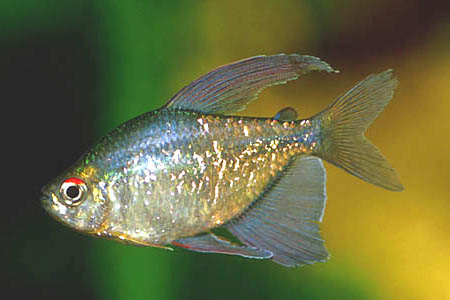
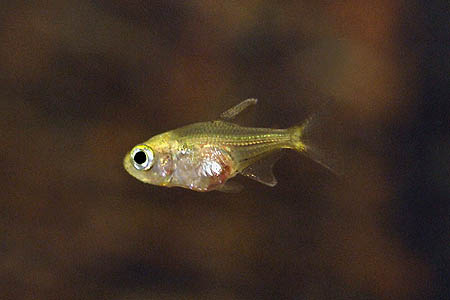
钻石灯(Makunaima pittieri)幼鱼往往只是朴素的银色,成熟并得到良好喂养后,鳞片才逐渐显出强烈闪光。它是适合群养的温和灯鱼,至少六至八条共同生活,更容易安心和展示。
分布与栖息地
原生范围限于委内瑞拉巴伦西亚湖及周边水域,生活在浅水植被区和缓流支流。湖泊受农业、工业污染和富营养化影响,其野外栖息环境承受压力;观赏贸易中则已有大量人工繁育个体。
饲养环境
小群可从约 60 cm 长的缸起步。它适应维护良好的水族箱,但不喜欢过亮或空旷环境,密植草缸尤其利于发色。也可用河砂、根木、枝条及落叶形成较暗、略带茶色的布置,及时更换老化叶片,避免积污。
人工繁育个体可能耐受偏碱水,但在中性以下的适宜水质中颜色通常更好。
食性与喂食
喂养不难,通常愿意接受多种饲料。可用优质薄片或细颗粒搭配适口红虫、水蚤、丰年虾等活饵或冷冻饵,让营养和食物形式更丰富。
习性与混养
可与温和灯鱼、小型鲤科鱼、常见温和迷鳃鱼、小型慈鲷及安静底栖鱼混养,体形相称的温和中型慈鲷也可考虑。数量过少容易紧张,也可能出现啄鳍;至少六至八条有助于把争执留在群体内部。多条雄鱼之间会有鲜明的展示。
雌雄区分
雄鱼通常更大但不如雌鱼粗壮,闪光鳞片更多。成年雄鱼腹鳍、背鳍和臀鳍延长,并带紫色光泽;雌鱼这些鳍大多近乎透明。
繁殖
可用独立昏暗小缸,放细叶植物、产卵拖把或底部隔网,配轻柔海绵过滤。繁殖用水宜软、偏酸,约 pH 5.5–6.5。可群体繁殖,也可先分开调养雌雄,傍晚选抱卵雌鱼和发色好的雄鱼入缸,常在翌晨产卵。
亲鱼会吃卵,发现卵后应及时移出。卵约 24–36 小时孵化,幼鱼再过三至四天自由游动;先用纤毛虫类开口饵,长大后再喂微虫和丰年虾无节幼体。
图片
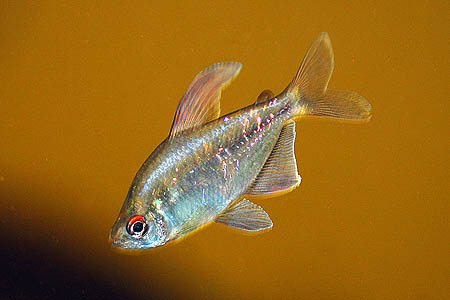
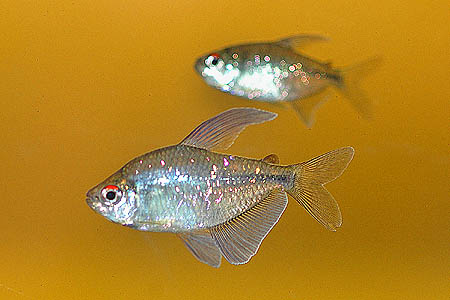
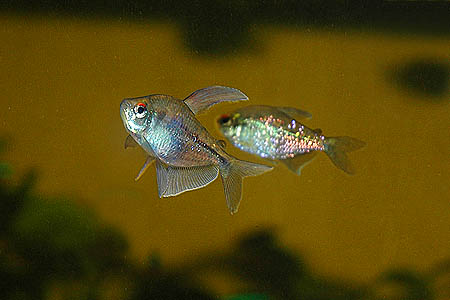
图片来自 SeriouslyFish,版权归各摄影者所有。
English
Overview
Diamond tetras (Makunaima pittieri) often look plain and silvery when young. With maturity and a varied diet, their reflective scales develop the sparkling appearance behind their name. Keep at least six to eight of these peaceful fishes together to encourage confidence and displays.
Distribution & habitat
The species is endemic to Lake Valencia and nearby waters in Venezuela, occupying shallow vegetated areas and slow tributaries. Agricultural and industrial pollution, together with eutrophication, have affected the lake environment. Commercial breeding supplies many aquarium specimens.
Aquarium setup
A small group can start in a tank around 60 cm long. These adaptable fish suit well-maintained aquariums but dislike intense lighting and sparse furnishings. Dense planting promotes attractive coloration. Alternatively, use sand, roots, branches, and dried leaves under subdued lighting, replacing aging leaves before they foul the water.
Farmed fish may tolerate alkaline conditions, but generally show their best colors in suitable water below neutral pH.
Diet & feeding
They readily accept a variety of foods. Combine quality flakes or small granules with suitably sized live or frozen offerings such as bloodworms, water fleas, and brine shrimp.
Behaviour & compatibility
Peaceful tetras, small cyprinids, suitable gouramis and dwarf cichlids, and quiet bottom dwellers are possible companions. Appropriately sized, nonaggressive medium cichlids can also work. Insufficient numbers can lead to nervousness or fin nipping; a group of six to eight or more usually directs squabbles toward other members of the group. Rival males give particularly attractive displays.
Sexual dimorphism
Males tend to be larger but less stocky, with more reflective scales. Their pelvic, dorsal, and anal fins lengthen with maturity and develop a violet sheen, whereas the corresponding female fins remain largely clear.
Breeding
Prepare a separate dim aquarium with fine plants, spawning mops, or mesh protecting the bottom, and gentle sponge filtration. Soft, acidic breeding water around pH 5.5–6.5 is suitable. Group spawning is possible, or condition the sexes separately and introduce a ripe female with a strongly colored male in the evening. Spawning often follows the next morning.
Remove adults when eggs are detected because they eat them. Eggs hatch in roughly 24–36 hours; fry swim freely three to four days later. Offer infusoria initially, moving to microworms and brine shrimp nauplii once the fry can swallow them.
来源
- https://www.seriouslyfish.com/species/makunaima-pittieri(抓取于 2026-10-10)
makunaima-pittieri · 文件: data/species/makunaima-pittieri.md · 状态: 草稿