圆尾斗鱼 · Roundtail Paradise Fish
概要
| 字段 | 值 |
|---|---|
| 类别 | 鱼 |
| 学名 | Macropodus ocellatus |
| 别名 | 睛斑鬥魚、Polyacanthus paludosus、Macropodus ctenopsoides、睛斑斗鱼 |
| 分类 | 攀鲈目 Anabantiformes › 丝足鲈科 Osphronemidae › Macropodus |
| 水体 | 淡水 |
| 原产地 | 中国、日本、朝鲜、韩国 |
| 成体体长 | 8 cm |
| 饲养难度 | 中等 |
| 最小水体 | 72 L |
| 最小缸长 | 80 cm |
| 群居方式 | 成对 |
| 外部数据 | seriouslyfish macropodus-ocellatus;fishbase 4795 |
| 领地性 | 是 |
| 繁殖方式 | 吐泡筑巢 |
水质参数
| 参数 | 耐受范围 | 最适范围 | 单位 |
|---|---|---|---|
| 水温 | 10–22 | — | °C |
| pH | 6–7.5 | — | — |
| 总硬度 | 5–20 | — | dGH |
概述
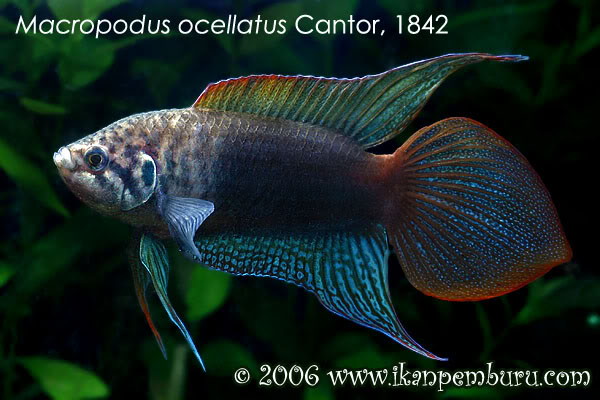
圆尾斗鱼(Macropodus ocellatus)是能适应季节温度变化的迷鳃鱼,尾鳍圆形,雄鱼在繁殖期领地意识增强。许多情况下不需要持续加温,适度冬季低温期可能有益,不宜全年按高温热带鱼管理。
分布与栖息地
广泛见于中国、朝鲜半岛及日本,中国大陆从珠江流域延伸至黑龙江流域,越南东北部也可能有分布。俄罗斯境内黑龙江水系的种群可能为引入。模式地点为浙江舟山。
生活于灌溉沟渠、稻田、水池、沼泽、溪流及大河回水区。分布北部冬季可出现水面结冰和很低水温,反映其明显的季节适应性。
饲养环境
一对至少约 80 × 30 cm 底面积。沉木根枝可形成阴影,繁殖时应有浮水或水面植被供筑巢。落叶提供遮蔽,并滋生微生物作为鱼苗早期食物。可采用完整布景,也可为清洁方便选择不铺底。
在合适室内条件下通常能不加热饲养,有迹象表明冬季降温期对它有益。
食性与喂食
自然食物可能为昆虫幼体等小动物。可提供水蚤、丰年虾、白线虫等小型活饵或冻饵,有些优质干粮也可能接受。
习性与混养
繁殖期雄鱼会积极守卫领地。足够大且遮蔽结构丰富的缸可以群养,不能把一对的最低空间直接用于多条成鱼。
雌雄区分
雄鱼较大,背鳍、臀鳍和尾鳍软条更为延长。
繁殖
雄鱼在水面植物间筑泡巢,筑巢时通常容忍雌鱼在附近,亲鱼不必事先分开。软水和略升温据称可诱发繁殖。繁殖缸需贴合盖,保留温暖湿润空气供鱼苗迷鳃器官发育。
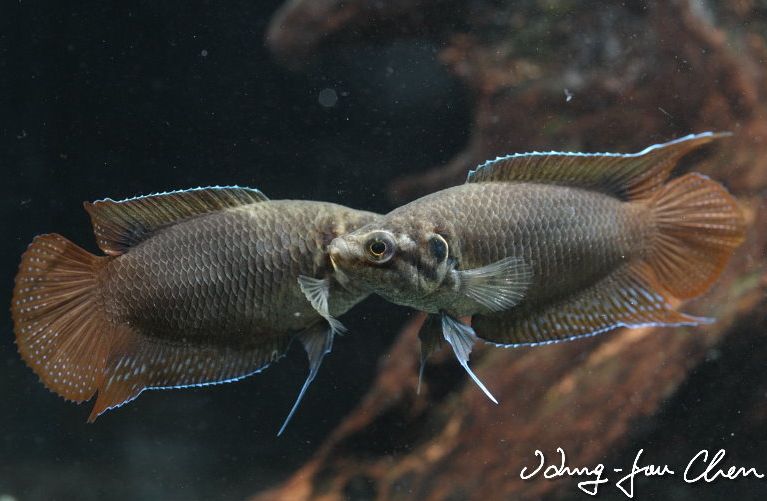
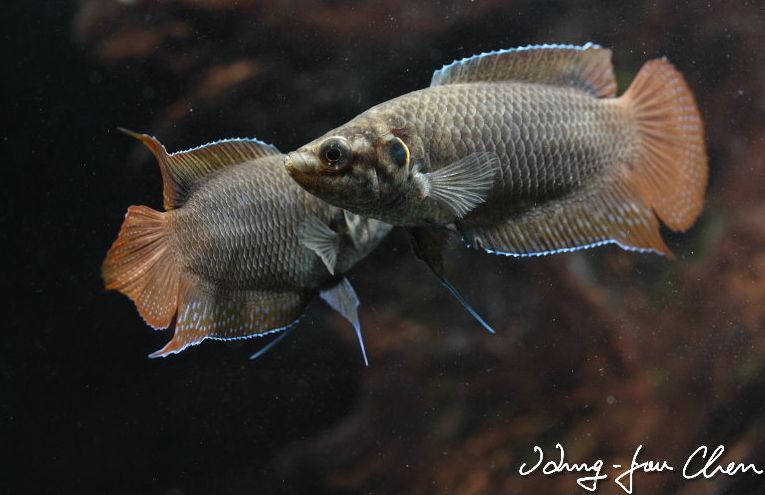
巢完成后雄鱼展鳍求偶,雌鱼颜色变淡,双方巢下环抱。分批释放的卵含油滴、比水轻,会自行浮向泡巢,雄鱼也常协助归巢,一窝通常数百枚。
产后双亲一般可暂留,但应给雌鱼退避处。有时泡巢散开,卵改聚成一团。卵约 3~4 天孵化,幼体留巢至卵黄吸收;自由游动后雄鱼失去护幼兴趣,此时最好移出亲鱼。
鱼苗头几天需要草履虫等微小开口饵,之后再转微虫和丰年虾无节幼体。少量、规律换水。
补充说明
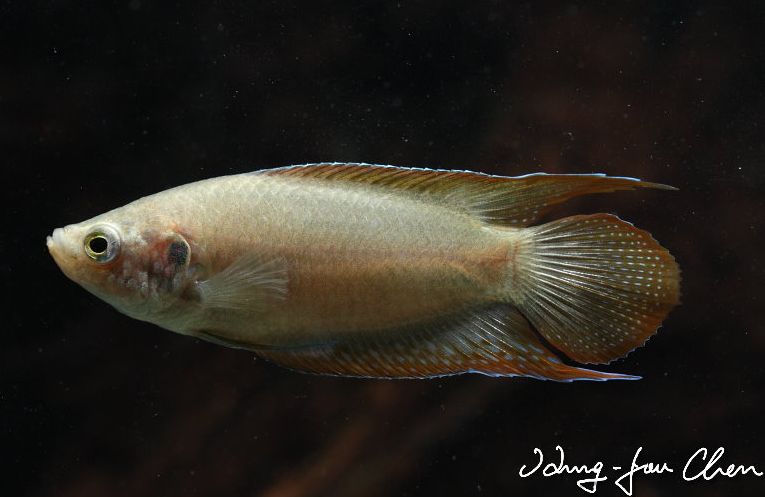
旧文献可能把本种写成 Macropodus chinensis,但这个名称现作为叉尾斗鱼(M. opercularis)的异名处理,不能仅凭旧称对应物种。圆尾及眼纹不连接鳃盖斑,是辨认本种的重要线索。
图片
图片来自 SeriouslyFish,版权归各摄影者所有。

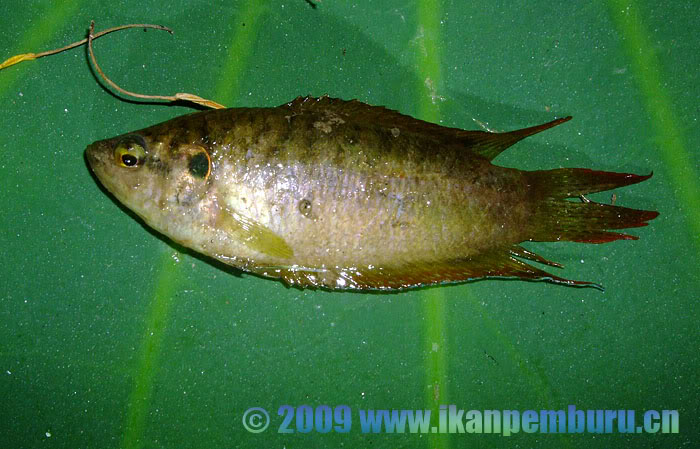
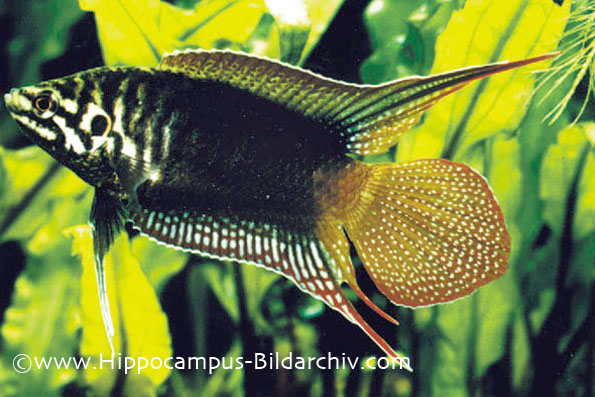
English
Overview
The round-tailed labyrinth fish Macropodus ocellatus is adapted to seasonal temperature changes. Males become territorial during reproduction. Many suitable indoor setups need no continuous heating, and a cool winter interval may be beneficial.
Distribution & habitat
It has a broad range across China, Korea, and Japan, extending on the Chinese mainland from the Pearl basin to the Amur. Northeastern Vietnam is a possible additional locality; Russian Amur populations may be introduced. Zhoushan is the type locality.
Habitats include irrigation ditches, rice fields, pools, marshes, streams, and river backwaters. Northern sites can freeze at the surface in winter, illustrating strong seasonal adaptation.
Aquarium setup
A pair requires a footprint of at least approximately 80 × 30 cm. Roots and branches provide shade, with floating or surface plants important for nest building. Leaves add shelter and microorganisms useful to newly feeding fry. Fully furnished or easily maintained bare-bottom layouts are both possible.
In suitable indoor conditions, heating is often unnecessary. Evidence suggests a winter cooling period can benefit the fish.
Diet & feeding
Insect larvae and similar small animals are likely natural prey. Offer small live or frozen Daphnia, Artemia, and worms. Some quality dry products may also be accepted.
Behaviour & compatibility
Reproductive males defend territories actively. Groups are possible in sufficiently spacious aquaria with plentiful structure, but the minimum pair accommodation should not be treated as a group tank.
Sexual dimorphism
Males grow larger and develop extended soft rays in the dorsal, anal, and caudal fins.
Breeding
The male constructs a bubble nest among surface plants and generally tolerates females nearby during construction, so prior separation is unnecessary. Soft water and a modest temperature increase are reported spawning stimuli. A close-fitting cover retains warm, humid air for developing fry.
Once the nest is ready, fin displays lead to embraces beneath it. Eggs contain an oil droplet and float upward, often assisted by the male. Repeated batches typically produce several hundred eggs.
Adults can initially remain, with shelter for the female. The nest may break apart and the eggs become gathered into a cluster. Hatching takes around 3–4 days, after which larvae stay until yolk absorption. Remove adults when free swimming begins and male care wanes.
For the first few days, provide infusoria-sized food, then introduce microworms and Artemia nauplii. Use small, regular water changes.
Notes
Older accounts may use Macropodus chinensis, a name now treated as a synonym of M. opercularis, making historical identification confusing. A rounded tail and an eye stripe disconnected from the gill-cover spot help identify this species.
来源
- https://www.seriouslyfish.com/species/macropodus-ocellatus(抓取于 2026-10-10)
macropodus-ocellatus · 文件: data/species/macropodus-ocellatus.md · 状态: 草稿