斑纹吻棘鳅 · Zebra Spiny Eel
概要
| 字段 | 值 |
|---|---|
| 类别 | 鱼 |
| 学名 | Macrognathus zebrinus |
| 别名 | 斑紋吻棘鰍 |
| 分类 | 合鳃鱼目 Synbranchiformes › 刺鳅科 Mastacembelidae › Macrognathus |
| 水体 | 淡水 |
| 成体体长 | 46 cm |
| 饲养难度 | 中等 |
| 最小水体 | 243 L |
| 最小缸长 | 120 cm |
| 特征 | 吃小鱼: 是;会跳缸: 是;翻底砂: 是 |
| 外部数据 | seriouslyfish macrognathus-zebrinus;fishbase 12297 |
| 原产地 | 缅甸、印度尼西亚 |
| 食性 | 肉食 |
| 游动层 | 底层 |
| 领地性 | 是 |
水质参数
| 参数 | 耐受范围 | 最适范围 | 单位 |
|---|---|---|---|
| 水温 | 23–26 | — | °C |
| pH | 6.5–7.5 | — | — |
| 总硬度 | 5–15 | — | dGH |
概述
斑纹吻棘鳅(Macrognathus zebrinus)常钻入底砂,对能够吞下的小鱼有捕食风险。安全固定的造景、柔软底砂和没有缝隙的缸盖比复杂装饰更重要,尤其不能忽略它长大后的空间需求。
分布与栖息地
分布记录包括缅甸和印度尼西亚,生活在河流水系及沼泽,周围通常有大量水生植物。
饲养环境
缸长至少约 120 cm,可采用约 120 × 45 × 45 cm 的布局,宽度比高度重要。石块和沉木应先直接稳固放在缸底,再铺底砂,避免鱼在下方钻掘造成倒塌。
必须使用柔软沙底,尖砾可能伤皮肤。砂层约 2.5 cm 即可,过厚容易使鱼长时间完全消失。塑料管可作藏身处,带小底孔的花盆则可能把鱼卡住。
光照宜柔和,避免强水流。种在底砂里的植物可能被翻起,浮水植物或附着沉木的水榕、蕨类更合适。缸盖必须贴合,管线处也不能留下逃逸通道。
食性与喂食
野外吃小鱼及水生无脊椎动物,缸内通常接受虾、蛤蜊、贻贝、蚯蚓和红虫等非活体饵,但很少接受干粮。
刚到新环境时可能害羞,可暂在熄灯后投喂,逐渐适应后再调整;这不等于已经确认它只在夜间活动。
习性与混养
可与较大型温和鱼混养,前提是同伴无法被吞食。对同种有一定领地意识,多条饲养需非常宽敞的缸。
雌雄区分
没有可靠固定的外部鉴别特征,成熟雌鱼通常更粗壮。
繁殖
尚无成功人工繁殖记录。
补充说明
旧资料曾将本种归于 Mastacembelus 属。背部尖硬鳍条可能刺破人的皮肤,捞取和转移时应避免直接抓握。刺鳅并不是仅凭鳗形外观就能按普通鳗鱼方式饲养的鱼。
图片
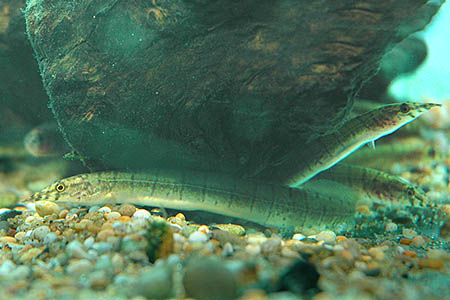
图片来自 SeriouslyFish,版权归各摄影者所有。
English
Overview
Burrowing Macrognathus zebrinus requires secure furnishings, soft sand, and a gap-free cover. It also preys on small fishes, and its eventual size needs to be considered before a juvenile is purchased.
Distribution & habitat
Records include Myanmar and Indonesia. Rivers and swamps with abundant aquatic vegetation provide habitat.
Aquarium setup
Use at least about 120 cm of tank length, with a layout around 120 × 45 × 45 cm emphasizing width over height. Place rocks and wood securely on the tank base before adding sand, preventing collapse if fish excavate underneath.
Soft sand is essential because sharp gravel can injure skin. A layer around 2.5 cm deep is sufficient; deeper beds can conceal the fish for extended periods. Plastic tubes provide shelters, whereas flowerpots with narrow drainage holes can trap it.
Keep light subdued and avoid strong current. Rooted plants may be dislodged, so floating growth or attached Anubias and ferns are useful alternatives. Seal lid and equipment openings carefully.
Diet & feeding
Natural prey includes small fishes and aquatic invertebrates. Captive individuals usually accept shrimp, clams, mussels, earthworms, and bloodworms, but seldom dry food.
New arrivals may feed more readily after lights-out until settled. That acclimation tactic does not establish exclusively nocturnal activity.
Behaviour & compatibility
Larger peaceful companions are possible if they cannot be swallowed. Some conspecific territoriality occurs, requiring very spacious quarters for multiple individuals.
Sexual dimorphism
Dependable fixed external characters are not established, although mature females tend to be thicker-bodied.
Breeding
Successful captive breeding has not been recorded.
Notes
Historical sources placed this species in Mastacembelus. Sharp dorsal rays can puncture human skin, so avoid direct gripping during transfer. An eel-like outline alone does not imply identical care to unrelated eels.
来源
- https://www.seriouslyfish.com/species/macrognathus-zebrinus(抓取于 2026-10-10)
macrognathus-zebrinus · 文件: data/species/macrognathus-zebrinus.md · 状态: 草稿