梭头鲈 · Giant Pikehead
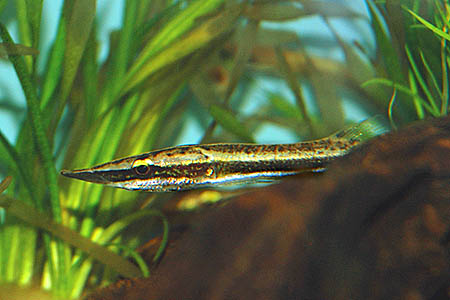
概要
| 字段 | 值 |
|---|---|
| 类别 | 鱼 |
| 学名 | Luciocephalus pulcher |
| 别名 | 梭頭鱸 |
| 分类 | 攀鲈目 Anabantiformes › 丝足鲈科 Osphronemidae › Luciocephalus |
| 水体 | 淡水 |
| 成体体长 | 20 cm |
| 饲养难度 | 中等 |
| 最小水体 | 108 L |
| 最小缸长 | 120 cm |
| 外部数据 | seriouslyfish luciocephalus-pulcher;fishbase 4503 |
| 原产地 | 泰国、马来西亚、印度尼西亚、文莱 |
| 食性 | 肉食 |
| 特征 | 吃小鱼: 是;吃虾: 是;会跳缸: 是 |
| 游动层 | 中层、上层 |
| 繁殖方式 | 口孵 |
水质参数
| 参数 | 耐受范围 | 最适范围 | 单位 |
|---|---|---|---|
| 水温 | 22–26 | — | °C |
| 总硬度 | 0–10 | — | dGH |
概述
梭头鲈(Luciocephalus pulcher)是伏击小鱼的迷鳃鱼,常静止悬在中上层等待猎物。它很难改吃死饵,入手前应先落实活饵供应和酸性水条件;运输后体况差的个体尤其需要谨慎选择。
分布与栖息地
分布于泰国、马来西亚、印度尼西亚和文莱部分地区,栖息于泥炭沼泽及其他森林黑水环境,水流常很弱甚至停滞。林冠遮光,水中矿物少、酸性强,腐殖质将水染成深褐色,底部散布枝木和落叶。
饲养环境
至少 120 cm 长的缸,使用浮水植物遮光,沉木枝条可部分伸出水面,落叶增强遮蔽。条件合适的密植缸也能使用。水必须偏酸,pH 6.0 已是人工饲养的上限,不能按普通中性混养缸管理。
过滤缓慢运行,水流很弱,但应规律部分换水以保持高水质。缸盖可靠防跳,水面与盖之间保留数厘米的湿润空气层供呼吸。
食性与喂食
主要捕食鱼类,可伸出的口部使它吞下接近自身一半大小的猎物。它依靠伪装静候,再突然突击,不能因平时不动就判断食量小或对小鱼安全。
水族饲养中改吃非活饵很困难,活鱼通常最受欢迎,也可接受蚯蚓、蟋蟀及活虾。如果使用饵料鱼,独立饲养、繁殖稳定的饵料群有助降低购买来源带入病原和寄生虫的风险。
习性与混养
最好专门单养。小鱼会被捕食,而更大或太活跃的鱼又容易使它紧张。空间充足时可同种群养,但所有个体必须大小相近,否则很容易发生同类相食。
繁殖
雄鱼口孵,已有水族繁殖成功记录。雄鱼含卵约 30 天,期间不进食,之后释放已发育完整的鱼苗。
补充说明
刚进口时易衰弱消瘦、出现细菌感染,购买时应观察嘴部和鳍基是否有红斑,以及是否异常无力。稳定、恢复摄食并给予适宜环境后可较耐养,但特殊饮食限制了适合的饲养者。
它没有正常发挥功能的鳔,同时具有迷鳃器官,可辅助利用空气中的氧。同属近似种(Luciocephalus aura)较小,体侧有明显虹彩斑点,可用于区分。
图片
图片来自 SeriouslyFish,版权归各摄影者所有。
English
Overview
Luciocephalus pulcher is an ambush predator often seen hovering in the middle or upper water. Reliance on live prey and a need for acidic conditions should be addressed before acquisition. Fish weakened by transport are especially challenging initially.
Distribution & habitat
It occurs in parts of Thailand, Malaysia, Indonesia, and Brunei, occupying peat swamps and other forested blackwater habitats. Dense canopy, little water movement, low mineral content, strong acidity, and accumulations of wood and leaves characterize these environments.
Aquarium setup
Use a tank at least 120 cm long with floating cover to create shade. Branches may extend above the surface, and leaves add shelter. A densely planted aquarium also works if water conditions are suitable. Acidity is essential: pH 6.0 is the upper aquarium limit given for this species.
Keep filtration slow and circulation minimal, while maintaining excellent quality through regular partial water changes. Fit a secure lid and retain several centimeters of humid air above the water for breathing and safe containment.
Diet & feeding
A specialized fish predator, it can extend its jaws dramatically and consume prey approaching half its own size. Camouflage and stillness precede a sudden strike. Lack of constant movement should not be mistaken for safety around small tankmates.
Conversion to nonliving food is rarely successful. Live fish are preferred, though earthworms, crickets, and live shrimp are also accepted. If feeder fish are used, maintaining a separate breeding colony reduces the disease and parasite risks associated with repeated purchases.
Behaviour & compatibility
A species aquarium is preferable. Smaller fish are prey, while larger or more energetic companions can intimidate it. Conspecific groups need generous room and closely matched sizes, since cannibalism is likely when sizes differ.
Breeding
Aquarium reproduction has occurred through paternal mouthbrooding. The male carries eggs for approximately 30 days without feeding, then releases fully developed young.
Notes
New imports may be thin, weak, and prone to bacterial infection. Avoid fish with red areas around the mouth or fins or pronounced lethargy. Settled, feeding individuals can become hardy under appropriate conditions, but the specialized diet remains a major commitment.
It lacks a functioning swim bladder and uses a labyrinth organ for supplementary air breathing. The similar Luciocephalus aura is smaller and has conspicuous iridescent flank spots.
来源
- https://www.seriouslyfish.com/species/luciocephalus-pulcher(抓取于 2026-10-10)
luciocephalus-pulcher · 文件: data/species/luciocephalus-pulcher.md · 状态: 草稿