光体鮠 · Jaguar Catfish
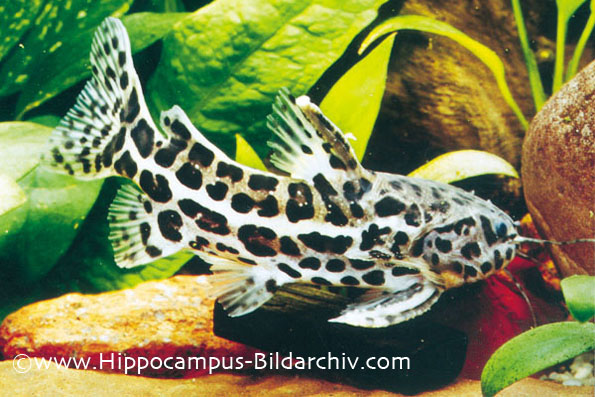
概要
| 字段 | 值 |
|---|---|
| 类别 | 鱼 |
| 学名 | Liosomadoras oncinus |
| 别名 | 光體鮠 |
| 分类 | 鲶形目 Siluriformes › 项鳍鲶科 Auchenipteridae › Liosomadoras |
| 水体 | 淡水 |
| 成体体长 | 25 cm |
| 饲养难度 | 入门 |
| 最小水体 | 243 L |
| 最小缸长 | 120 cm |
| 性情 | 温和 |
| 外部数据 | seriouslyfish liosomadoras-oncinus;fishbase 12106 |
| 原产地 | 南美洲乌卡亚利河、亚马孙河及内格罗河流域 |
| 特征 | 夜行性: 是;吃小鱼: 是 |
| 游动层 | 底层 |
水质参数
| 参数 | 耐受范围 | 最适范围 | 单位 |
|---|---|---|---|
| 水温 | 20–28 | — | °C |
| pH | 4.8–7.2 | — | — |
| 总硬度 | 0–15 | — | dGH |
概述
光体鮠(Liosomadoras oncinus)是带鲜明斑纹的夜行底栖鲶鱼,一般温和、胆小,但会在黑暗中吃小鱼。它比容易混淆的摩氏光体鮠(Liosomadoras morrowi)长得更大,选购时需考虑成年体形和产地水质。
分布与栖息地
分布记录涉及乌卡亚利河、亚马孙河及内格罗河流域,可生活在大河、溪流、湖泊和泛滥区。不同产地的水质差别很大,广泛分布不代表每一批鱼都适应所有极端条件。
饲养环境
底面积至少约 120 × 45 cm。照明宜暗,用圆滑石块、沉木、管道及耐弱光植物提供大量藏身处;多条同养时要有相应空间和掩护。
尽量了解购入个体的产地及原饲养水质,再安排环境,不宜只按宽泛参数范围任意调整。
食性与喂食
通常不挑食,喜吃红虫、蚯蚓等活饵和冷冻饵,也接受沉底干饲料。熄灯后投喂,确认夜间能获得自己的份额。
习性与混养
适合体形相当的温和缸友,太小的鱼会在夜间被吃掉。它偶尔对其他底栖鱼表现出地盘争夺,躲藏处应充足而分散。
同种相伴时似乎更安定,空间允许可维持小群,但不能因此忽略底部空间与掩护的竞争。
雌雄区分
雄鱼臀鳍有明显用于交接的改造;成熟后背鳍和胸鳍也比雌鱼厚。
繁殖
采用体内受精,缸内成功繁殖尚无确认记录。交接结构与卵胎生鱼的相似功能不能作为直接产仔的证据。
补充说明
与摩氏光体鮠(Liosomadoras morrowi)相比,本种花纹更亮、成年体形更大。过去曾因鳃盖棘而被归入另一科,这一历史不能代替当前身份核对;作为底栖鱼,仍应以实际体形、花纹和来源共同判断。
图片
图片来自 SeriouslyFish,版权归各摄影者所有。
English
Overview
Liosomadoras oncinus is a boldly patterned nocturnal catfish that spends much of its aquarium life near the bottom. Usually shy and peaceful, it nevertheless eats small fishes after dark. It grows larger than a commonly confused relative, making adult size and collection origin important considerations.
Distribution & habitat
Records concern the Ucayali, Amazon, and Negro river systems. It occupies large rivers, streams, lakes, and flooded areas. The wide geographic range encompasses differing water chemistry; it does not mean every individual is equally suited to all extremes.
Aquarium setup
Allow a footprint around 120 × 45 cm or greater. Subdued lighting and plentiful cover from smooth rocks, wood, pipes, and low-light plants support security. Several individuals need proportionally more space and shelter.
Try to establish both the collection origin and the water conditions used before purchase. A broad parameter range should not replace attention to the needs of the particular fish.
Diet & feeding
It readily accepts varied food, including live or frozen bloodworms and earthworms as well as sinking dry diets. Feed after lights go out and confirm that it obtains a share.
Behaviour & compatibility
Choose placid companions of comparable size. Small fishes can be swallowed at night. Occasional territorial interactions with other bottom dwellers are possible, so shelters should be numerous and separated.
It appears more comfortable with conspecific company, and a small group can be maintained where space permits. Social tendencies do not remove competition for bottom area and retreats.
Sexual dimorphism
Males have a strongly modified anal fin involved in mating. Mature males also develop thicker dorsal and pectoral fins than females.
Breeding
Fertilization is internal, but successful aquarium reproduction remains unconfirmed. Functional similarity between the mating structure and a livebearer's gonopodium should not be mistaken for evidence of livebearing.
Notes
Compared with Liosomadoras morrowi, it has brighter markings and a larger adult size. Its opercular spines once led to placement in a different family. That historical classification should not substitute for examining size, pattern, and provenance when identifying a fish.
来源
- https://www.seriouslyfish.com/species/liosomadoras-oncinus(抓取于 2026-10-10)
liosomadoras-oncinus · 文件: data/species/liosomadoras-oncinus.md · 状态: 草稿