眼斑雀鳝 · Spotted Gar
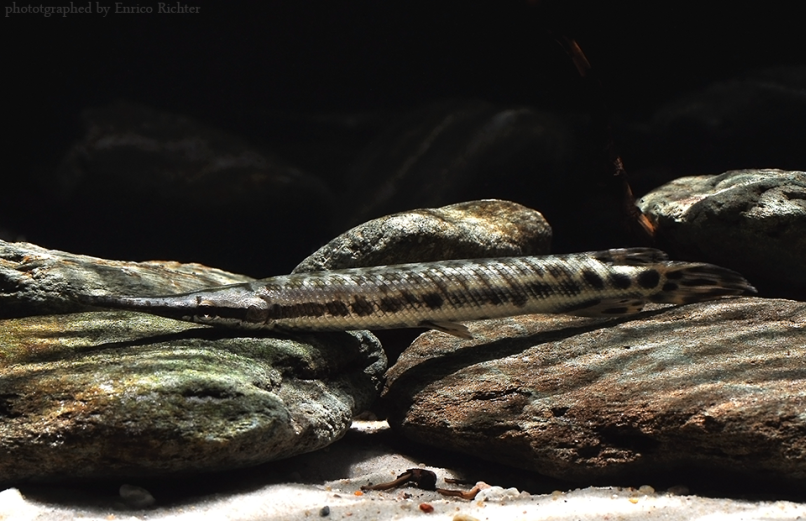
概要
| 字段 | 值 |
|---|---|
| 类别 | 鱼 |
| 学名 | Lepisosteus oculatus |
| 别名 | 点雀鳝、眼斑雀鱔、點雀鱔、Lepidosteus oculatus、Lepisosteus latirostris、Cylindostreus productus、Cylindrosteus agassizii、Cylindrosteus bartoni |
| 分类 | 雀鳝目 Lepisosteiformes › 雀鳝科 Lepisosteidae › Lepisosteus |
| 水体 | 淡水 |
| 原产地 | 墨西哥、美国 |
| 成体体长 | 125 cm |
| 饲养难度 | 中等 |
| 群居方式 | 独居 |
| 水流偏好 | 低 |
| 外部数据 | seriouslyfish lepisosteus-oculatus;fishbase 1075 |
| 繁殖方式 | 散卵 |
水质参数
| 参数 | 耐受范围 | 最适范围 | 单位 |
|---|---|---|---|
| 水温 | 12–20 | — | °C |
| pH | 6–8 | — | — |
| 总硬度 | 5–20 | — | dGH |
概述
眼斑雀鳝(Lepisosteus oculatus)来自北美洲,体型和数十年的寿命决定它不适合家庭鱼缸。只有少数大型公共水族设施能长期容纳,幼鱼出售不能代替对成年条件的评估。
分布与栖息地
从伊利湖、密歇根湖向南,经密西西比河流域延至墨西哥湾水系,记录包括佛罗里达至得克萨斯一带;墨西哥与美国边境格兰德河的部分记录仍以可能性描述。栖地有大湖、河流、缓流支流、回水和水潭,偏爱低海拔大型水体。
饲养环境
仅应考虑极大型公共展示,水流和照明都不宜强。成年空间需求是主要门槛,不能因幼鱼活动看似从容就缩小长期设施。
食性与喂食
可采用雀鳝类常用的适口鱼虾喂法,幼鱼逐步适应冷冻饵,较大个体用合适大小的整鱼。幼鱼每天喂,随成长减少频率,成年每周一两餐即可。
新鱼可能需要转食过程,体况不足时不宜持续停食;确实暂时只能吃活鱼的个体,应使用提前至少两周隔离调理的饵鱼,并逐步尝试非活饵。普通活饵鱼存在疾病和寄生虫风险,牛心及禽肉也不适合。
习性与混养
单独饲养最稳妥;若在合适大型设施中混养,伙伴必须体型接近、无攻击性,而且不可能被吞食。
繁殖
野外在 5–7 月繁殖,卵散在水生植物间,没有亲鱼照顾;单尾雌鱼一次可能产多达两万粒卵。人工繁殖尚未记录,不能把这个数量当作每尾必然达到的产卵量。
补充说明
雀鳝类特殊的血管化鳔能辅助呼吸空气,但长期空间需求仍然很高。
图片
图片来自 SeriouslyFish,版权归各摄影者所有。
English
Overview
A North American gar whose adult size and decades-long lifespan exceed normal home-aquarium capacity, Lepisosteus oculatus requires very large public facilities. Availability as a juvenile is not evidence that adequate adult housing will be straightforward.
Distribution & habitat
Distribution extends from Lakes Erie and Michigan through the Mississippi basin toward Gulf drainages in Florida and Texas. Some farther-south Rio Grande records remain qualified. It occupies lakes, rivers, slow tributaries, backwaters, and pools, favoring larger lowland waters.
Aquarium setup
Appropriate accommodation is limited to very large public displays. Avoid strong current and bright lighting. Adult space remains the primary constraint, regardless of how manageable a juvenile appears.
Diet & feeding
General gar feeding guidance uses suitably sized aquatic prey foods, moving from frozen shrimp and small fish to whole fish for larger specimens. Feed juveniles daily and reduce adults to one or two meals weekly.
Conversion to dead food may take time and requires adequate condition. If live fish are temporarily essential, quarantine and feed them well for at least two weeks before use, then seek alternatives. Routine feeder fish carry pathogen risks, while mammalian and avian meats are unsuitable.
Behaviour & compatibility
Individual housing is best. Any companions in suitable large facilities must be nonaggressive, of comparable size, and safely beyond swallowing capacity.
Breeding
Wild spawning occurs from May to July, with eggs scattered among aquatic plants and no parental care. One female may produce as many as twenty thousand eggs in an event. Captive reproduction is unrecorded, and that maximum should not be treated as a typical yield.
Notes
A vascularized swim bladder allows gars to supplement respiration with atmospheric air, without changing their substantial long-term space requirements.
来源
- https://www.seriouslyfish.com/species/lepisosteus-oculatus(抓取于 2026-10-10)
lepisosteus-oculatus · 文件: data/species/lepisosteus-oculatus.md · 状态: 草稿