Lepidocephalichthys micropogon
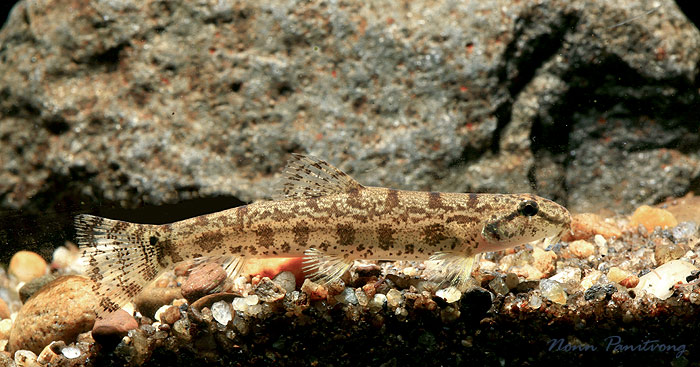
概要
| 字段 | 值 |
|---|---|
| 类别 | 鱼 |
| 学名 | Lepidocephalichthys micropogon |
| 别名 | Acanthopis micropogon、Lepidocephalichthys manipurensis |
| 分类 | 鲤形目 Cypriniformes › 鳅科 Cobitidae › Lepidocephalichthys |
| 水体 | 淡水 |
| 原产地 | 孟加拉国、印度、缅甸、泰国 |
| 成体体长 | 5.5 cm |
| 饲养难度 | 中等 |
| 最小水体 | 54 L |
| 最小缸长 | 60 cm |
| 群居方式 | 群游 |
| 特征 | 会跳缸: 是 |
| 外部数据 | seriouslyfish lepidocephalichthys-micropogon;fishbase 26917 |
水质参数
| 参数 | 耐受范围 | 最适范围 | 单位 |
|---|---|---|---|
| 水温 | 20–25 | — | °C |
| pH | 6–7.5 | — | — |
概述
Lepidocephalichthys micropogon 是缅甸及周边流域的小型鳅,尾鳍深叉,通常带四条宽而不规则的 V 形深带,触须较短。水族贸易中可能作为其他鱼的混入个体出现,标签需要与实际特征核对。
分布与栖息地
已知来自缅甸与泰国西部的萨尔温江、缅甸 Sittaung 和伊洛瓦底江,以及孟加拉国、印度阿萨姆的布拉马普特拉河水系。历史模式地 Tenasserim 的表述可能对应 Sittaung 流域,但不宜据此精确定位某一现今采集点。
具体栖地尚未确认。相似近亲多在浅水缓流、沼泽、牛轭湖、回水和稻田生活,软泥底有植被、根枝与落叶,水深和清澈度随季节变化。这些是近亲参考,不应写成本种全部已测环境。
饲养环境
至少约 60 × 30 cm 底面积,提供柔软细砂,以满足可能的埋砂行为。粗砾可能伤鱼或妨碍取食。沉木、根枝及平滑岩石先稳放再铺砂,形成阴影和退避位置,防止钻掘后造景倾倒。
灯光可较暗,少量落叶增加遮蔽。避免强流,同时保持适当供氧。进水口防小鱼钻入,缸盖严密防跳,尤其注意新入缸阶段。
食性与喂食
它可能像近亲一样筛底质捕食昆虫幼虫、小型甲壳动物等。缸内可尝试适口沉底干粮,并定期提供水蚤、丰年虾和红虫等小型活饵或冻饵,观察是否实际吃到食物。
习性与混养
同属鱼通常较温和,建议至少四条同种,并配相近环境的平和上层鱼帮助减少紧张。其他鳅类要排除强领域性或好斗伙伴。近亲可能吃卵或仔鱼的风险,不应因为平时安静而忽略。
雌雄区分
成熟雄鱼胸鳍较大,第七、八鳍条融合加粗形成板状结构,本种可形成较大、背面凹陷的突起,有时带锯齿。雌鱼通常较大、更厚实。
补充说明
尾鳍深叉、短触须、背鳍起点通常在腹鳍之后,有助于区别外形相近的鱼。与同属近缘记录(Lepidocephalichthys manipurensis)是否同物异名,历史处理不同,辨认时应留意名称关系。捞取时注意可竖起的眼下棘可能挂网。
图片
图片来自 SeriouslyFish,版权归各摄影者所有。
English
Overview
Lepidocephalichthys micropogon is a small loach from Myanmar and neighboring drainages. A deeply forked tail, usually with four broad irregular V-shaped bars, and short barbels help recognition. Occasional bycatch in other fish shipments makes label checking important.
Distribution & habitat
Records include the Salween in Myanmar and western Thailand, Myanmar's Sittaung and Irrawaddy, and the Brahmaputra in Bangladesh and Assam, India. The historical Tenasserim type locality may correspond to the Sittaung basin, but does not establish a precise modern collection site.
Its habitat is unconfirmed. Similar relatives use shallow slow channels, swamps, oxbows, backwaters, and rice fields with soft mud, vegetation, roots, and leaves. Seasonal clarity and depth changes are comparative background rather than complete observations of this species.
Aquarium setup
Allow at least about 60 × 30 cm with soft fine sand for probable burial behavior. Coarse gravel may injure fish or disrupt feeding. Secure wood, roots, and smooth stones before adding sand, providing shaded retreats without risking collapse if excavation occurs.
Dim lighting and modest leaves add shelter. Avoid strong flow while maintaining oxygenation. Protect intakes from small fish and fit a secure cover, especially during initial settling.
Diet & feeding
It probably sifts substrate for insect larvae and small crustaceans like its relatives. Try suitable sinking dry foods alongside regular small live or frozen Daphnia, brine shrimp, and bloodworms, checking actual intake.
Behaviour & compatibility
The genus is generally peaceful. At least four conspecifics are recommended, with calm upper-water fish under similar conditions to reduce nervousness. Exclude aggressive or strongly territorial loaches. Possible egg or fry predation by relatives remains relevant despite quiet everyday behavior.
Sexual dimorphism
Males develop enlarged pectorals with fused, thickened seventh and eighth rays. The resulting plate may form a large dorsally concave flange, sometimes serrated. Females are generally larger and fuller-bodied.
Notes
Deep tail forking, short barbels, and the dorsal origin usually behind the pelvic origin assist identification. Historical treatments differ over synonymy with Lepidocephalichthys manipurensis; the recorded name and aliases are retained. Erectable eye spines require care during netting.
来源
ID:lepidocephalichthys-micropogon · 文件: data/species/lepidocephalichthys-micropogon.md · 状态: 草稿