Lepidocephalichthys kranos
概要
| 字段 | 值 |
|---|---|
| 类别 | 鱼 |
| 学名 | Lepidocephalichthys kranos |
| 分类 | 鲤形目 Cypriniformes › 鳅科 Cobitidae › Lepidocephalichthys |
| 水体 | 淡水 |
| 原产地 | 老挝、泰国、越南 |
| 成体体长 | 4.5 cm |
| 饲养难度 | 入门 |
| 最小水体 | 54 L |
| 最小缸长 | 60 cm |
| 群居方式 | 群游 |
| 特征 | 会跳缸: 是;翻底砂: 是 |
| 外部数据 | seriouslyfish lepidocephalichthys-kranos;fishbase 65368 |
| 食性 | 肉食 |
水质参数
| 参数 | 耐受范围 | 最适范围 | 单位 |
|---|---|---|---|
| 水温 | 23–26 | — | °C |
| pH | 5.5–7.5 | — | — |
| 总硬度 | 2–10 | — | dGH |
概述
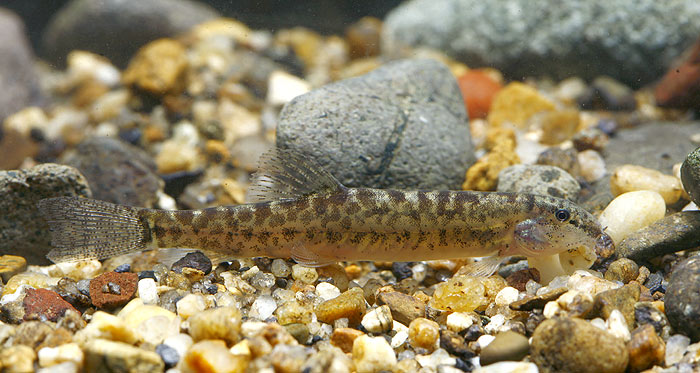
Lepidocephalichthys kranos 是泰国及湄公河流域的小型鳅,体纹常呈马赛克状,吻后身体迅速增高,形成较明显的隆背轮廓。头顶较大且外露的鳞片也是识别线索。
分布与栖息地
明确记录包括泰国湄南河水系,以及泰国、老挝和越南境内的湄公河流域。模式地位于泰国乌汶附近 Mun 河水系的沼泽。泰国东部其他小水系也可能存在,但尚不能全部纳入确定分布。
常利用浅水缓流、沼泽、牛轭湖、回水与稻田,软泥底上多植物、根枝和落叶,可与 Lepidocephalichthys hasselti 同域。季节性水深、水色变化明显,部分旱季水体可能低氧;属内鱼的辅助肠呼吸能力不能作为缸内缺氧的理由。
饲养环境
至少约 60 × 30 cm 底面积,铺柔软细砂供埋身。粗砾会妨碍钻掘、造成擦伤并影响觅食。岩石、木材先固定再加砂,防止钻掘后倒塌。弱光和少量落叶能增加藏身条件。
供氧适当而水流不必强。保护过滤进水口,防止小鱼钻入;盖好缸,尤其新入缸时避免跳出。
食性与喂食
本种主要捕食微小动物,经鳃筛出底质中的昆虫幼虫、小甲壳动物等。沉底干粮可与水蚤、丰年虾、红虫等小型活饵或冻饵轮换,不宜只靠残饵维持。
习性与混养
至少四条同种较合适,温和的上层鱼可降低紧张。其他钻砂鳅类需逐种确认,避免强领域性或好斗伙伴。同属鱼可能吃卵、仔鱼,繁殖混养仍须考虑风险。
雌雄区分
成熟雄鱼胸鳍增大,内侧第七、八鳍条融合加粗,形成小型板状突起。雌鱼一般更大、更厚实;体纹会有变化,不能只靠一条侧纹判断性别。
繁殖
野外可能是季节性繁殖,水族繁殖尚未有明确结果,不能把季节性涨水直接当作已验证的催产方案。
补充说明
头顶大鳞、隆起的颈背、体侧细而断续的深纹应与马赛克花纹一起观察。鳅科眼下棘可在受惊时竖起,捞取时需防挂网。
图片
图片来自 SeriouslyFish,版权归各摄影者所有。
English
Overview
Lepidocephalichthys kranos is a small loach from Thailand and the Mekong region. A mosaic-like pattern, steep increase in body depth behind the snout, and large exposed crown scales provide useful identification clues.
Distribution & habitat
Confirmed records cover Thailand's Chao Phraya system and the Mekong in Thailand, Laos, and Vietnam. The type locality is a marsh in the Mun drainage near Ubon Ratchathani. Other eastern Thai drainages are possible extensions, not confirmed throughout.
Shallow slow channels, swamps, oxbows, backwaters, and rice fields provide soft mud, vegetation, roots, and leaves. It may coexist with Lepidocephalichthys hasselti. Seasonal changes affect depth and clarity, and some dry-season habitats become oxygen-poor. Intestinal air breathing known within the genus does not justify inadequate aquarium oxygenation.
Aquarium setup
Allow at least about 60 × 30 cm with soft fine sand for burial. Coarse gravel impedes digging and feeding and risks injury. Secure rocks and wood before adding substrate. Dim light and modest leaves improve shelter.
Provide oxygenation without strong currents. Guard intakes and cover the aquarium securely, especially while newly introduced fish settle.
Diet & feeding
A micropredator, it sifts insect larvae and small crustaceans from the substrate. Combine sinking dry food with small live or frozen Daphnia, brine shrimp, and bloodworms rather than relying on leftovers.
Behaviour & compatibility
At least four conspecifics are preferable. Peaceful fish above the bottom can reduce nervousness. Other loaches require screening for territoriality and aggression. Possible egg or fry predation among congeners remains relevant in breeding communities.
Sexual dimorphism
Males develop enlarged pectorals with fused, thickened seventh and eighth rays forming a small plate-like projection. Females are generally larger and fuller-bodied. Pattern variation makes a single flank stripe an unreliable sexing test.
Breeding
Seasonal reproduction in nature is suggested, but aquarium breeding is not established. Seasonal flooding alone does not supply a verified spawning procedure.
Notes
Combine crown scales, a muscular raised nape, and a thin interrupted lateral mark with the mosaic pattern when comparing specimens. Erectable eye spines can snag nets during handling.
来源
- https://www.seriouslyfish.com/species/lepidocephalichthys-kranos(抓取于 2026-10-10)
lepidocephalichthys-kranos · 文件: data/species/lepidocephalichthys-kranos.md · 状态: 草稿