乔氏似鳞头鳅
概要
| 字段 | 值 |
|---|---|
| 类别 | 鱼 |
| 学名 | Lepidocephalichthys jonklaasi |
| 别名 | 喬氏似鱗頭鰍、Lepidocephalus jonklaasi |
| 分类 | 鲤形目 Cypriniformes › 鳅科 Cobitidae › Lepidocephalichthys |
| 水体 | 淡水 |
| 原产地 | 斯里兰卡 |
| 成体体长 | 4.5 cm |
| 饲养难度 | 中等 |
| 最小水体 | 54 L |
| 最小缸长 | 60 cm |
| 群居方式 | 群游 |
| 特征 | 会跳缸: 是;翻底砂: 是 |
| 外部数据 | seriouslyfish lepidocephalichthys-jonklaasi;fishbase 6156 |
水质参数
| 参数 | 耐受范围 | 最适范围 | 单位 |
|---|---|---|---|
| 水温 | 20–25 | — | °C |
| pH | 5.5–7.5 | — | — |
| 总硬度 | 2–15 | — | dGH |
概述
乔氏似鳞头鳅(Lepidocephalichthys jonklaasi)来自斯里兰卡西南湿润地带的林溪,分布范围有限,栖地破坏是其重要威胁。底砂既是取食场所,也是钻藏的庇护,布缸应围绕细沙、遮阴和安静的水流展开。
分布与栖息地
记录包括金河、卡卢河、尼尔瓦拉河和本托塔河水系,以及科塔瓦附近的小黑水溪。典型环境是雨林下清澈或略带茶色的浅溪,沙底覆盖落叶和枝条,岸根悬入水中,水草相对少,水质通常偏软。
饲养环境
底面积可参考 60 × 30 厘米。使用细沙,它会全身埋入或只露出眼睛;粗砾可能造成擦伤、紧迫和进食困难。石木应在铺沙前放稳,配合落叶和弱光形成多个藏身点。水流不必强,但仍要保证溶氧,遮好过滤入口并盖严缸盖。
食性与喂食
可能主要摄食微小动物。可用颗粒足够小的下沉饲料,搭配水蚤、丰年虾、红虫等活饵或冷冻饵,不应依靠其他鱼留下的残食。
习性与混养
同属鱼通常温和,可参考四尾以上的群养建议。混养伙伴应适应相近的安静环境,避开强势、争地盘的底层鱼;卵和鱼苗存在被吃的可能。
雌雄区分
成熟雄鱼胸鳍较大,内侧第七、八鳍条融合增厚成特殊结构;雌鱼一般稍大、体形更厚实。
补充说明
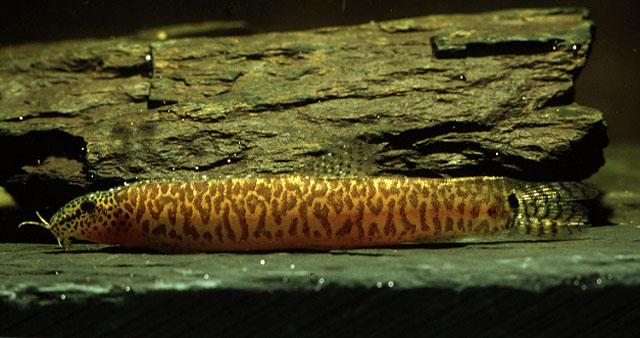
体侧的大型纵长斑常连成不规则横带,尾鳍有三至六条宽黑纹,可配合近圆至截形的尾缘辨认。头部缺鳞不代表全身无鳞。捞取时需留意眼下棘挂网。
图片
图片来自 SeriouslyFish,版权归各摄影者所有。
English
Overview
Restricted to wet southwestern Sri Lanka, Lepidocephalichthys jonklaasi inhabits forest streams threatened by habitat loss. A suitable aquarium centers on sand for retreat and feeding, overhead shade, and gentle water movement.
Distribution & habitat
Known sites include the Gin, Kalu, Nilwala, and Bentota drainages and a small blackwater creek near Kottawa. Shaded shallow streams have clear or lightly stained water, sandy beds beneath leaves and branches, and overhanging roots. Aquatic plants are relatively sparse and the water is generally soft.
Aquarium setup
Allow a 60 by 30 cm footprint, using fine sand in which the fish can disappear or leave just its eyes exposed. Rough gravel risks injury and interferes with feeding. Place stable wood and rocks before adding sand, then supply leaf cover and dim refuges. Retain good oxygenation without a powerful current; protect filter openings and cover the aquarium securely.
Diet & feeding
Its natural diet is thought to consist mainly of tiny animal prey. Offer suitably small sinking foods together with live or frozen Daphnia, Artemia, and bloodworms, ensuring meals reach the fish rather than depending on leftovers.
Behaviour & compatibility
Genus-level guidance describes peaceful fishes that benefit from groups of at least four. Select companions suited to similarly quiet conditions and avoid domineering bottom-dwellers. Eggs and fry may be taken as food.
Sexual dimorphism
Mature males have enlarged pectorals with thickened, fused inner rays. Females are generally larger and deeper-bodied.
Notes
Large, vertically extended flank blotches can form irregular bars; three to six broad dark tail bands and a rounded to truncate tail provide further clues. A scaleless head does not imply a scaleless body. Subocular spines can catch in a net.
来源
ID:lepidocephalichthys-jonklaasi · 文件: data/species/lepidocephalichthys-jonklaasi.md · 状态: 草稿