赫氏似鳞头鳅
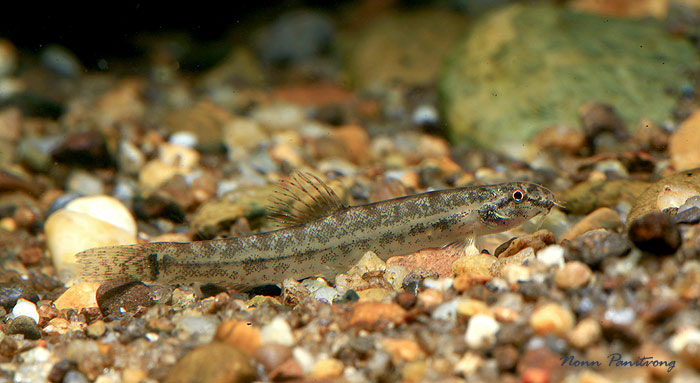
概要
| 字段 | 值 |
|---|---|
| 类别 | 鱼 |
| 学名 | Lepidocephalichthys hasselti |
| 别名 | 八须鳞头鳅、赫氏似鱗頭鰍、八鬚鱗頭鰍、Cobitis hasselti、Lepidocephalichthys nudus、Acanthophthalmus unistriatus |
| 分类 | 鲤形目 Cypriniformes › 鳅科 Cobitidae › Lepidocephalichthys |
| 水体 | 淡水 |
| 原产地 | 柬埔寨、印度尼西亚、老挝、马来西亚、缅甸、泰国、越南 |
| 成体体长 | 6 cm |
| 饲养难度 | 入门 |
| 最小水体 | 54 L |
| 最小缸长 | 60 cm |
| 群居方式 | 群游 |
| 特征 | 会跳缸: 是;翻底砂: 是 |
| 外部数据 | seriouslyfish lepidocephalichthys-hasselti;fishbase 23019 |
| 食性 | 肉食 |
水质参数
| 参数 | 耐受范围 | 最适范围 | 单位 |
|---|---|---|---|
| 水温 | 23–26 | — | °C |
| pH | 5.5–7.5 | — | — |
| 总硬度 | 2–10 | — | dGH |
概述
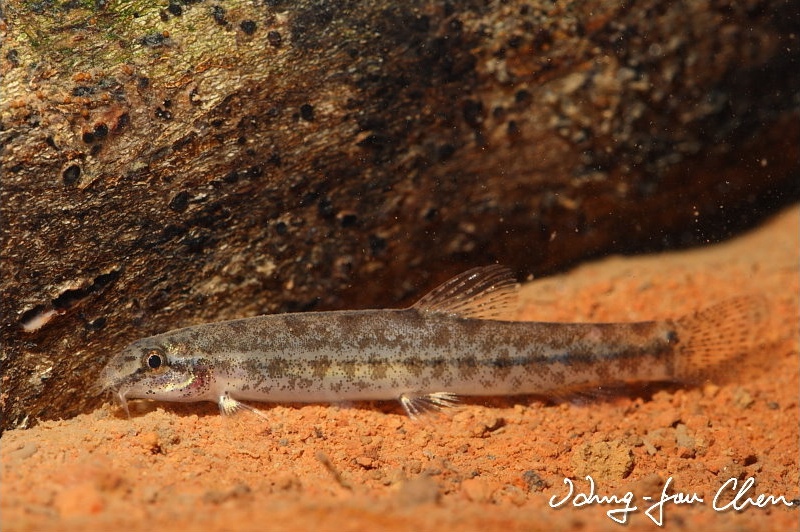
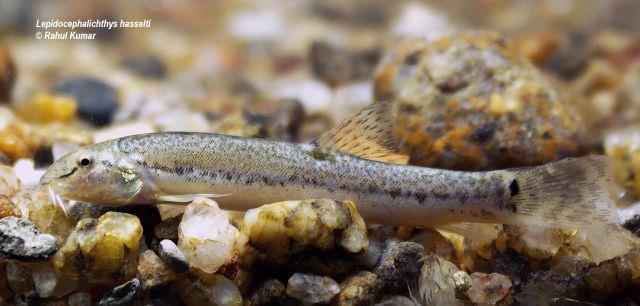
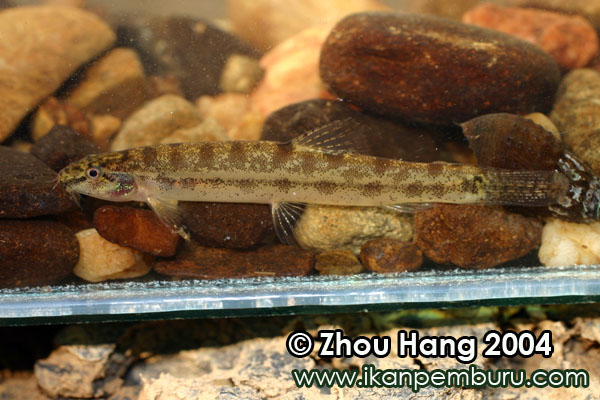
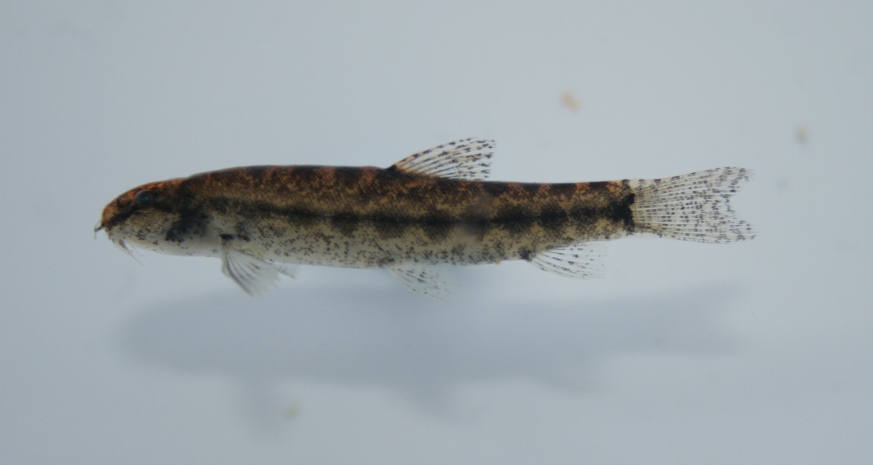
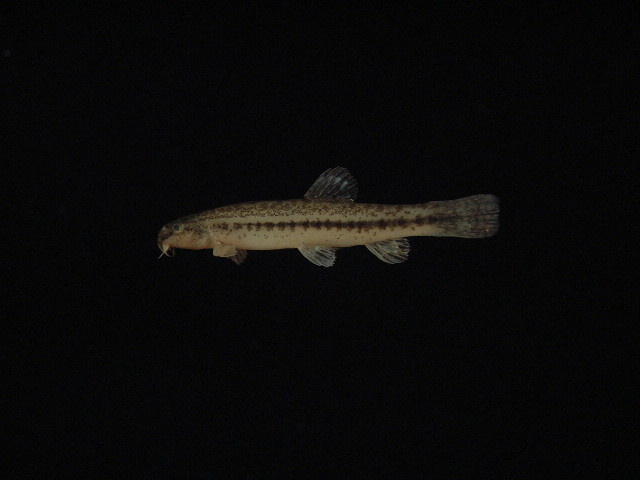
赫氏似鳞头鳅(Lepidocephalichthys hasselti)分布广、产地间纹样变化大,体侧常有连续暗带或一列深斑,上方为浅色带。即使出现在有急滩的河流中,它也可能专门选择软底浅湾,缸内不宜一味加大水流。
分布与栖息地
从缅甸、泰国、老挝、柬埔寨和越南,到马来半岛、苏门答腊、爪哇和婆罗洲均有记录。栖地包括泥底浅池、回水、稻田和河缘,植被、根枝或落叶常提供遮蔽,水况随季节变化。
饲养环境
底面积至少参考 60 × 30 厘米,细沙供钻藏,粗砾可能伤鱼或影响进食。先放稳石木再铺沙,弱光、叶堆和多个阴影位置较合适。避免高速水流,保持增氧,并防止鱼进入过滤入口或跳出。
食性与喂食
以筛砂取得的微小动物为主,下沉干粮搭配水蚤、丰年虾、红虫等小型活冷冻饵。
习性与混养
可参考同属四尾以上群养建议,选择相近环境的温和中上层鱼作伙伴。其他底层鳅要避开过强争地盘的种类,卵和鱼苗可能成为食物。
雌雄区分
雄鱼胸鳍增大,最内侧第七、八鳍条融合成小型向上突起的结构。雌鱼一般稍大、更厚实,体侧偏斑点,雄鱼偏暗带。
补充说明
头顶局部少鳞不能理解为全身无鳞。尾鳍网纹、尾根小黑点及浅色侧带可综合辨认;眼下棘捞鱼时可能挂网。
图片
图片来自 SeriouslyFish,版权归各摄影者所有。
English
Overview
Widespread Lepidocephalichthys hasselti varies in pattern by locality, often showing a dark flank stripe or blotch row beneath a pale band. Even in rivers containing rapids, observed fish can favor quiet soft-bottomed bays, so strong aquarium flow is not automatically appropriate.
Distribution & habitat
Records extend from mainland Southeast Asia through Peninsular Malaysia, Sumatra, Java, and Borneo. Shallow muddy pools, backwaters, paddies, and river margins offer vegetation, roots, or leaves, with seasonal variation in water conditions.
Aquarium setup
Provide at least a 60 by 30 cm footprint with fine sand. Secure hardscape first, then add substrate and shaded refuges with leaves and wood. Coarse gravel can disrupt feeding or damage burrowing fish. Avoid strong flow while retaining oxygenation, protected intakes, and a close cover.
Diet & feeding
It extracts tiny invertebrates from substrate. Combine sinking prepared foods with regular small live or frozen meals rather than relying on scavenging.
Behaviour & compatibility
A group of four or more follows genus-level recommendations. Compatible quiet open-water fishes are potential companions; avoid territorial bottom-dwellers and account for possible predation on eggs or fry.
Sexual dimorphism
Males develop enlarged pectorals with fused inner rays forming a small upward-oriented flange. Females tend to be larger and fuller-bodied, with spotted flanks rather than the male stripe.
Notes
A partly scaleless crown does not imply a scaleless body. Tail reticulation, a small tail-base spot, and the pale flank stripe assist identification. Erectable subocular spines require care during netting.
来源
ID:lepidocephalichthys-hasselti · 文件: data/species/lepidocephalichthys-hasselti.md · 状态: 草稿