尖吻鲈 · Barramundi
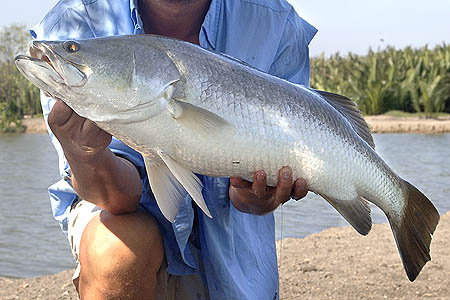
概要
| 字段 | 值 |
|---|---|
| 类别 | 鱼 |
| 学名 | Lates calcarifer |
| 别名 | 扁红目鲈、盲槽、金目鲈、盲鰽、尖吻鱸、扁紅目鱸(台湾)、金目鱸(台湾) |
| 分类 | 尖嘴鲈科 Latidae › Lates |
| 水体 | 淡水 |
| 成体体长 | 200 cm |
| 饲养难度 | 中等 |
| 特征 | 吃小鱼: 是 |
| 外部数据 | seriouslyfish lates-calcarifer;fishbase 346 |
| 原产地 | 从波斯湾向东经亚洲沿岸,向南至印度尼西亚及澳大利亚 |
| 食性 | 肉食 |
| 性情 | 温和 |
水质参数
| 参数 | 耐受范围 | 最适范围 | 单位 |
|---|---|---|---|
| 水温 | 15–28 | — | °C |
| pH | 7–8.5 | — | — |
| 总硬度 | 10–30 | — | dGH |
概述
尖吻鲈(Lates calcarifer)是能够长成巨鱼的捕食者。店里的幼鱼看起来尚可容纳,并不代表普通水族箱能承担终生饲养;成年所需空间、过滤能力和食物量,都远超常见家庭设施。
分布与栖息地
分布从波斯湾向东延伸,经印度、泰国、中国和日本,再向南至印度尼西亚及澳大利亚。既见于淡水河湖,也生活在咸淡水和近海环境,偏好有沉木、岩石突出部等水下掩护的区域。
饲养环境
成年需要极大的池体或水族设施。装饰形式并非核心问题,真正的限制是容纳巨型鱼活动的空间,以及处理大量排泄物的过滤系统。它能适应含盐水体,在合适条件下可以生活于咸淡水或海水系统;不能仅因幼鱼暂时在淡水缸中出售,就忽略其跨盐度生活史。
食性与喂食
野外主要捕食鱼类,幼鱼在人工环境下也有接受虾和小鱼饵料的记录。成年需要相当数量、大小合适的整鱼,长期食物成本不可忽视。大型个体进食冲击力强,投喂时应保持距离,避免让手靠近抢食区域。
习性与混养
对于吞不下的同伴通常较温和,但它不断增长的嘴和体型,会使长期合适的混养对象越来越有限。幼鱼与大型慈鲷、虎鱼、龙鱼或鲶鱼共处的记录,不能作为成年仍可安全混养的保证。
繁殖
自然繁殖涉及从淡水向咸淡水或海水迁移,普通水族箱无法提供完整条件。个体生命早期为雄性,经过数年后部分转变为雌性;不能据此推断每尾鱼都会在同一时间变性。
补充说明
本种也是重要的食用鱼和游钓鱼。幼年外形具有吸引力,但购鱼时更应考虑成年设施,不能把短期容纳幼鱼视为饲养成功。
图片
图片来自 SeriouslyFish,版权归各摄影者所有。
English
Overview
A juvenile Lates calcarifer gives little indication of the facilities needed throughout its life. This massive predator is inappropriate for ordinary home aquaria. Long-term space, filtration, and feeding demands matter far more than whether a young specimen fits into the available tank today.
Distribution & habitat
Its range runs east from the Persian Gulf through India, Thailand, China, and Japan, then south through Indonesia to Australia. Freshwater rivers and lakes, estuaries, and marine coastal habitats are all occupied. Submerged timber and rocky overhangs provide favored cover.
Aquarium setup
Adults require exceptionally large tanks or ponds. Decoration is secondary to usable space and filtration capable of processing a giant fish's waste. The species tolerates saline water and can occupy brackish or marine systems where appropriate. Its availability in freshwater retail tanks should not obscure that broader life history.
Diet & feeding
Natural feeding centers strongly on fish. Young captive specimens have also accepted shrimp and small fish foods. Adults demand substantial amounts of suitable whole fish, creating a continuing cost as well as a storage and feeding commitment. Large individuals strike forcefully; keep hands away from the feeding area.
Behaviour & compatibility
Fish too large to swallow are generally tolerated. That condition becomes difficult to satisfy as the predator grows. Successful juvenile associations with large cichlids, tiger perches, arowanas, or catfishes do not establish lifelong compatibility.
Breeding
In nature, reproduction involves migration from fresh water toward brackish or marine conditions. Routine aquarium propagation is impractical. Individuals begin their lives as males, with some changing to females after several years; this does not mean every individual changes at an identical age.
Notes
Barramundi are valued as food and sport fish in their native range. Their attractive juvenile appearance should be considered alongside the extraordinary adult housing requirement before any acquisition.
来源
- https://www.seriouslyfish.com/species/lates-calcarifer(抓取于 2026-10-10)
lates-calcarifer · 文件: data/species/lates-calcarifer.md · 状态: 草稿