眼斑亮丽鲷 · Ocellated Shell-dweller
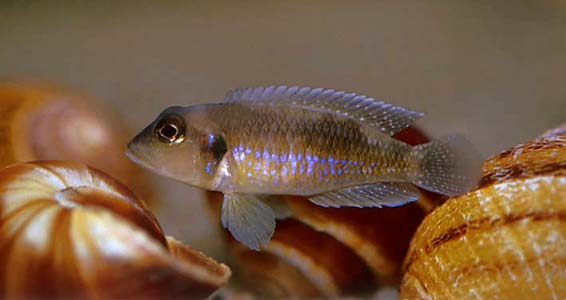
概要
| 字段 | 值 |
|---|---|
| 类别 | 鱼 |
| 学名 | Lamprologus ocellatus |
| 别名 | 眼斑亮麗鯛 |
| 分类 | 慈鲷目 Cichliformes › 慈鲷科 Cichlidae › Lamprologus |
| 水体 | 淡水 |
| 成体体长 | 6 cm |
| 饲养难度 | 入门 |
| 领地性 | 是 |
| 外部数据 | seriouslyfish lamprologus-ocellatus;fishbase 8619 |
| 原产地 | 坦噶尼喀湖 |
| 特征 | 翻底砂: 是 |
| 繁殖方式 | 附着产卵 |
水质参数
| 参数 | 耐受范围 | 最适范围 | 单位 |
|---|---|---|---|
| 水温 | 23–27 | — | °C |
| pH | 7.5–9 | — | — |
| 总硬度 | 10–25 | — | dGH |
概述
眼斑亮丽鲷(Lamprologus ocellatus)是会搬沙埋壳的小型贝居慈鲷。它常把住所埋到只露入口,随后强烈守卫周围领地,甚至埋掉邻近空壳来阻止其他鱼入住;小体形并不意味着缺乏攻击性。
分布与栖息地
本种为坦噶尼喀湖特有鱼,栖息于湖岸附近有散石、开阔沙地和大量空螺壳的区域。
饲养环境
一对或一雄配两三雌可参考约 45 × 30 × 30 厘米的缸,群落饲养需要更大空间。保留开阔沙地,沙层至少约 5 厘米,并放入多于鱼数的空壳。贝壳宜分散布置,水保持硬且偏碱,不能只用少量装饰壳代替实际领地空间。
食性与喂食
活饵和冻饵应占主要部分,通常也会接受干粮。提供合口、多样的食物,并确保守在壳边的个体也能进食。
习性与混养
会积极守卫螺壳和附近区域,维护缸内时也可能咬手。可与活动于其他区域的适当坦湖岩栖鱼或开阔水域鱼组合;群养应保持壳充足、雌鱼多于雄鱼,避免雄鱼争斗失控。
雌雄区分
雄鱼明显大于雌鱼,背鳍和臀鳍边缘偏金色,雌鱼相应边缘偏白。
繁殖
繁殖通常不难,在螺壳内产卵。可参考 pH 8.0~8.5、25~26.5 °C,一雄多雌、贝壳间留距离。雌鱼在所选壳口展示后进入产卵,随后倒退离壳,雄鱼释放的精液随水流进入壳内;较大壳也可能容雄鱼进入受精。
受精后雄鱼不再参与护幼,雌鱼会将它排除在自己领地之外,并伏在壳口扇水。卵约三天孵化,约到第十天仔鱼自由游动,随后逐渐探索更远处,最终被雌鱼逐出。开口可吃丰年虾无节幼体或微虫。若想提高整窝成活率,可另缸育幼,因为群落中的其他鱼可能捕食它们。
补充说明
与外形相似的 Lamprologus brevis 相比,本种体侧没有明显垂直横带,市场也有金色色型。埋壳形成沙丘可能帮助引导微生物到壳口,供仔鱼利用,但这属于功能解释的假说,不能当作不喂幼鱼的理由。
图片
图片来自 SeriouslyFish,版权归各摄影者所有。
English
Overview
Lamprologus ocellatus is a small shell-dwelling cichlid that reshapes its sandy surroundings. It commonly buries its home until only the entrance remains visible and may cover neighboring shells to prevent occupation. Its size should not obscure its vigorous territorial defense.
Distribution & habitat
Endemic to Lake Tanganyika, it occupies shoreline areas combining scattered rocks, open sand and numerous empty snail shells.
Aquarium setup
A tank around 45 × 30 × 30 cm is a reference for a pair or one male with two or three females; a colony needs more room. Provide open sand at least approximately 5 cm deep and more shells than fish. Space the shells apart and maintain hard alkaline water. A few decorative shells cannot substitute for usable territorial space.
Diet & feeding
Live and frozen foods should predominate, though dry preparations are usually accepted. Offer suitably sized, varied meals and check that individuals remaining close to their shells also feed.
Behaviour & compatibility
The shell and its surrounding patch are defended vigorously, sometimes even against a hand during maintenance. Appropriate Tanganyikan rock dwellers or open-water fishes may coexist if they use different areas. Colonies need ample shells and more females than males to limit fighting.
Sexual dimorphism
Males are substantially larger, with gold edging to the dorsal and anal fins; female fin margins are whitish.
Breeding
Shell spawning is generally straightforward. Around pH 8.0–8.5 and 25–26.5 °C are useful references, with several females per male and widely spaced shells. A female displays at her entrance, enters to lay and then backs out. The male releases sperm that is carried inward by the resulting water movement, or enters himself if the shell is sufficiently large.
After fertilization he takes no further part in care and is excluded from the female's territory. She fans the eggs while covering the entrance. Hatching takes about three days, and free swimming occurs around day ten. Fry progressively explore farther away before eventually being expelled. Brine-shrimp nauplii or microworms are suitable first foods. Separate rearing can improve survival because other colony members may prey on the young.
Notes
Unlike the similar Lamprologus brevis, this species lacks vertical flank bars. A gold form is also traded. One hypothesis proposes that sand around the buried shell directs microorganisms toward its entrance and benefits fry; this remains a proposed function, not a substitute for feeding them.
来源
- https://www.seriouslyfish.com/species/lamprologus-ocellatus(抓取于 2026-10-10)
lamprologus-ocellatus · 文件: data/species/lamprologus-ocellatus.md · 状态: 草稿