刚果亮丽鲷 · Congo Lamprologus
概要
| 字段 | 值 |
|---|---|
| 类别 | 鱼 |
| 学名 | Lamprologus congoensis |
| 别名 | 剛果亮麗鯛 |
| 分类 | 慈鲷目 Cichliformes › 慈鲷科 Cichlidae › Lamprologus |
| 水体 | 淡水 |
| 成体体长 | 15 cm |
| 饲养难度 | 中等 |
| 最小水体 | 162 L |
| 最小缸长 | 120 cm |
| 水流偏好 | 高 |
| 外部数据 | seriouslyfish lamprologus-congoensis;fishbase 8616 |
| 原产地 | 刚果共和国及刚果民主共和国的刚果河流域 |
| 性情 | 攻击性 |
| 领地性 | 是 |
| 游动层 | 底层 |
| 繁殖方式 | 附着产卵 |
水质参数
| 参数 | 耐受范围 | 最适范围 | 单位 |
|---|---|---|---|
| 水温 | 23–25 | — | °C |
| pH | 6–7.5 | — | — |
| 总硬度 | 5–15 | — | dGH |
概述
刚果亮丽鲷(Lamprologus congoensis)是适应急流的河流慈鲷,主要贴近底床活动。它攻击性和领地性较强,不能因为同属其他鱼来自坦湖,就照搬坦湖贝居鱼的混养方式。
分布与栖息地
原生于刚果共和国及刚果民主共和国的刚果河,记录包括刚果河上游、Matadi、Stanley Pool 和 Stanley Falls 一带。自然环境为流动较快、含氧量高的河段。
饲养环境
可参考约 120 × 30 × 45 厘米的缸,底面积远比额外高度重要。沙底搭配圆滑岩石洞穴,也可加入沉木枝条。使用造流设备提供较强水体流动,并确保充分供氧;多雄饲养需要明显更大的底面和大量遮蔽。
食性与喂食
通常接受多数合口饵料,但活饵和冻饵应占主要部分,保持种类变化,不宜只靠一种干粮。
习性与混养
不宜与其他慈鲷同养。空间足够时,可考虑适应同样流速、含氧量的较大灯鱼、鲤科鱼或合适的溪流鲶类。雄鱼对同类有攻击性,同时养多雄尤其需要谨慎;数条雌鱼通常较容易相处。
雌雄区分
成熟雄鱼更大、更鲜艳,头部额隆较明显。
繁殖
一雄可与多条雌鱼繁殖,宜使用专缸。每条雌鱼选自己的洞穴并守卫,水可参考 24~25 °C、pH 6.5~7.0,亲鱼用多样活饵、冻饵养壮。雌鱼展示后吸引雄鱼入洞,卵通常产在洞壁或洞顶,一次可达约 80 枚。
卵约 2~3 天孵化,雌鱼把仔鱼用嘴搬到洞底,再过约一周自由游动,可吃微虫或丰年虾无节幼体。雌鱼主要守在洞内护幼,雄鱼防守整个多雌区域;用嘴搬运仔鱼不等同于口孵。
补充说明
流线形身体、强壮胸鳍和缩小的鱼鳔使它浮力较低,更能抵抗急流。在缸中常贴底以短促、顿挫的方式移动,这是其适应方式的一部分。
图片
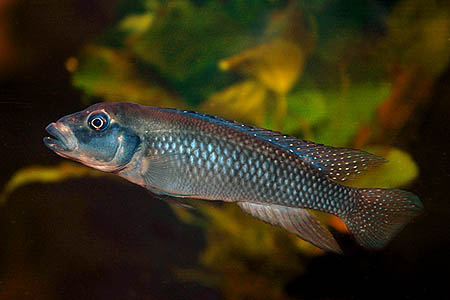
图片来自 SeriouslyFish,版权归各摄影者所有。
English
Overview
Lamprologus congoensis is a river cichlid adapted to fast water and a largely bottom-oriented life. Strong territorial aggression calls for careful companion selection; care should not simply be borrowed from Tanganyikan shell dwellers sharing its genus.
Distribution & habitat
It occurs in the Congo River in both the Republic of Congo and the Democratic Republic of Congo, with records from the upper river, Matadi, Stanley Pool and Stanley Falls areas. Natural sites feature fast current and high oxygen availability.
Aquarium setup
An aquarium around 120 × 30 × 45 cm provides a reference, with floor area much more valuable than extra height. Use sand, smooth rocks arranged into caves and optional branching wood. Provide substantial circulation and strong oxygenation. Housing several males requires considerably more floor space and numerous retreats.
Diet & feeding
Most suitable foods are accepted, but live and frozen offerings should make up the main part of the diet. Vary the menu rather than relying exclusively on one dry preparation.
Behaviour & compatibility
Avoid other cichlids. With adequate room, appropriately sized characins, barbs and river-adapted catfishes may be considered if their flow and oxygen needs match. Males are aggressive toward conspecifics, making multiple-male arrangements demanding. Several females generally coexist more readily.
Sexual dimorphism
Adult males are larger and more colorful, developing a prominent forehead hump.
Breeding
One male can breed with several females in a dedicated aquarium. Each female selects and defends a separate cave. Conditioning uses varied live and frozen foods; approximately 24–25 °C and pH 6.5–7.0 are breeding references. A displaying female attracts the male inside, and up to about 80 eggs are placed on a cave wall or roof.
Hatching takes roughly two to three days. The female carries the larvae in her mouth to the cave floor, where they develop for about another week before swimming freely. Microworms or brine-shrimp nauplii are suitable first foods. She guards inside while the male defends the wider area occupied by the females. Mouth transport here is not mouthbrooding.
Notes
A streamlined body, strong pectoral fins and reduced swim bladder lower buoyancy and help it withstand current. Its short, jerky movements close to the substrate reflect these adaptations.
来源
- https://www.seriouslyfish.com/species/lamprologus-congoensis(抓取于 2026-10-10)
lamprologus-congoensis · 文件: data/species/lamprologus-congoensis.md · 状态: 草稿