美鳍亮丽鲷
概要
| 字段 | 值 |
|---|---|
| 类别 | 鱼 |
| 学名 | Lamprologus callipterus |
| 别名 | 美鰭亮麗鯛 |
| 分类 | 慈鲷目 Cichliformes › 慈鲷科 Cichlidae › Lamprologus |
| 水体 | 淡水 |
| 成体体长 | 15 cm |
| 饲养难度 | 中等 |
| 最小水体 | 81 L |
| 最小缸长 | 90 cm |
| 领地性 | 是 |
| 外部数据 | seriouslyfish lamprologus-callipterus;fishbase 8612 |
| 原产地 | 坦噶尼喀湖 |
| 性情 | 攻击性 |
| 特征 | 翻底砂: 是 |
| 繁殖方式 | 附着产卵 |
水质参数
| 参数 | 耐受范围 | 最适范围 | 单位 |
|---|---|---|---|
| 水温 | 24–27 | — | °C |
| pH | 7.5–9 | — | — |
| 总硬度 | 10–25 | — | dGH |
概述
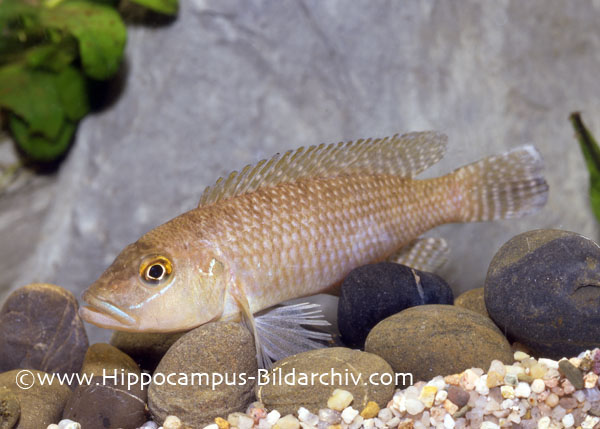
美鳍亮丽鲷(Lamprologus callipterus)利用空螺壳繁殖,雌雄体型差距极大:雄鱼需搬动壳,雌鱼则需钻入壳内。雄鱼领地意识强,选择这种鱼更应关注底面积和繁殖行为,而非仅按体长挑缸。
分布与栖息地
坦噶尼喀湖特有,栖于岩岸向开阔水域过渡的地带,环境中有散布的岩石堆。
饲养环境
一雄配五六雌可参考约 90 × 30 × 30 厘米的缸。铺沙,放置稳固岩石藏身处,并在开阔底面提供充足空螺壳。硬而偏碱的水是基本条件;若加入其他鱼或更多雄鱼,需要明显扩大空间。
食性与喂食
多数食物可以接受,但应让活饵和冷冻食物构成主要部分。
习性与混养
雄鱼对同种尤其强势,混养只宜在较大水族箱考虑。选择体型合适且使用不同区域的同湖鱼,并让螺壳巢区有独立空间。
雌雄区分
雄鱼体型大得多,体重可超过雌鱼的 20 倍;但自然界也存在小型雄鱼,因此极端体型差异是常见模式而非绝对规则。
繁殖
一雄可与多雌繁殖,专缸至少配三雌,水温可参考 25~26.5 °C、酸碱度 8~8.5。雄鱼约长至 9 厘米后能搬壳,会挖浅坑并把壳集中成巢。雌鱼在选定壳内产卵,雄鱼因体大无法进入,在壳口释放精子受精。雌鱼约 10~17 天留壳照护且停食,雄鱼守外围。鱼苗自由游动、离壳后亲鱼不再继续照顾,可移入育苗缸并喂微虫或丰年虾无节幼体。
补充说明
野外大雄鱼的巢可横跨数米、含数百个壳,护巢期间雄鱼可能停食并最终被更强个体替代。次优势雄鱼会潜入巢区争取受精机会;小型雄鱼甚至能入壳,可能在其中参与受精。
图片
图片来自 SeriouslyFish,版权归各摄影者所有。
English
Overview
Shells shape the life of Lamprologus callipterus: a male must move them, while a female must fit inside. The sexes consequently differ greatly in size. Strong male territoriality makes floor space and breeding layout especially important.
Distribution & habitat
It is endemic to Lake Tanganyika, occupying transition habitat where rocky shores give way to open water and scattered rock piles interrupt the substrate.
Aquarium setup
A tank around 90 by 30 by 30 cm is suggested for one male with five or six females. Use sand, rock shelters, and many empty snail shells over open areas. Maintain hard, alkaline water. Additional males or other species require substantially more room.
Diet & feeding
Although it accepts a range of foods, live and frozen items should form the main part of its meals.
Behaviour & compatibility
Males are aggressive toward rivals and should only share an aquarium with other species when ample space is available. Suitable companions should use different areas and be of compatible size. Preserve a distinct shell-nesting territory.
Sexual dimorphism
Typical males are much larger and may weigh over twenty times as much as females. Dwarf males also occur, so the usual size contrast does not describe every reproductive male.
Breeding
Use at least three females per male in a dedicated breeding setup, with about 25–26.5 °C and pH 8–8.5. At roughly 9 cm, a male can transport shells into a shallow pit that becomes his nest. Females lay inside individual shells; the male fertilizes from the entrance. A female remains inside for roughly 10–17 days without feeding while the male guards the area. Once free-swimming fry leave the shell, parental care ends. Transfer them for rearing if needed and offer microworms or brine shrimp nauplii.
Notes
Wild nests can span several meters and contain hundreds of shells. Guarding males may stop feeding and eventually lose the territory as their condition declines. Sneaking males attempt fertilization at other males’ nests, while dwarf males can enter shells and are thought to obtain fertilizations there.
来源
- https://www.seriouslyfish.com/species/lamprologus-callipterus(抓取于 2026-10-10)
lamprologus-callipterus · 文件: data/species/lamprologus-callipterus.md · 状态: 草稿