Ladigesia roloffi · Jelly Bean Tetra
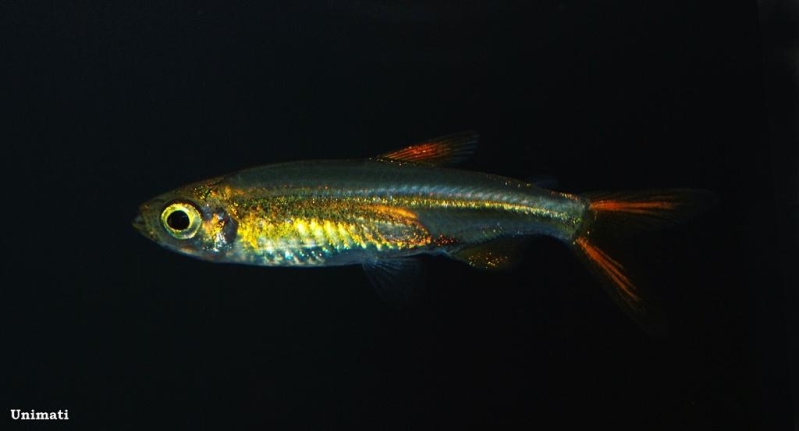
概要
| 字段 | 值 |
|---|---|
| 类别 | 鱼 |
| 学名 | Ladigesia roloffi |
| 分类 | 脂鲤目 Characiformes › 非洲脂鲤科 Alestidae › Ladigesia |
| 水体 | 淡水 |
| 原产地 | 塞拉利昂 |
| 成体体长 | 3.1 cm |
| 饲养难度 | 入门 |
| 最小水体 | 54 L |
| 最小缸长 | 60 cm |
| 群居方式 | 群游 |
| 性情 | 温和 |
| 外部数据 | seriouslyfish ladigesia-roloffi;fishbase 5248 |
| 繁殖方式 | 产卵 |
水质参数
| 参数 | 耐受范围 | 最适范围 | 单位 |
|---|---|---|---|
| 水温 | 20–26 | — | °C |
| pH | 5–7 | — | — |
| 总硬度 | 1–8 | — | dGH |
概述
Ladigesia roloffi 是体形很小的非洲灯鱼,性情温和,但对成熟水质和软酸环境的要求,使它并不适合随意加入热闹的社区缸。群养能减少胆怯,繁殖则更依赖极低硬度和稳定条件。
分布与栖息地
确切记录集中在塞拉利昂 Kasewe 森林保护区,据称属于 Gbangbaia 上游。利比里亚 Harbel 附近 Du 河流域另有单次历史记录,完整分布范围仍不清楚。
当地湿季明显,河流水温偏暖、水中矿物质少且呈酸性。Kasewe 是湿润森林残存地之一,森林破坏使这类小范围栖息地更值得保留。
饲养环境
建议底面积至少约 60 × 30 cm。砂底、沉木和根枝组成遮蔽,干落叶可增加隐蔽位置,其分解产生的微生物还能为仔鱼提供补充食物。较暗照明下可用铁皇冠、莫丝和椒草类植物,浮水植物也有帮助。
对有机废物波动较敏感,只适合生物过滤成熟的稳定缸。繁殖需要酸性、碳酸盐硬度接近于无、总硬度很低的水,可通过反渗透等方式取得软水。落叶或桤木果可营造相应环境,不必依赖采集天然泥炭。
食性与喂食
野外可能摄食极小无脊椎动物及其他浮游动物。缸内可接受适口干粮,但宜每天搭配丰年虾无节幼体、水蚤、裸腹溞或小型白线虫等活饵或冻饵,食物颗粒必须适合小口。
习性与混养
至少八至十尾同种一起养,更容易表现自然活动。伙伴应体形相近、安静且适应相同软酸水条件,不能只因对方平和就忽略体形和水质差异。与小型慈鲷等合养也需逐种核对,避免小鱼长期受到压迫。
雌雄区分
雄鱼臀鳍前部鳍条略延长,怀卵雌鱼身体通常更圆。
繁殖
缸内繁殖不算常见,软酸水是前提。成熟缸中可能偶然出现少量幼鱼,若希望提高数量,可设置独立繁殖缸,放足莫丝等细密植物,并用网格将落卵与成鱼隔开。
先用丰富活饵调理亲鱼,傍晚移入;雌鱼明显变瘦通常提示已经产卵,应尽快移走亲鱼。卵约二十四至三十六小时孵化,仔鱼在一周内开始自由游动,主动找食后先喂微型开口饵,可能需要两周才长到能吃丰年虾无节幼体。
幼鱼据称对水化学波动很敏感,有在最初数周不换水的育苗经验,但不应把这一做法当作所有缸都适用的保证;重点是保持成熟、稳定的育苗环境。
补充说明
脂鳍起点前方的背部缺少鳞片,是其属级鉴别特征之一,不等于全身无鳞。长期保存采集或繁育来源信息,有助于澄清有限的分布记录。
图片
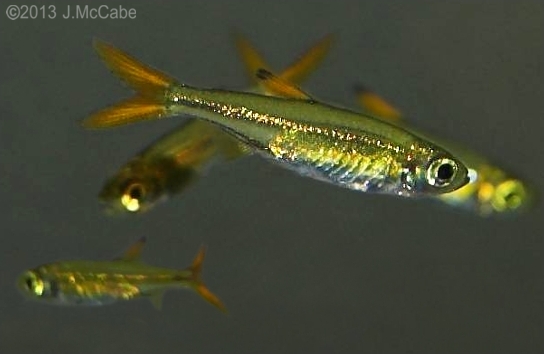
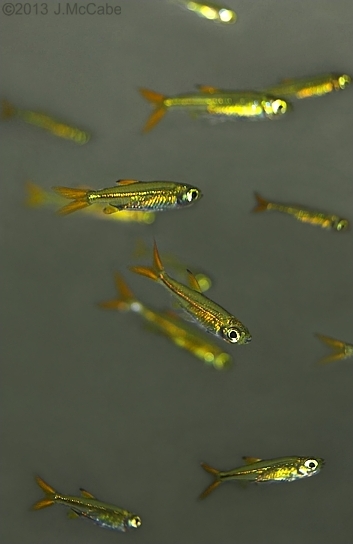
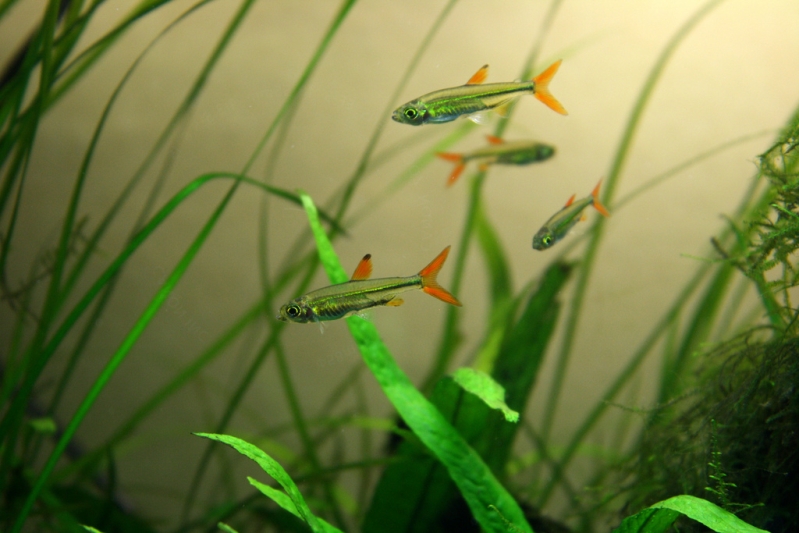
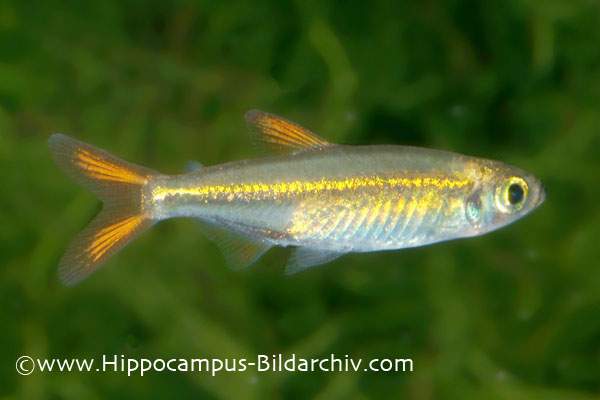
图片来自 SeriouslyFish,版权归各摄影者所有。
English
Overview
Ladigesia roloffi is a tiny, peaceful African tetra. Mature water quality and soft acidic conditions make it less suitable for casual addition to a busy community tank than its temperament might suggest. Groups reduce nervousness, while breeding requires particularly low hardness and stability.
Distribution & habitat
Confirmed records center on Kasewe Forest reserve in Sierra Leone, reportedly in the upper Gbangbaia basin. A single historical record also exists from the Du drainage near Harbel, Liberia. The complete range remains unclear.
The region has a pronounced wet season and generally warm, mineral-poor acidic river water. Kasewe preserves a remnant of moist forest in a landscape affected by extensive forest loss.
Aquarium setup
Provide at least about 60 × 30 cm. Sand, wood, and roots create cover. Dried leaves add shelter, and microorganisms developing during decomposition can supplement fry food. Java fern, mosses, and crypts suit dim lighting, with floating vegetation also useful.
The fish is sensitive to changing organic-waste levels, so use only a stable, biologically mature aquarium. Breeding requires acidic water with negligible carbonate hardness and very low general hardness, potentially supplied through reverse osmosis or another soft-water source. Leaves or alder cones can help create suitable surroundings without collecting natural peat.
Diet & feeding
Tiny invertebrates and other zooplankton are probable natural foods. Aquarium fish accept suitably small dry food but should also receive daily small live or frozen brine shrimp nauplii, Daphnia, Moina, or grindal worms. Food size must match the small mouth.
Behaviour & compatibility
Keep at least eight to ten conspecifics for more confident behavior. Companions should be similarly small, quiet, and suited to the same soft acidic conditions. A peaceful label alone does not establish compatible size or water requirements. Small cichlids also need individual assessment to avoid persistent intimidation.
Sexual dimorphism
Males have slightly lengthened front anal-fin rays. Females carrying eggs generally look rounder.
Breeding
Captive breeding is uncommon, and soft acidic water is essential. A few youngsters may appear in a mature display. For better yield, use a separate spawning aquarium with dense moss and a mesh barrier separating eggs from adults.
Condition adults on plentiful live foods and introduce them in the evening. A noticeably slimmer female usually indicates spawning; remove adults promptly. Eggs hatch in about twenty-four to thirty-six hours, with free swimming within a week. Offer microscopic foods once fry actively search for food. They may need two weeks before accepting brine shrimp nauplii.
Fry are reportedly sensitive to chemical changes. Some rearing accounts favor no water changes during the first few weeks, but this is not a universal guarantee. A mature, stable rearing environment remains central.
Notes
The absence of scales on the back immediately before the adipose-fin origin is a generic identification feature, not whole-body scalelessness. Provenance records are valuable given the limited confirmed distribution.
来源
- https://www.seriouslyfish.com/species/ladigesia-roloffi(抓取于 2026-10-10)
ladigesia-roloffi · 文件: data/species/ladigesia-roloffi.md · 状态: 草稿