非洲王子 · Caeruleus
概要
| 字段 | 值 |
|---|---|
| 类别 | 鱼 |
| 学名 | Labidochromis caeruleus |
| 别名 | 淡黑鑷麗魚、淡黑镊丽鱼 |
| 分类 | 慈鲷目 Cichliformes › 慈鲷科 Cichlidae › Labidochromis |
| 水体 | 淡水 |
| 成体体长 | 10 cm |
| 饲养难度 | 中等 |
| 最小水体 | 154 L |
| 最小缸长 | 90 cm |
| 性情 | 温和 |
| 外部数据 | seriouslyfish labidochromis-caeruleus;fishbase 2327 |
| 原产地 | 马拉维湖北部 |
| 繁殖方式 | 口孵 |
水质参数
| 参数 | 耐受范围 | 最适范围 | 单位 |
|---|---|---|---|
| 水温 | 24–28 | — | °C |
| pH | 7.7–8.6 | — | — |
| 总硬度 | 10–25 | — | dGH |
概述
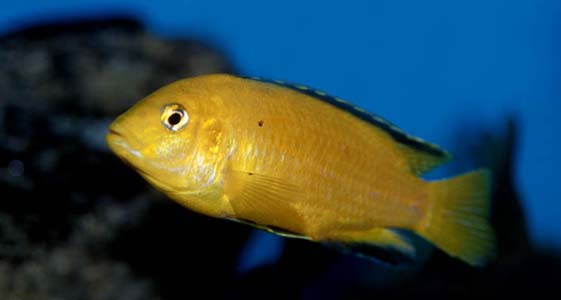
非洲王子(Labidochromis caeruleus)在岩栖慈鲷中相对温和,水族贸易中以鲜黄色型最知名,多数商品鱼来自人工繁殖。野外更常见的却是蓝白色型,黄色并不能代表所有地域种群。
分布与栖息地
马拉维湖北部特有,分布包括凯撒角至伦多,以及奇尔姆博角至查罗一带。鲜黄色型仅记录于查罗至狮子湾之间。它既生活于岩区,也见于茂密苦草带。
饲养环境
可从约 90 × 45 × 38 厘米开始,沙底配大量稳固岩洞,石堆间保留游动空间。繁殖群可用约 120 厘米长的专缸,并设置平石和开阔沙地。
食性与喂食
接受食物较广,日常仍应有较多植物成分,如含螺旋藻饲料或烫菠菜,并搭配活饵与冷冻食物。
习性与混养
可群养并与合适的硬水鱼搭配,繁殖时则会守地盘,雄鱼追雌也可能很积极。多雌一雄通常比单独一雌承受压力更分散。与其他岩栖慈鲷混养仍须评估对方的攻击性,不能因本种较温和就忽视受压风险。
雌雄区分
雄鱼成年后往往稍大,繁殖时颜色更鲜明,鳍部黑色也可能更多;但仅凭黑边判断性别并不可靠。
繁殖
雌鱼口孵,专缸可一雄配至少三雌,参考水温 25~26.5 °C、酸碱度 8.2~8.5。雌鱼产卵后立即收入口中,通过啄雄鱼臀鳍卵点时获得精子完成受精。每窝约 5~30 粒,雌鱼停食含卵约 3~4 周。避免惊扰;受迫隔离和回群都需关注社会地位与追逐情况。释放的鱼苗可直接吃丰年虾无节幼体。
补充说明
不同地域型和其他镊丽鱼属鱼可能杂交,应分开保留品系。历史商品学名曾有误用,不能据此推断其原生于坦噶尼喀湖。
图片
图片来自 SeriouslyFish,版权归各摄影者所有。
English
Overview
The familiar electric-yellow form represents only part of the variation in Labidochromis caeruleus. Blue-and-white fish are more widespread in nature, while most aquarium specimens are captive-bred. This is a relatively mild mbuna, though breeding changes its social behavior.
Distribution & habitat
The northern Lake Malawi range includes shores between Cape Kaiser and Lundo and between Chirmbo Point and Charo. Electric-yellow fish have been recorded only between Charo and Lion’s Cove. Habitats include both rockwork and dense beds of Vallisneria.
Aquarium setup
A tank around 90 by 45 by 38 cm provides a starting point. Use sand and stable cave-forming rock piles separated by swimming space. A dedicated breeding group benefits from around 120 cm of length, with flat stones and open sand.
Diet & feeding
Provide a substantial vegetable component, including spirulina-based food or suitable blanched greens, together with live and frozen items.
Behaviour & compatibility
Groups can work with suitable hard-water companions, including calmer Malawian cichlids. During spawning, territories develop and males pursue females more vigorously. Several females per male can spread this attention. Its relatively peaceful disposition does not ensure safety among more aggressive mbuna.
Sexual dimorphism
Mature males may be somewhat larger and brighter during breeding. Extra black in the fins is only a tentative clue, not a dependable sexing method.
Breeding
For breeding, use one male with at least three females at approximately 25–26.5 °C and pH 8.2–8.5. The female collects eggs as they are laid; fertilization follows her response to the male’s anal-fin egg spots. A brood of roughly 5–30 may remain in her mouth for three to four weeks, during which she does not eat. Minimize disturbance and consider the social consequences before separating and returning a female. Fry can take brine shrimp nauplii when released.
Notes
Keep geographic forms and other Labidochromis species separate when breeding. Early imports used the name L. tanganyicae, but the species is native to Malawi, not Tanganyika.
来源
- https://www.seriouslyfish.com/species/labidochromis-caeruleus(抓取于 2026-10-10)
labidochromis-caeruleus · 文件: data/species/labidochromis-caeruleus.md · 状态: 草稿