菲氏突吻丽鱼 · Fuelleborn's Cichlid
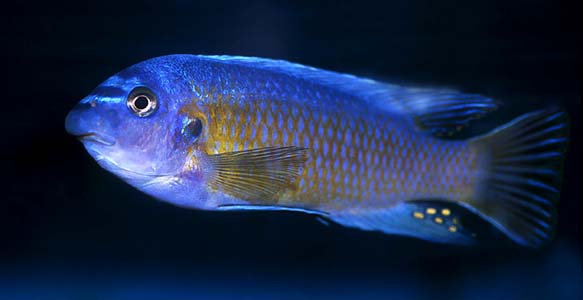
概要
| 字段 | 值 |
|---|---|
| 类别 | 鱼 |
| 学名 | Labeotropheus fuelleborni |
| 别名 | 菲氏突吻麗魚 |
| 分类 | 慈鲷目 Cichliformes › 慈鲷科 Cichlidae › Labeotropheus |
| 水体 | 淡水 |
| 成体体长 | 17.5 cm |
| 饲养难度 | 中等 |
| 最小水体 | 154 L |
| 最小缸长 | 90 cm |
| 领地性 | 是 |
| 外部数据 | seriouslyfish labeotropheus-fuelleborni;fishbase 2325 |
| 原产地 | 马拉维湖 |
| 性情 | 攻击性 |
| 特征 | 啃水草: 是 |
| 繁殖方式 | 口孵 |
水质参数
| 参数 | 耐受范围 | 最适范围 | 单位 |
|---|---|---|---|
| 水温 | 24–28 | — | °C |
| pH | 7.6–8.8 | — | — |
| 总硬度 | 10–25 | — | dGH |
概述
菲氏突吻丽鱼(Labeotropheus fuelleborni)是马拉维湖岩栖慈鲷,突出的吻部和凿状牙适合刮取岩面藻类。它活动于水流扰动明显的浅水岩岸,饲养重点是充氧、岩洞与处理领地冲突。
分布与栖息地
马拉维湖特有,广见于浅水岩岸及岛屿周边,常处于浪涌和水流较强、含氧丰富的环境。
饲养环境
一般饲养可从约 90 × 45 × 38 厘米考虑,专门繁殖群宜用约 120 厘米长。沙底配大量稳固岩石,形成洞穴和视线遮挡,同时保留少量开阔区。保持充氧;水草容易被吃,不宜作为主要布景。
食性与喂食
投喂以植物成分占较大比例,可用含螺旋藻饲料、菠菜等,另配适量活饵和冷冻食物。它接受食物较广,并不意味着可以忽略日常植物性食物。
习性与混养
攻击性和领地性强,不适合温和的孔雀类或乌塔卡类慈鲷。可在足够空间中考虑其他性情相近的岩栖慈鲷,并用多雌一雄的组合分散追逐压力。增加同伴数量并非普遍解决方法,需持续观察受迫躲藏或受伤个体。
雌雄区分
雄鱼通常较大,体色更鲜明。部分雌鱼呈橙色或橙斑型,极少数雄鱼也有橙斑外观,不能只凭这一花色判断性别。
繁殖
雌鱼口孵。可用一雄至少三雌,设置平石和沙地,水温约 25~26.5 °C、酸碱度约 8.2~8.5。雄鱼清理并守住求偶区域,雌鱼产卵后迅速含入口中,借啄雄鱼臀鳍卵点的动作完成受精。雌鱼通常含 25~60 粒卵约 3~4 周,期间不进食。受惊可能吐卵或吞卵,过早或长期隔离又可能影响回群地位,应谨慎处理。放出的鱼苗可吃丰年虾无节幼体。
补充说明
吻部构造使它能近乎平行于岩面取食,适应浅水水流。不同产地花色很多,应避免混合地域型或近缘种繁殖;紧迫或兴奋也会迅速改变体色。
图片
图片来自 SeriouslyFish,版权归各摄影者所有。
English
Overview
The overhanging snout and chisel-like teeth of Labeotropheus fuelleborni are adapted to grazing rock surfaces. This Malawian rock cichlid comes from turbulent shallows and requires strong oxygenation, secure rockwork, and careful management of aggression.
Distribution & habitat
It occurs widely around shallow rocky shores and islands in Lake Malawi, often where wave action keeps the water highly oxygenated.
Aquarium setup
The suggested starting footprint is about 90 by 45 cm, with around 120 cm of length preferable for a breeding group. Use sand and extensive secure rockwork with caves and sight breaks. Leave some open space and maintain ample oxygen. Plants are likely to be eaten.
Diet & feeding
Keep vegetable ingredients prominent in the feeding routine, using spirulina-based foods and suitable greens alongside live or frozen items. Broad food acceptance does not remove the need for substantial plant material.
Behaviour & compatibility
This is an aggressive, territorial fish. Peaceful peacocks and utaka are unsuitable companions; robust mbuna may be considered in an appropriate setup. Several females per male help spread courtship pressure. Group composition still needs observation, especially for fish being persistently excluded or injured.
Sexual dimorphism
Males are generally larger and more colorful. Orange and orange-blotched females occur, while rare males can also show the blotched pattern.
Breeding
This is a maternal mouthbrooder. A group of one male and at least three females can use a breeding setup with flat stones and sand, around 25–26.5 °C and pH 8.2–8.5. After laying, the female gathers the eggs and fertilization occurs during interaction with the male’s anal-fin egg spots. She may carry 25–60 eggs for three to four weeks without feeding. Disturbance can cause brood loss, while prolonged separation may complicate her return to the group. Released fry can take newly hatched brine shrimp.
Notes
Its mouth allows grazing while the body remains nearly parallel to the rock surface. Numerous locality forms exist, and breeding lines should be kept separate from other forms and related species. Color also changes rapidly with stress or excitement.
来源
- https://www.seriouslyfish.com/species/labeotropheus-fuelleborni(抓取于 2026-10-10)
labeotropheus-fuelleborni · 文件: data/species/labeotropheus-fuelleborni.md · 状态: 草稿