Knodus borki · Blue Tetra
概要
| 字段 | 值 |
|---|---|
| 类别 | 鱼 |
| 学名 | Knodus borki |
| 分类 | 脂鲤目 Characiformes › 脂鲤科 Characidae › Knodus |
| 水体 | 淡水 |
| 成体体长 | 5 cm |
| 饲养难度 | 中等 |
| 最小水体 | 86 L |
| 最小缸长 | 75 cm |
| 群居方式 | 群游 |
| 外部数据 | seriouslyfish knodus-borki;fishbase 64782 |
| 原产地 | 哥伦比亚、巴西 |
| 食性 | 杂食 |
| 繁殖方式 | 产卵 |
水质参数
| 参数 | 耐受范围 | 最适范围 | 单位 |
|---|---|---|---|
| 水温 | 22–26 | — | °C |
| pH | 5.5–7 | — | — |
| 总硬度 | 5–12 | — | dGH |
概述
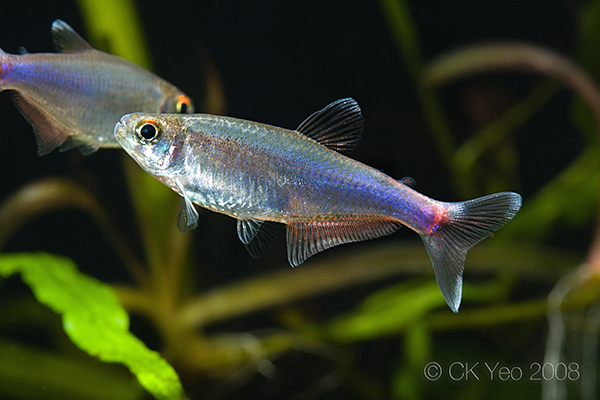
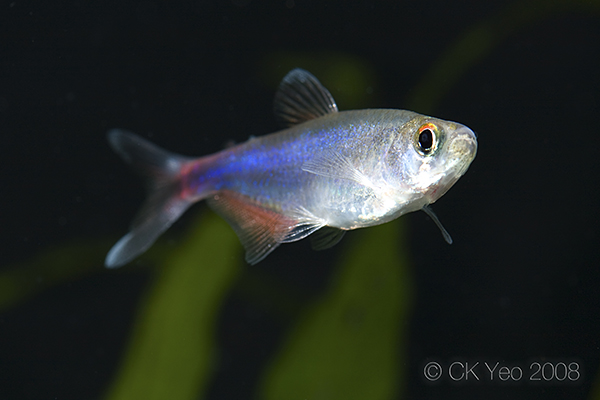
Knodus borki 的蓝色可以十分强烈,并非因为人工染色。它游动活跃,饥饿抢食或空间拥挤时可能咬鳍,适合较大空间、足够同伴和充足遮蔽,不适合拿来陪伴胆小短鲷。
分布与栖息地
分布于哥伦比亚与巴西,生活在河流、溪流及支流中。
饲养环境
体型虽小,活动量却大,不能按小鱼尺寸压缩游动空间。密植水草、深色底床和浮水遮光能帮助显色,稀疏空缸常表现不出最佳颜色。
也可用沙底、山毛榉枝和根木,配干栎叶、山毛榉叶或榄仁叶营造南美风格。过滤内的水族安全泥炭可帮助染水,水体同时要保持高溶氧。偏碱环境不适合它。
食性与喂食
杂食,通常接受多种饵料,尤其喜欢红虫、水蚤、丰年虾等小型活饵和冷冻饵。也应加入焯过的菠菜或优质螺旋藻薄片等植物性食物。
习性与混养
总体可与合适伙伴相处,但有时咬同种或长鳍鱼,进食时和拥挤环境中更明显。至少八至十条配较大缸通常能限制这一问题,让多数较量留在同种之间。
避开特别安静、行动慢的伙伴,它持续活动的作风会使这类鱼紧张。因此不适合作为胆小短鲷的陪游鱼。其他健壮脂鲤、合适异型和小型鼠鱼可作为候选,仍须核对水质与体型。
雌雄区分
成熟雌鱼腹部明显更圆,雄鱼颜色略浓。繁殖状态雄鱼臀鳍据称会泛红,这一特征不宜作为绝对标准。
繁殖
人工繁殖已经实现,但细节有限。可用独立繁殖缸,裸底配小型气动海绵过滤,放阔叶植物。雌鱼据称在叶背产卵,因此应提供这类基质,但具体产卵位置仍带有不确定性。
使用成熟、偏酸的软水,在本种适宜硬度范围内准备。亲鱼先成群接受高质量活饵、冷冻饵调养,待雌鱼饱满、雄鱼显色后,傍晚挑选一对入缸。
如果次晨见卵,应移走成鱼,避免它们可能吃卵。鱼苗非常小,初期需用草履虫或其他微型开口活饵。
补充说明
鲜艳体色需要合适环境才能充分表现。空旷陈设下发色不足,不应据此推断为另一种鱼或染色褪去。
图片
图片来自 SeriouslyFish,版权归各摄影者所有。
English
Overview
The intense blue of Knodus borki is natural rather than artificial coloring. This vigorous swimmer may nip fins, particularly during feeding or in cramped quarters. Space, a sufficient group, and generous cover matter, and it is unsuitable as a reassuring companion for timid dwarf cichlids.
Distribution & habitat
It occurs in Colombia and Brazil, inhabiting rivers, streams, and tributaries.
Aquarium setup
Small size should not obscure its need for swimming room. Dense planting, dark substrate, and floating cover bring out the best color; sparse surroundings often produce a disappointing display.
An alternative uses sand, beech branches and roots, and dried oak, beech, or Indian almond leaves. Aquarium-safe peat in the filter can help stain the water. Maintain plenty of dissolved oxygen. Alkaline conditions are unsuitable.
Diet & feeding
An omnivore accepting a broad range of foods, it particularly enjoys small live or frozen bloodworms, water fleas, and brine shrimp. Include plant material such as blanched spinach or good Spirulina flakes.
Behaviour & compatibility
Generally compatible with suitable companions, it can nevertheless nip conspecifics and long-finned fishes. Feeding excitement and confinement make this more noticeable. Eight to ten or more in a larger aquarium usually reduce the problem and keep most rivalry within the group.
Avoid very quiet or slow-moving companions, which may be intimidated by its constant activity. It is not an appropriate dither fish for shy dwarf cichlids. Robust tetras and suitable small suckermouth or cory catfishes are possible alternatives after checking size and water requirements.
Sexual dimorphism
Mature females have a clearly rounder abdomen, while males show slightly stronger color. A reddish anal fin is reported in spawning males but should not be treated as an absolute sexing rule.
Breeding
Captive reproduction has been achieved, although details are limited. Use a separate bare-bottomed aquarium with a small air-driven sponge filter and broad-leaved plants. Egg deposition beneath a leaf is reported rather than firmly established, but providing such surfaces is reasonable.
Prepare mature, acidic soft water within the species' appropriate hardness range. Condition the group with high-quality live and frozen foods. Once females are plump and males strongly colored, move a selected pair in the evening.
Remove the adults if eggs are found the next morning because they may eat them. The very small fry require Paramecium or comparable microscopic live foods initially.
Notes
Suitable surroundings allow its natural blue to develop fully. Weak coloration in a bare display should not be interpreted automatically as a different identity or fading artificial dye.
来源
- https://www.seriouslyfish.com/species/knodus-borki(抓取于 2026-10-10)
knodus-borki · 文件: data/species/knodus-borki.md · 状态: 草稿