燕子美人 · Threadfin Rainbowfish
概要
| 字段 | 值 |
|---|---|
| 类别 | 鱼 |
| 学名 | Iriatherina werneri |
| 别名 | 伊島銀漢魚、伊岛银汉鱼 |
| 分类 | 银汉鱼目 Atheriniformes › 黑带银汉鱼科 Melanotaeniidae › Iriatherina |
| 水体 | 淡水 |
| 原产地 | 新几内亚岛南部,以及澳大利亚昆士兰州约克角半岛和北领地 |
| 成体体长 | 4 cm |
| 饲养难度 | 中等 |
| 最小水体 | 54 L |
| 最小缸长 | 60 cm |
| 群居方式 | 群游 |
| 性情 | 温和 |
| 水流偏好 | 低 |
| 外部数据 | seriouslyfish iriatherina-werneri;fishbase 22673 |
| 食性 | 浮游生物食性 |
| 领地性 | 是 |
| 繁殖方式 | 散卵 |
水质参数
| 参数 | 耐受范围 | 最适范围 | 单位 |
|---|---|---|---|
| 水温 | 22–30 | — | °C |
| pH | 5–8 | — | — |
| 总硬度 | 1–12 | — | dGH |
概述
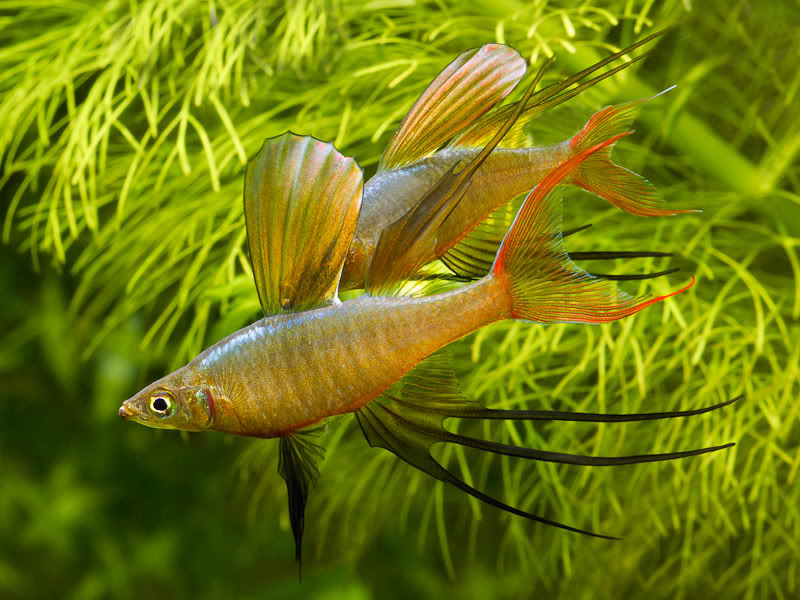
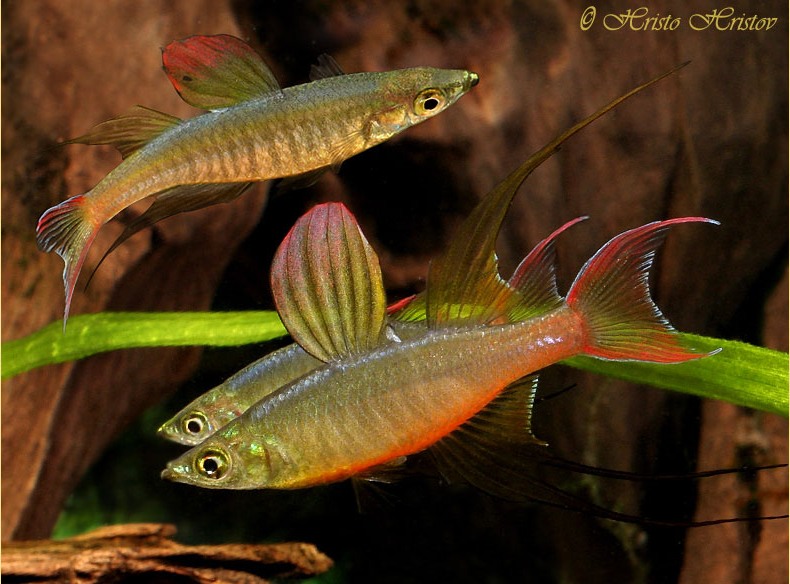
燕子美人(Iriatherina werneri)雄鱼长鳍细丝优雅,却是一种口小、抢食能力弱且对环境波动敏感的彩虹鱼。漂亮外观不代表适合普通混养或刚开好的新缸。
分布与栖息地
分布于新几内亚岛南部,包括印度尼西亚马老奇至巴布亚新几内亚弗莱河一带,以及澳大利亚约克角半岛和北领地多个水系。
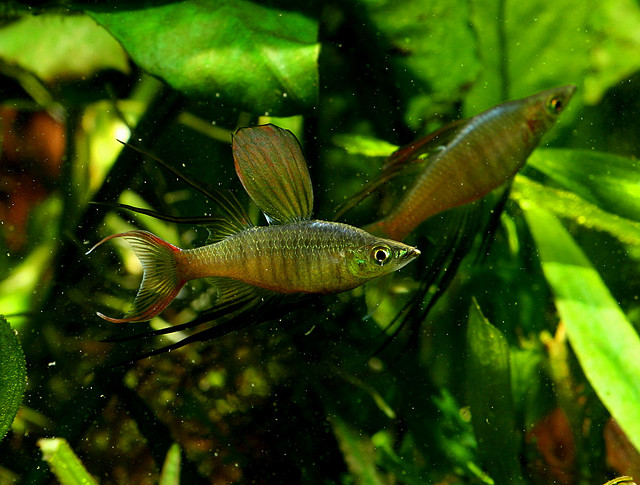
偏好清澈、缓流、植物茂盛的溪流、淡水沼泽、潟湖及河道遗留水潭,多在浅水岸边植被和睡莲附近活动。雌鱼与幼鱼常成群,繁殖雄鱼会临时占据开放水域展示。
饲养环境
底面积至少约 60 × 30 cm,适合密植草缸,浮水植物、树根和枝条可柔化光线。若想让少量鱼苗与成鱼共存,可在靠近水面处配置细叶莫丝及带长根的浮水植物。
水流要轻柔,强流会让它吃力;只放入生物过滤成熟、水质稳定的缸,不宜承受水化学突然变化。
食性与喂食
天然摄食浮游植物、硅藻及浮游动物,口很小,食物颗粒大小是关键。以适口水蚤、小型蚤类、丰年虾无节幼体、微虫和桡足类等活饵为重要组成,也能接受细碎的浮性干饲料。
习性与混养
性情很温和,却容易抢不到食物,雄鱼长鳍也可能被咬。宜单种饲养,或与体形、性情相近的小鱼搭配,小型温和底栖鱼和常见米虾类也可考虑。
至少六条,最好十条以上,群体能减轻紧张,让雄鱼展示和争取雌鱼的行为更明显。
雌雄区分
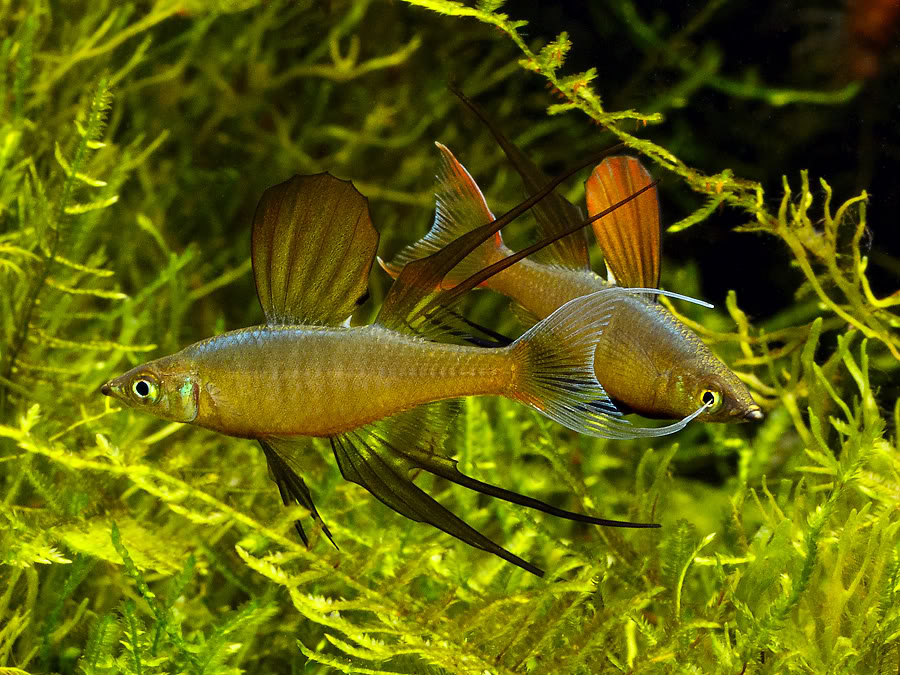
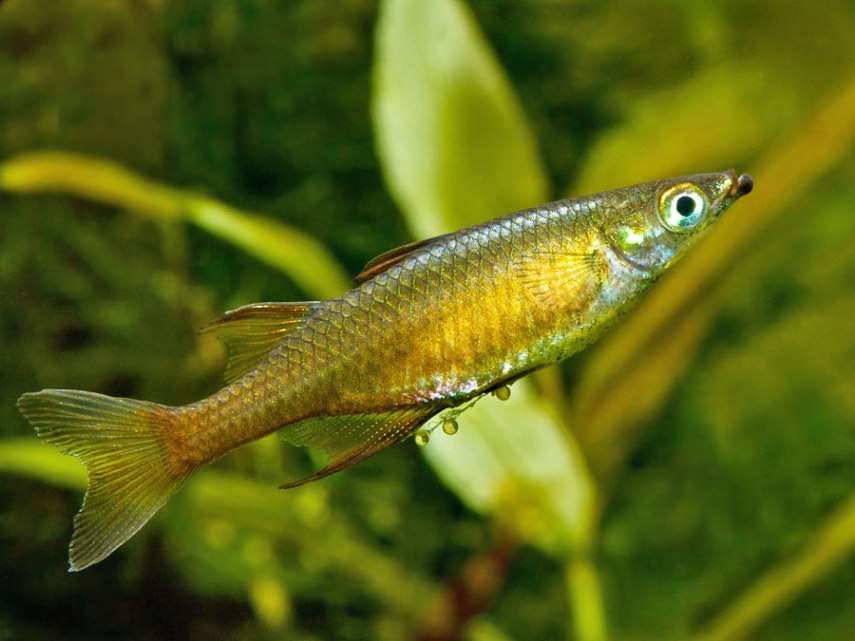
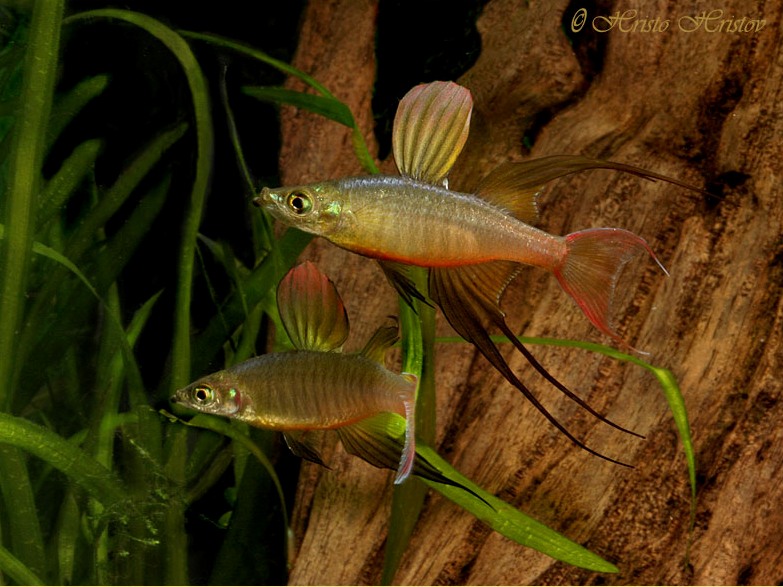
成熟雄鱼体形更大、颜色更鲜艳,背鳍、臀鳍及腹鳍延长。雌鱼没有雄鱼那么夸张的鳍形。
繁殖
是散卵型,不护卵,机会合适会吃自己的卵和鱼苗。偏暖时更容易产卵,雌鱼可连续数日每天产少量卵,一条雄鱼同一天可能与多雌交配。雄鱼在浮水遮蔽下展开背鳍、抖动细丝求偶,雌鱼选择浮水根须或细叶植物后共同进入产卵。
可把一雄两至三雌放入海绵过滤繁殖缸,每天检查产卵拖把或莫丝,移走带卵介质;也可在成熟密植缸中让少量幼鱼自然留存,后者产量较低却较容易维持稳定环境和微型食物。
鱼苗极小,对食物粒径和水质敏感,至少每天少量喂两次,备不同大小的微型饵或合适粉饵,及时处理残饵并少量勤换水。前两周长得慢,之后大小分化时应分开较大鱼苗,避免抢食和吞食小个体。
补充说明
不同地区外形、鳍形有所差异,是否涉及独立分类单元尚未确认。市场鱼多为商业繁殖,不能把标签上某种颜色直接当作可靠野生产地。
图片
图片来自 SeriouslyFish,版权归各摄影者所有。
English
Overview
Iriatherina werneri combines elegant male fin filaments with demanding practical needs: a tiny mouth, weak feeding competition, and sensitivity to unstable conditions. Its appearance does not make it suitable for a general community or a newly established aquarium.
Distribution & habitat
It occurs in southern New Guinea, from the Merauke region toward the Fly system, and in Australia's Cape York Peninsula and Northern Territory.
Clear, slow streams, freshwater swamps, lagoons, and billabongs with abundant plants are favored. Shallow vegetated margins and lily beds are typical. Females and juveniles gather in groups, while reproductive males establish temporary display areas in open water.
Aquarium setup
Provide a base around 60 × 30 cm or larger. Dense planting suits it, with floating cover and branching wood softening the light. To retain some young alongside adults, place fine moss high in the aquarium and include floating plants with trailing roots.
Keep current gentle, since strong flow can be difficult for this fish. Introduce it only after biological filtration is mature and water conditions stable.
Diet & feeding
Natural food includes suspended phytoplankton, diatoms, and zooplankton. Particle size matters because the mouth is very small. Tiny live foods such as small water fleas, brine-shrimp nauplii, microworms, and copepods should be prominent, although finely crushed floating dry food is accepted too.
Behaviour & compatibility
It is exceptionally peaceful but easily loses out at feeding time, and male fin extensions may attract nipping. A dedicated aquarium or companions of comparable size and disposition is preferable. Small placid bottom fishes and familiar dwarf freshwater shrimp are also possibilities.
Maintain at least six, ideally ten or more. A group reduces nervousness and encourages male displays and competition for females.
Sexual dimorphism
Mature males are larger and brighter, with extended dorsal, anal, and pelvic fins. Females lack the exaggerated male fin development.
Breeding
It scatters eggs without parental care and will eat eggs or young when able. Warmer conditions favor spawning. Females may deposit a few eggs daily over several days, and a male can mate with more than one female in a day. Males display under floating cover; females select roots or fine vegetation before the pair enters the spawning medium.
One method uses a male with two or three females in a sponge-filtered tank, checking mops or moss daily and transferring egg-bearing material. Alternatively, a mature, densely planted colony tank may retain a few young. This produces fewer fry but offers stable conditions and resident microscopic food.
The tiny fry need carefully matched food sizes. Give small meals at least twice daily, using several microscopic live foods or suitable powders. Remove uneaten food and make frequent small water changes. Growth is slow initially; later, separate markedly different sizes because larger fry can outcompete or consume smaller ones.
Notes
Geographic populations differ in appearance and fin shape, but proposed taxonomic separation remains unconfirmed. Commercially bred fish dominate the trade, so a color label does not reliably establish a wild locality.
来源
- https://www.seriouslyfish.com/species/iriatherina-werneri(抓取于 2026-10-10)
iriatherina-werneri · 文件: data/species/iriatherina-werneri.md · 状态: 草稿