青脂鲤 · Purple Emperor Tetra
概要
| 字段 | 值 |
|---|---|
| 类别 | 鱼 |
| 学名 | Inpaichthys kerri |
| 别名 | 青脂鯉 |
| 分类 | 脂鲤目 Characiformes › 脂鲤科 Characidae › Inpaichthys |
| 水体 | 淡水 |
| 成体体长 | 3.5 cm |
| 饲养难度 | 入门 |
| 最小水体 | 68 L |
| 最小缸长 | 60 cm |
| 性情 | 温和 |
| 外部数据 | seriouslyfish inpaichthys-kerri;fishbase 12388 |
| 原产地 | 巴西阿里普阿纳河及马德拉河上游流域 |
| 繁殖方式 | 产卵 |
水质参数
| 参数 | 耐受范围 | 最适范围 | 单位 |
|---|---|---|---|
| 水温 | 24–27 | — | °C |
| pH | 5.5–7 | — | — |
| 总硬度 | 1–12 | — | dGH |
概述
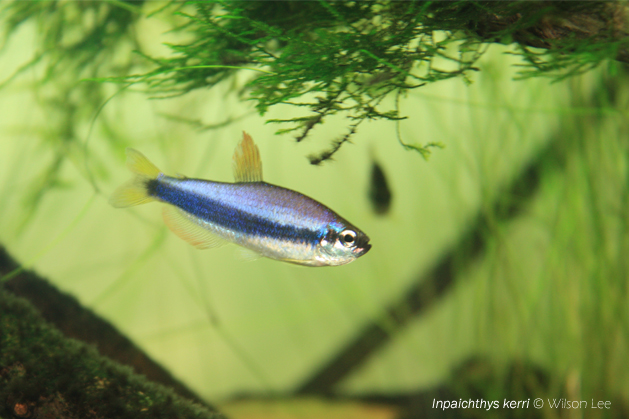
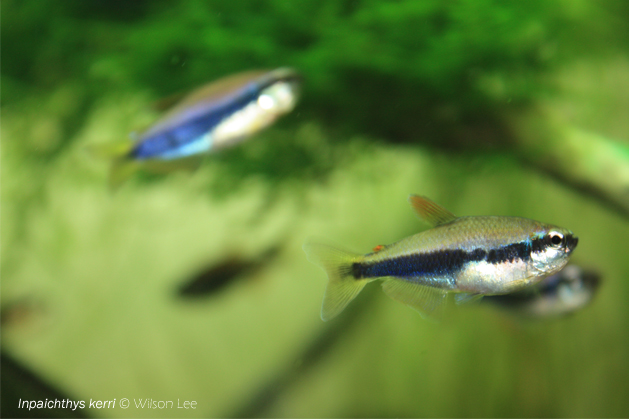
青脂鲤(Inpaichthys kerri)是体形小巧的温和灯鱼,雄鱼展示时蓝紫光泽明显。它不总是紧密成群,却很需要同类陪伴;至少六条一起饲养,更容易减少紧张和对其他鱼的追咬。
分布与栖息地
原生于巴西阿里普阿纳河和马德拉河上游。主要生活在森林中偏离主河道的缓流支流,腐殖物使水呈褐色,水质偏酸。
饲养环境
小群可从约 60 cm 长的缸起步。河砂、根木和枝条配干燥落叶,能形成遮阴的茶色水环境;老化叶片应定期更换,避免腐败污染。维护良好的密植草缸也适合,过于空旷明亮时容易胆怯、褪色。
它不适应碱性水,宜维持稳定的软水至中等硬度、偏酸环境。
食性与喂食
一般接受常见人工饲料,同时应定期供应适口丰年虾、水蚤等小型活饵或冷冻饵。多样饮食有助于体态和颜色发展。
习性与混养
避免体形大或过分活跃、抢食强的邻居,适合小型温和灯鱼、鲤科鱼、迷鳃鱼、小型慈鲷及安静底栖鱼。数量过少时可能啄鳍;六条左右或更多的群体通常把争执集中在同类之间,雄鱼互相展示很有观赏性。
雌雄区分
雌鱼体形更粗壮、颜色较淡,脂鳍主要为红色;雄鱼较鲜艳,脂鳍呈蓝色。
繁殖
水族箱内已有常规繁殖。可另设昏暗繁殖缸,以细叶水草、产卵拖把或底部网格保护卵,配轻柔运转的海绵过滤。繁殖水宜软而偏酸,约 pH 5.5–6.5、GH 1–5。
可群体繁殖,也可将雌雄分别调养,傍晚选抱卵雌鱼与发色好的雄鱼配对,次晨往往产卵。亲鱼会吃卵,发现卵后应移出。卵约 24–48 小时孵化,再过三至四天幼鱼自由游动,最初喂纤毛虫类开口饵,随后按口径转喂微虫或丰年虾无节幼体。
补充说明
“蓝帝王”等贸易名会与其他鱼混用。本种有脂鳍,是排除部分外形相似帝王灯鱼的重要线索。
图片
图片来自 SeriouslyFish,版权归各摄影者所有。
English
Overview
Purple emperor tetras (Inpaichthys kerri) are small, peaceful fishes whose displaying males develop an attractive blue-purple sheen. They do not always form a tight school, but need company. A group of at least six helps reduce nervousness and unwanted attention toward other fishes.
Distribution & habitat
Native to Brazil's Aripuanã and upper Madeira basins, they inhabit sluggish forest tributaries away from the main river channels. Decaying organic matter stains the water brown, and conditions are acidic.
Aquarium setup
A small group can start in a tank about 60 cm long. Sand, roots, branches, and dried leaves create a shaded, lightly stained environment; replace aging leaves periodically to avoid fouling. A well-maintained, densely planted aquarium also works. Bright, sparsely furnished conditions tend to leave the fish shy and poorly colored.
They do poorly in alkaline water. Maintain stable, acidic conditions with soft to moderately hard water.
Diet & feeding
Most prepared foods are accepted. Add regular meals of small live or frozen foods such as brine shrimp and water fleas; dietary variety supports growth and coloration.
Behaviour & compatibility
Avoid much larger, boisterous, or strongly competitive neighbors. Small peaceful tetras, suitable cyprinids and gouramis, dwarf cichlids, and quiet bottom dwellers are possibilities. Fin nipping can occur when too few are kept. With roughly six or more, disputes usually remain within the group, and rival males produce appealing displays.
Sexual dimorphism
Females are stockier and less colorful, with a predominantly red adipose fin. Males are more vivid and have a blue adipose fin.
Breeding
Aquarium spawning is well established. Prepare a separate dim tank with fine plants, spawning mops, or a bottom mesh to protect eggs, plus gentle sponge filtration. Soft, acidic breeding water around pH 5.5–6.5 and GH 1–5 is suitable.
Group spawning is possible. For pairs, condition the sexes separately, then introduce an egg-filled female and a well-colored male in the evening; spawning commonly follows the next morning. Remove adults when eggs appear because they will eat them. Hatching takes around 24–48 hours, followed by free swimming three to four days later. Start with infusoria, then offer microworms or brine shrimp nauplii when small enough to swallow.
Notes
Names such as blue emperor can cause confusion. The presence of an adipose fin distinguishes this species from some similar-looking emperor tetras.
来源
- https://www.seriouslyfish.com/species/inpaichthys-kerri(抓取于 2026-10-10)
inpaichthys-kerri · 文件: data/species/inpaichthys-kerri.md · 状态: 草稿