甲刺鱼 · Armoured Stickleback
概要
| 字段 | 值 |
|---|---|
| 类别 | 鱼 |
| 学名 | Indostomus paradoxus |
| 别名 | 甲刺魚 |
| 分类 | 刺鱼目 Gasterosteiformes › 甲刺鱼科 Indostomidae › Indostomus |
| 水体 | 淡水 |
| 原产地 | 缅甸 |
| 成体体长 | 3 cm |
| 饲养难度 | 中等 |
| 最小水体 | 16 L |
| 最小缸长 | 40 cm |
| 群居方式 | 群游 |
| 领地性 | 是 |
| 水流偏好 | 低 |
| 外部数据 | seriouslyfish indostomus-paradoxus;fishbase 4321 |
| 食性 | 肉食 |
| 繁殖方式 | 附着产卵 |
水质参数
| 参数 | 耐受范围 | 最适范围 | 单位 |
|---|---|---|---|
| 水温 | 22–27 | — | °C |
| pH | 6.5–7.5 | — | — |
| 总硬度 | 2–12 | — | dGH |
概述
甲刺鱼(Indostomus paradoxus)体形微小,动作和取食竞争力都不适合一般热闹混养缸。饲养重点是缓流、密植、细小活饵,以及可供观察同种互动的环境;购买时还须留意近似种被误用同一名称出售的情况。
分布与栖息地
原生于缅甸,最早由北部茵多基湖记录,随后见于密支那附近的伊洛瓦底江支流,也在更南方的江口三角洲地区发现,已知分布并不局限于北部湖区。
同属常见于缓流或静水中的水草、岸边植被与落叶之间。本种模式产地有黑色黏土、藻类和腐败植物;南部采集点则是清澈泥底池塘,有茂密水生植物。不能把它简单理解成只住在某一种水色中的鱼。
饲养环境
适合水草茂密、底质柔软的缸,细砾也可使用。沉木根、枝条、浮水植物与落叶可增加遮蔽和依附结构,并使光线更柔和。尺寸合适的小塑料管兼作躲藏与产卵处。
过滤可以保留,但出水不要太强,整体应维持缓慢流动。成熟草缸中的微小生物也有助于补充食物。
食性与喂食
主要捕食微型甲壳类、虫、昆虫幼虫及其他浮游动物。饲养时应准备丰年虾无节幼体、水蚤、微虫等足够细小的活饵,不能预期它会顺利接受干粮或冷冻饵。
格林达尔蠕虫通常反而不受欢迎,不宜只凭“也是小虫”就作为唯一食物。缸内自然微生物可补充摄食,但不能直接替代观察进食与持续投饵。
习性与混养
抢食能力弱,也容易被较大的鱼捕食,宜单种饲养,或只搭配同样微小、安静的伙伴。虽然并非真正群游或结群游动的种类,但同种互动有益,至少 4~6 条可表现出更多自然行为。
雄鱼会守卫小领地,与其他雄鱼争执时通常不会造成伤害。多条饲养仍需安排足够结构与小型藏身处。
雌雄区分
成年雄鱼腹鳍较宽且延长,外缘鳍条向内弯;雌鱼腹鳍较细直,抱卵时腹部更圆。
繁殖
已有多次缸内繁殖记录。雄鱼选择小洞、缝隙、竹筒或塑料管为巢,并守卫周围小范围。繁殖期雄鱼整体变浅、偏红,背鳍和臀鳍出现浅褐色条纹,在入口处展鳍、抖动尾部求偶。待产雌鱼体色显著变浅,生殖突清楚可见。
产卵时两鱼常倒置,把卵附在巢顶;过程可分数次进行,雌鱼短暂离开后再返回,一窝通常 5~40 粒。产后雌鱼离开,雄鱼单独护卵,除短暂进食外留在巢内,直到鱼苗自由游动并散开。
无捕食者的成熟缸可能自然留下少量幼鱼,也可发现后吸出单独育苗,但新生鱼苗极小,操作不易。初期需要轮虫、草履虫等显微级食物。
补充说明
本种背鳍、臀鳍没有近缘种成年雄鱼那样的深色带纹;繁殖雄鱼出现的是浅褐色带。腹面浅褐、喉部白色且偶有少数褐点,也是辨识线索。
Indostomus crocodilus 外形很近,名称容易混用;Indostomus spinosus 的腹面更深褐、喉部褐点较多,头部骨质脊的锯齿也更明显。不要仅靠商家名称确定身份。
图片
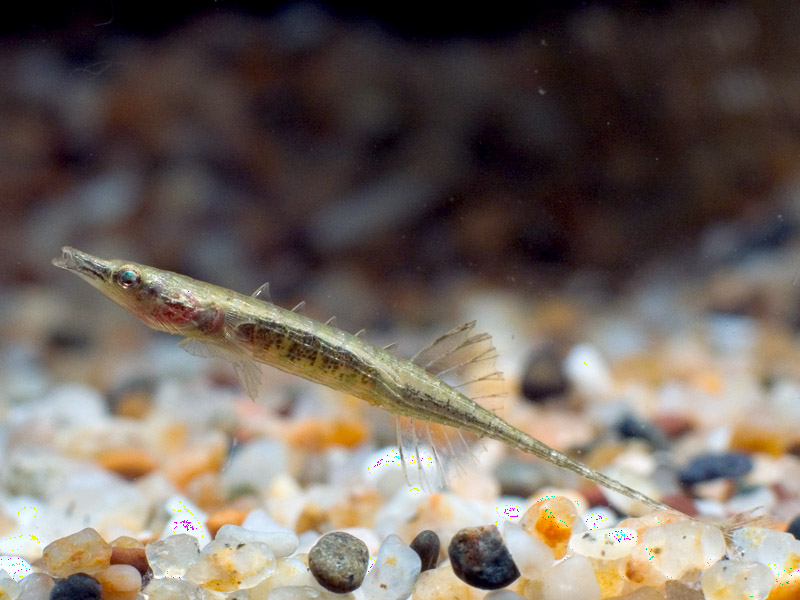
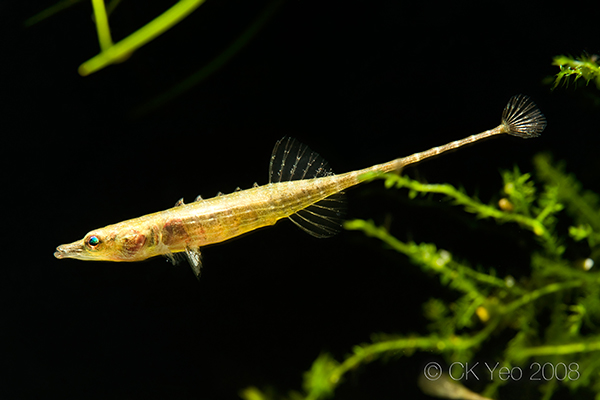
图片来自 SeriouslyFish,版权归各摄影者所有。

English
Overview
Indostomus paradoxus is a minute fish whose weak competitive feeding makes a busy general community unsuitable. A quiet, densely structured aquarium, tiny live prey, and opportunities for interaction with its own kind are central to care. Identification also deserves attention because similar species may be sold under its name.
Distribution & habitat
Native to Myanmar, it was first described from northern Lake Indawgyi. Later records include Ayeyarwady tributaries around Myitkyina and localities farther south in the delta, extending its known range beyond the northern lake region.
Members of the genus favor still or sluggish water among submerged plants, bankside vegetation, and leaf litter. This species' original locality contained black clay, algae, and decaying vegetation, whereas a southern collection came from a clear, muddy pond with dense aquatic plants. Its habitat should not be reduced to a single water appearance.
Aquarium setup
Use abundant planting over a soft bottom; fine gravel is also acceptable. Roots, branches, floating plants, and leaves add sheltered surfaces while softening the light. Suitably narrow plastic tubes provide both retreats and potential spawning chambers.
Keep filtration gentle rather than exposing the fish to strong currents. A mature planted system also supports microscopic animals that can supplement feeding.
Diet & feeding
Its principal prey consists of tiny crustaceans, worms, insect larvae, and other zooplankton. Be prepared to supply appropriately small live foods, including newly hatched brine shrimp, Daphnia, and microworms. Acceptance of dry or frozen food should not be assumed.
Grindal worms are usually rejected despite their apparently suitable size. Resident microfauna may help, but observing intake and maintaining an external food supply remain necessary.
Behaviour & compatibility
Larger fishes can eat it, and faster competitors readily outcompete it for food. A species aquarium is preferable, although equally small, quiet companions may work. It does not form a conventional shoal, yet conspecific interaction appears beneficial; at least four to six individuals allow a wider range of behavior.
Males defend small territories and challenge rivals without normally injuring them. Provide enough structure and small retreats for multiple fish.
Sexual dimorphism
Adult males develop broad, elongated pelvic fins with inward-curving outer rays. Female pelvic fins are narrower and straighter, and females carrying eggs become fuller through the abdomen.
Breeding
Aquarium spawning has been achieved repeatedly. A male selects a narrow crevice, cave, bamboo section, or plastic tube and guards its immediate surroundings. Breeding males become paler and reddish, with light brown dorsal and anal fin stripes. Fin displays and tail-region quivering at the entrance attract females; receptive females become conspicuously pale and show a prominent genital papilla.
The pair commonly turns upside down to attach eggs overhead. Spawning may occur in several bouts separated by brief female departures, producing about 5–40 eggs. The female then leaves, while the male tends the brood alone, departing briefly to feed. Guarding continues until the young swim freely and disperse.
Some fry may survive in mature, predator-free aquariums. Alternatively, visible fry can be siphoned into separate accommodation, although their minute size makes this difficult. Rotifers, Paramecium, or comparable microscopic food are needed initially.
Notes
Unlike adult males of close relatives, this species lacks dark dorsal and anal fin bands; breeding males show pale brown ones. A pale brown underside and white throat with occasional brown spots are additional clues.
The similar Indostomus crocodilus is readily confused with it in the trade. Indostomus spinosus has a darker underside, more throat spots, and more strongly serrated head ridges. A sales label alone is insufficient identification.
来源
- https://www.seriouslyfish.com/species/indostomus-paradoxus(抓取于 2026-10-10)
indostomus-paradoxus · 文件: data/species/indostomus-paradoxus.md · 状态: 草稿