Indostomus crocodilus
概要
| 字段 | 值 |
|---|---|
| 类别 | 鱼 |
| 学名 | Indostomus crocodilus |
| 分类 | 刺鱼目 Gasterosteiformes › 甲刺鱼科 Indostomidae › Indostomus |
| 水体 | 淡水 |
| 原产地 | 马来西亚、泰国 |
| 成体体长 | 3 cm |
| 饲养难度 | 中等 |
| 最小水体 | 16 L |
| 最小缸长 | 40 cm |
| 群居方式 | 群游 |
| 领地性 | 是 |
| 水流偏好 | 低 |
| 外部数据 | seriouslyfish indostomus-crocodilus;fishbase 58213 |
| 食性 | 肉食 |
| 繁殖方式 | 附着产卵 |
水质参数
| 参数 | 耐受范围 | 最适范围 | 单位 |
|---|---|---|---|
| 水温 | 22–27 | — | °C |
| pH | 5–7 | — | — |
| 总硬度 | 0–5 | — | dGH |
概述
Indostomus crocodilus 是来自泰国南部和马来半岛东北部的微型鱼,雄鱼背鳍及臀鳍有深褐至黑色条带。它竞争力弱,需要持续得到足够微小活饵,比起一般混养更适合安静的成熟密植缸。
分布与栖息地
已知记录包括泰国陶公府及素叻他尼 Tapi 河流域,以及与陶公相邻的马来西亚吉兰丹。可能在泰国南部有更广分布,但现有地点不能证明每条河都有。
模式标本来自 Toh Daeng 泥炭沼泽林的黑水溪,鱼藏在缓流或静水处淹没的岸边根系和落叶中。Tapi 泛滥平原也有静水记录,包括被淡水灌丛及沼泽树木包围的牛轭湖,泥底混有倒枝、木质物和腐植物。
饲养环境
密植水草,使用细软底床或细砾石。根木、枝条、浮水植物和落叶不仅增加藏处,也能遮散光线;尺寸合适的小塑料管可提供躲藏与产卵空间。
水流保持轻柔,它利用的是静缓水环境,不宜让小鱼长期承受强流。
食性与喂食
主要捕食微小水生甲壳类、蠕虫、昆虫幼体及其他浮游动物。人工应准备丰年虾无节幼体、小水蚤、微虫等小活饵;现有饲养经验中不接受干粮或冷冻饵,格林达尔虫通常也被拒绝,不能只备一类虫等待它适应。
成熟水草缸的天然微生物群可能提供辅助食物,但仍需观察日常活饵供应与实际摄食。
习性与混养
大型鱼会把它当猎物,抢食能力也弱,优先专养,或谨慎搭配体形相近、安静的小型鱼。虽不形成紧密群游,仍似乎能从同伴互动获益,建议至少四至六条。
雄鱼对竞争者有领地意识,但一般不会造成伤害。足够同伴与分散躲藏处可呈现较丰富行为,不应将它误当作完全独居鱼。
雌雄区分
雄鱼腹鳍宽而延长,外侧鳍条向内弯;雌鱼腹鳍较窄且直,抱卵时腹部明显圆鼓。雄鱼背鳍和臀鳍上的深条带也是重要特征。
繁殖
已有多次人工繁殖成功,卵产在小洞或缝隙中,竹管和塑料管也可使用。雄鱼选定产卵点后守卫周围数厘米范围,繁殖时身体变浅、背鳍和臀鳍色素加强;它在入口竖鳍、颤动尾部向雌鱼展示。
成熟雌鱼在产卵前及过程中明显变浅,生殖突可见。两鱼常倒挂,把卵产在洞顶;一窝可分数次完成,雌鱼中途短暂离开,通常总计五至四十枚卵。
产后雌鱼离开,由雄鱼单独护育,除短暂进食外多留在洞内,直到鱼苗自由游动并散开。成熟、无捕食者的缸里可有部分鱼苗自然存活,也可发现后小心虹吸到育苗容器。
刚离洞的幼鱼非常细小,转移和开口都不容易。若单独育苗,初期需轮虫、草履虫等显微食物,不能直接按成鱼菜单投喂。
补充说明
与 Indostomus paradoxus 相比,本种雄鱼鳍中条带更深;腹面浅褐、喉部白色或仅少量褐点,头骨脊的锯齿较弱。Indostomus spinosus 腹面更深、喉部褐点更多,头部锯齿也更强,不能只凭细长外形区分。
这一类群过去曾被放在不同系统位置讨论,其体甲结构及发育特点是研究重点;对饲养者而言,准确辨种与微小活饵条件更直接相关。
图片
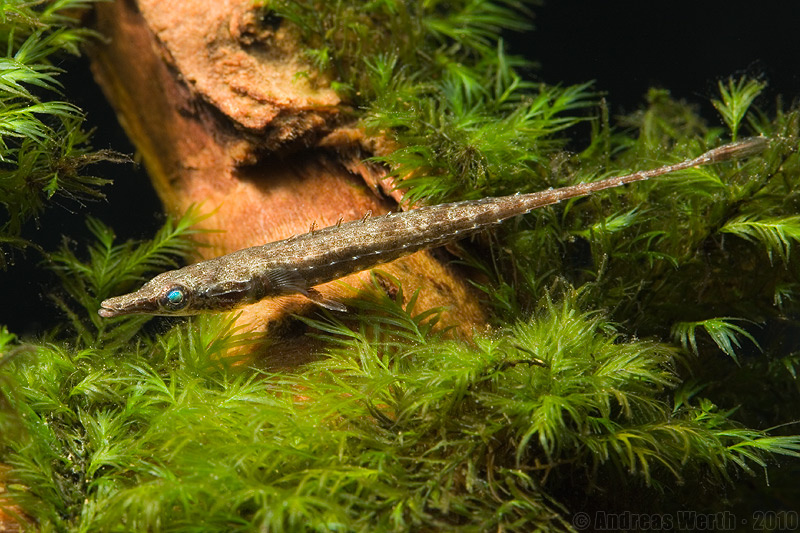
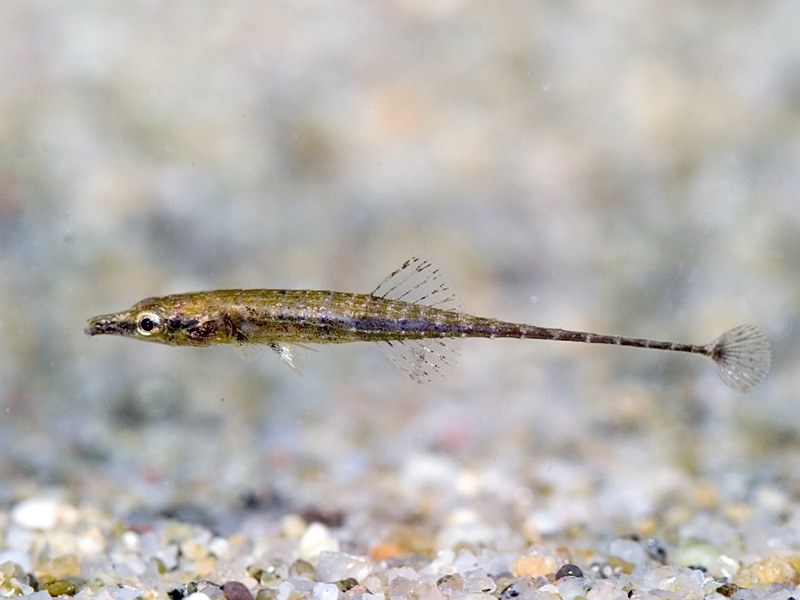
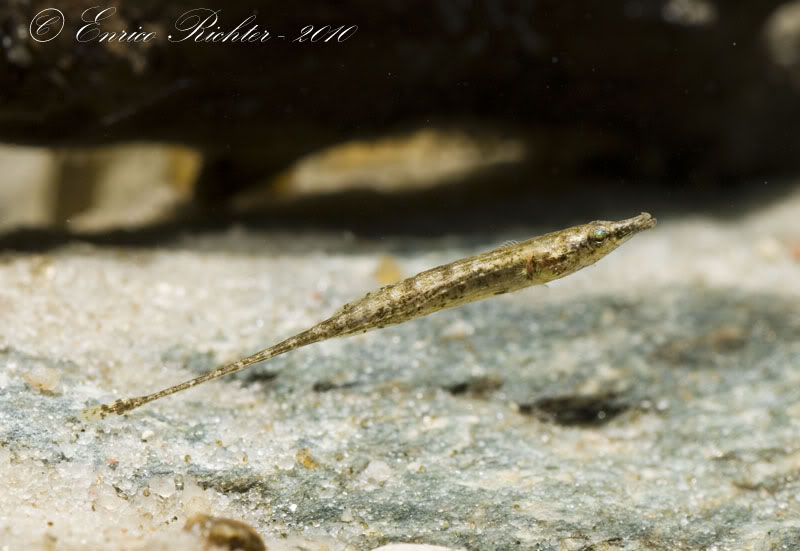
图片来自 SeriouslyFish,版权归各摄影者所有。
English
Overview
The tiny Indostomus crocodilus comes from southern Thailand and northeastern Peninsular Malaysia. Males show dark brown to black bars in the dorsal and anal fins. Poor feeding competition and a need for minute live prey favor a quiet, mature planted aquarium over a general community.
Distribution & habitat
Records include Narathiwat and the Tapi basin in Surat Thani, Thailand, and neighboring Kelantan in Malaysia. A broader southern Thai range is possible, but the known sites do not establish occurrence in every river.
The type fish came from a blackwater stream in Toh Daeng peat-swamp forest, sheltering among submerged marginal roots and leaves in slow or still water. Tapi floodplain records also include stagnant habitats, such as an oxbow surrounded by freshwater scrub and swamp trees, with mud, fallen wood, and decomposing plants on the bottom.
Aquarium setup
Use dense planting over soft substrate or fine gravel. Roots, branches, floating plants, and leaves add hiding places and diffuse light. Suitably narrow plastic tubes can provide both refuges and spawning sites.
Keep current gentle. Its still- and slow-water habits do not suit continuous exposure to strong flow.
Diet & feeding
It primarily captures minute aquatic crustaceans, worms, insect larvae, and other zooplankton. Prepare tiny live foods such as Artemia nauplii, small Daphnia, and microworms. Existing husbandry experience reports rejection of dry and frozen products, with grindal worms also usually refused. Depending on a single worm culture while waiting for acceptance is therefore unreliable.
Natural microfauna in a mature planted tank may supplement feeding, but continue monitoring live-food provision and actual intake.
Behaviour & compatibility
Larger fishes can eat it, and it competes poorly at meals. Prefer a species aquarium or carefully chosen, similarly sized placid companions. It does not form a coordinated school, yet appears to benefit from interactions with its own kind; keep at least four to six.
Males defend areas against rivals but generally do not injure each other. Companions and dispersed shelters reveal a wider range of behavior than treating it as a strictly solitary fish.
Sexual dimorphism
Male pelvic fins are broad and elongated, with outer rays curving inward. Females have narrower, straighter pelvic fins and develop a rounded abdomen when carrying eggs. Dark dorsal and anal bars are also useful male markings.
Breeding
Aquarium breeding has succeeded repeatedly. Eggs are laid in small caves or crevices, including bamboo or plastic tubes. A male selects a site and defends several centimeters around it. During breeding his body becomes paler while dorsal and anal pigmentation intensifies; raised fins and tail quivering at the entrance form part of courtship.
A ready female becomes markedly paler before and during spawning, with a visible genital papilla. The pair often turns upside down to place eggs on the roof. A clutch can be deposited in several bouts with brief female departures, usually totaling five to forty eggs.
Afterward the female leaves and the male provides sole care, remaining inside except for short feeding excursions until fry swim freely and disperse. Some young may survive in a mature aquarium without predators. Alternatively, newly visible fry can be carefully siphoned to a rearing container.
Emerging fry are extremely small, making both transfer and first feeding difficult. Separate rearing requires microscopic foods such as rotifers and Paramecium, not an immediate move to the adult menu.
Notes
Compared with Indostomus paradoxus, male fin bars are darker. The underside is pale brown, the throat white or sparsely spotted, and head-bone serrations weak. Indostomus spinosus has a darker underside, more throat spotting, and stronger serrations. Slender body shape alone is insufficient for identification.
The group's systematic placement has been debated, with armor structure and development central to research. For keepers, accurate identity and a dependable supply of tiny live prey are the more immediate concerns.
来源
- https://www.seriouslyfish.com/species/indostomus-crocodilus(抓取于 2026-10-10)
indostomus-crocodilus · 文件: data/species/indostomus-crocodilus.md · 状态: 草稿