叉泞齿鮰 · Goldbreast Goodeid
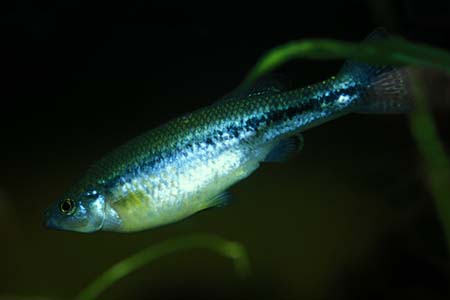
概要
| 字段 | 值 |
|---|---|
| 类别 | 鱼 |
| 学名 | Ilyodon furcidens |
| 别名 | 叉濘齒鮰 |
| 分类 | 鳉形目 Cyprinodontiformes › 谷鳉科 Goodeidae › Ilyodon |
| 水体 | 淡水 |
| 成体体长 | 7 cm |
| 饲养难度 | 入门 |
| 最小水体 | 68 L |
| 最小缸长 | 75 cm |
| 性情 | 温和 |
| 外部数据 | seriouslyfish ilyodon-furcidens;fishbase 11946 |
| 原产地 | 墨西哥哈利斯科州、科利马州 |
| 食性 | 杂食 |
| 繁殖方式 | 卵胎生 |
水质参数
| 参数 | 耐受范围 | 最适范围 | 单位 |
|---|---|---|---|
| 水温 | 18–24 | — | °C |
| pH | 7–8 | — | — |
| 总硬度 | 10–20 | — | dGH |
概述
叉泞齿鮰(Ilyodon furcidens)是来自墨西哥溪流的胎生鱼,性情较温和。与同样适应偏凉水温的鱼混养较合适,充足溶氧、水流和适量植物性食物是日常饲养的重点。
分布与栖息地
原产墨西哥哈利斯科州和科利马州,栖息在水流较快的溪流及小河中,具体底质和植被环境有所不同。
饲养环境
水草缸可以加入浮水植物作为遮蔽,并在底部散放光滑石块。保留良好的水流和溶氧,缸体可从 75 × 30 × 30 cm 的规格起步。选择同伴时也要考虑其较低的温度需求。
食性与喂食
杂食而且不太挑食。由于野外会摄取较多藻类,日常食谱中应安排植物性食物,不宜长期只喂动物性饵料。
习性与混养
可以进入条件适宜的混养缸。雄鱼之间可能有争执,但严重伤害并不常见;配合水草掩护观察群体互动即可。
雌雄区分
雄鱼较小、颜色较鲜艳,臀鳍具有用于交配的缺刻结构。部分成熟个体会出现颈背隆起,这并不是所有个体必有的表现。
繁殖
用一对或一群亲鱼在密植水草的单养缸中繁殖,难度相对不高。雌鱼不能储存精子,每胎都需要重新交配,也没有可供观察的明显妊娠斑。
妊娠约 7–8 周,每胎约 5–50 尾。新生鱼体型较大,能够立即摄取尺寸合适的成鱼食物,并主动参加抢食。腹部偶尔可见类似脐带的组织,这是胎内营养结构的残留,通常在 2–3 天内消失。亲鱼很少吃自己的鱼苗。
补充说明
种名与它叉状的牙齿有关。胚胎在母体内通过特殊组织获得营养,因此繁殖时应关注母鱼状况和鱼苗开口,而不能只按其他常见胎生观赏鱼的储精特点安排配对。
图片
图片来自 SeriouslyFish,版权归各摄影者所有。
English
Overview
A relatively peaceful Mexican livebearer, Ilyodon furcidens suits a community whose inhabitants share its preference for cooler conditions. Good oxygenation and flowing water reflect its stream habitat, while plant-based foods belong in the regular diet.
Distribution & habitat
Native records come from Jalisco and Colima in Mexico. It inhabits swiftly flowing streams and small rivers across a variety of local settings.
Aquarium setup
A planted aquarium beginning around 75 by 30 by 30 cm can include floating cover and scattered smooth stones. Maintain a useful current and plentiful dissolved oxygen. Choose companions according to the species' temperature requirements rather than assuming that every tropical community fish is appropriate.
Diet & feeding
This undemanding omnivore accepts most aquarium foods. Algae make up a substantial part of its natural intake, so vegetable matter should be a routine component rather than an occasional addition to an exclusively animal-based menu.
Behaviour & compatibility
Its peaceful disposition permits community keeping under suitable conditions. Males sometimes dispute rank or space, though physical injury is unusual. Planted cover allows the group to spread out.
Sexual dimorphism
Smaller, more colorful males have a modified anal fin with a notch, used in reproduction. A hump near the neck may develop with maturity, but is not an obligatory feature of every adult.
Breeding
A heavily planted species aquarium can house a pair or a breeding group. Females must mate again for each brood; stored sperm cannot sustain later pregnancies. There is no gravid spot.
After roughly seven to eight weeks, a brood of around 5–50 large young is born. They immediately compete for suitably sized adult foods. A cord-like attachment sometimes persists for two or three days after birth. It is the normal remnant of the structure that supplied nutrients inside the mother. Parental predation on newborns is uncommon.
Notes
The species name refers to its fork-shaped teeth. Its maternal nourishment and requirement for repeated mating are useful distinctions from other familiar aquarium livebearers, particularly when maintaining a breeding group over several broods.
来源
- https://www.seriouslyfish.com/species/ilyodon-furcidens(抓取于 2026-10-10)
ilyodon-furcidens · 文件: data/species/ilyodon-furcidens.md · 状态: 草稿