阿氏蜥形脂鲤
概要
| 字段 | 值 |
|---|---|
| 类别 | 鱼 |
| 学名 | Iguanodectes adujai |
| 别名 | 阿氏蜥形脂鯉 |
| 分类 | 脂鲤目 Characiformes › 蜥形脂鲤科 Iguanodectidae › Iguanodectes |
| 水体 | 淡水 |
| 原产地 | 巴西、委内瑞拉 |
| 成体体长 | 6.2 cm |
| 饲养难度 | 中等 |
| 最小水体 | 81 L |
| 最小缸长 | 90 cm |
| 群居方式 | 群游 |
| 性情 | 温和 |
| 外部数据 | seriouslyfish iguanodectes-adujai;fishbase 51955 |
水质参数
| 参数 | 耐受范围 | 最适范围 | 单位 |
|---|---|---|---|
| 水温 | 20–26 | — | °C |
| pH | 5–7 | — | — |
| 总硬度 | 1–5 | — | dGH |
概述
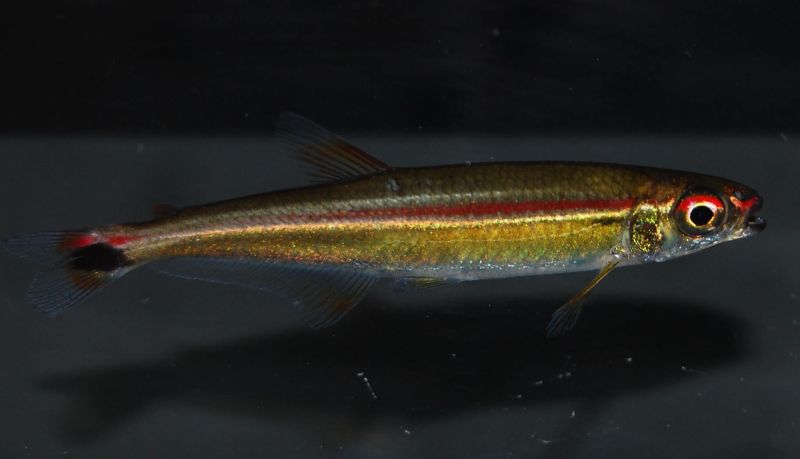
阿氏蜥形脂鲤(Iguanodectes adujai)体形修长、侧面有红线,常与盖氏蜥形脂鲤(Iguanodectes geisleri)一起进入贸易。前者红线下没有后者那条黑色纵纹,购买时应注意区分。
分布与栖息地
已知来自巴西亚马孙水系的内格罗河及委内瑞拉奥里诺科河上游,模式产地在内格罗河中游支流伊图河所属阿杜雅河。
推测多生活于水质洁净的黑水小支流,周围岸边植被密集、常悬垂于水面,底部有根枝和落叶。腐败植物释放的物质使水呈褐色,通常酸性、矿物含量低。它也可能出现在奥里诺科的清水沙底棕榈沼泽溪流,借水草和岸边植物藏身。修长体形或许与流水适应有关,但不能据此确定需要强水流。
饲养环境
底面积至少约 90 × 30 cm。沙底加沉木根枝可能较适合,植物缸也可使用。干落叶增加遮蔽,分解形成的微生物能补充成鱼和幼鱼食物,无需专门使用天然泥炭。
它对水质恶化敏感,必须在生物过滤成熟、环境稳定后引入,不适合刚开设的缸。
食性与喂食
天然食性推测为杂食,可能包括小型无脊椎动物、甲壳动物、丝藻和落果。缸内即使能吃干粮,也宜搭配红虫、蚊幼体、水蚤等小型活饵或冷冻饵,维持多样食谱。
习性与混养
总体温和,可考虑体型相近的小型脂鲤、胸斧鱼、铅笔鱼及较小底层鲶鱼,或不捕食小鱼的中小型慈鲷,前提是水质需求一致。
雌雄混合至少 8~10 条较合适,其他温和群游鱼可增加安全感。雄鱼会为雌鱼或群体地位展示最佳体色,雌鱼多于雄鱼可减少个别鱼持续受扰。
补充说明
与盖氏蜥形脂鲤相比,本种臀鳍起点位于背鳍下方,背鳍起点在身体中点后方,臀鳍鳍条约 28~34 条;后者臀鳍起点更靠后、背鳍起点接近中点,臀鳍鳍条约 20~25 条。
两者都可能以相同的“红线蜥形灯鱼”类商品名出售,斑纹和鳍位比商品标签更可靠。
图片
图片来自 SeriouslyFish,版权归各摄影者所有。
English
Overview
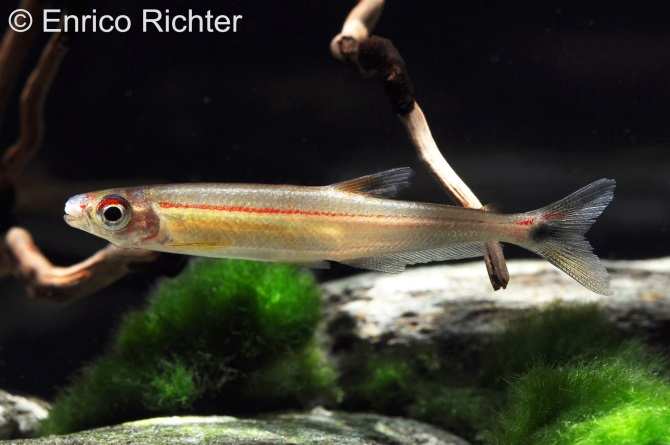
The slender, red-striped Iguanodectes adujai often enters trade with Iguanodectes geisleri. Unlike that relative, it lacks a black stripe directly beneath the red one, an important identification clue.
Distribution & habitat
Records come from Brazil's Negro basin and Venezuela's upper Orinoco. The type locality is the Adujá in the Itú drainage of the middle Negro.
Pristine small blackwater tributaries are presumed habitat, with thick overhanging bankside growth and beds covered by roots, branches, and leaves. Decomposing vegetation stains the acidic, low-mineral water. Clear sandy morichal habitats in the Orinoco may also be used, with plants providing shelter. A slender body suggests possible adaptation to current but does not establish a need for powerful circulation.
Aquarium setup
Provide at least about 90 × 30 cm of floor space. Sand and roots or branches are likely suitable, and a planted aquarium is another option. Leaves add shelter and develop microbial growth that can supplement adult and fry food. Natural peat is unnecessary.
Sensitivity to deteriorating water quality makes established biological filtration essential. Avoid newly set-up, unstable aquariums.
Diet & feeding
The natural diet is thought to be omnivorous, potentially including small invertebrates, crustaceans, filamentous algae, and fallen fruit. Even when dry foods are accepted, offer variety through small live or frozen bloodworms, mosquito larvae, and water fleas.
Behaviour & compatibility
It is generally peaceful. Similarly sized characins, hatchetfishes, pencilfishes, smaller bottom catfishes, and nonpredatory small or medium cichlids are possibilities where water requirements match.
Maintain a mixed-sex group of at least eight to ten, with other peaceful schooling fishes offering reassurance. Males show strong colors while competing for females or social rank. A female-biased group helps distribute attention.
Notes
Compared with I. geisleri, the anal fin begins beneath rather than behind the dorsal fin, and the dorsal origin lies behind rather than at midbody. Anal-ray counts are about 28–34 here versus 20–25 in its relative.
Both can share a red-line lizard tetra trade label. Pattern and fin placement are more dependable than that label alone.
来源
- https://www.seriouslyfish.com/species/iguanodectes-adujai(抓取于 2026-10-10)
iguanodectes-adujai · 文件: data/species/iguanodectes-adujai.md · 状态: 草稿