扁头黄黝鱼 · Empire Gudgeon
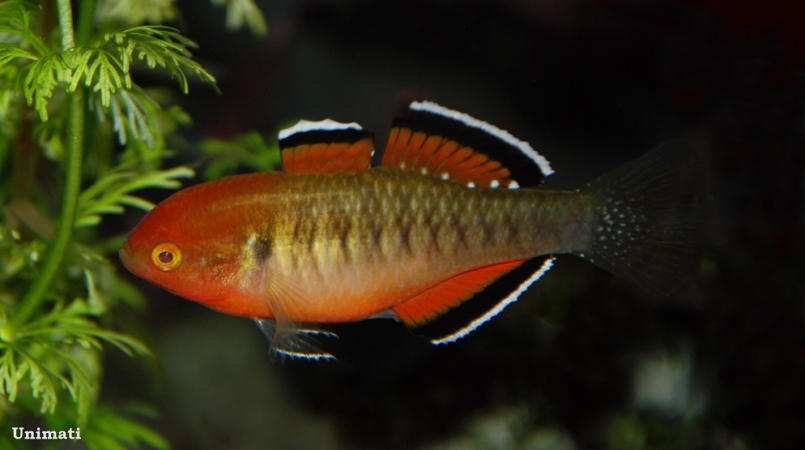
概要
| 字段 | 值 |
|---|---|
| 类别 | 鱼 |
| 学名 | Hypseleotris compressa |
| 别名 | 扁頭黃黝魚、Eleotris compressus、Eleotris brevirostris、Eleotris modesta、Eleotris simplex、Eleotris reticulatus、Eleotris elevata、Eleotris cavifrons、Eleotris humilis、Eleotris devisi、Carassiops longi |
| 分类 | 虾虎鱼目 Gobiiformes › 塘鳢科 Eleotridae › Hypseleotris |
| 水体 | 淡水 |
| 原产地 | 澳大利亚、印度尼西亚、巴布亚新几内亚 |
| 成体体长 | 12 cm |
| 饲养难度 | 入门 |
| 最小水体 | 72 L |
| 最小缸长 | 80 cm |
| 群居方式 | 成对 |
| 外部数据 | seriouslyfish hypseleotris-compressa;fishbase 22755 |
| 食性 | 肉食 |
| 繁殖方式 | 附着产卵 |
水质参数
| 参数 | 耐受范围 | 最适范围 | 单位 |
|---|---|---|---|
| 水温 | 20–35 | — | °C |
| pH | 5–9.1 | — | — |
| 总硬度 | 2–25 | — | dGH |
概述
扁头黄黝鱼(Hypseleotris compressa)成鱼能在淡水缸产卵,真正难点却在孵化之后:自然生活史中的幼体需被水流带到海边,在海水环境中继续发育。看到卵或初孵苗,并不代表已经完成家庭繁殖。
分布与栖息地
见于澳大利亚北部、东部及新几内亚南部。澳大利亚范围从西澳的皮尔巴拉、金伯利地区,沿北部及东部海岸向南延至新南威尔士的托旺巴河水系。
成鱼在淡水溪流生活和繁殖,早期幼体会顺流到海岸及河口,发育后再回到淡水繁殖。
饲养环境
底面积至少约 80 × 30 cm。设置大量藏身处,利用布置打断视线,让较弱个体能避开优势鱼持续的注意。
过滤无需很强,气动海绵过滤较合适;遮蔽的分布和个体之间能否回避,比单纯堆放装饰更重要。
食性与喂食
天然主要吃小型无脊椎动物和甲壳动物等。缸内可轮换红虫、蚊幼体、丰年虾、水蚤、糠虾等小型活饵或冷冻饵,通常也接受干粮。
繁殖
成熟后在水族箱产卵不困难。雄鱼增色、吸引雌鱼,同时驱赶其他雄鱼,在预先清理过的石面、沉木或玻璃上产卵,数量可达约 3000 粒。
产后雌鱼被驱离,雄鱼独自护卵。约 24 小时孵化,自然环境中幼体此时开始顺流前往海边,最初为漂浮生活阶段。
刚孵化的幼体非常小,消化道和有鳍条的鳍尚未发育,甚至暂时不能摄食草履虫。这一发育阶段和海水育成需求,使常规淡水缸育苗极困难;不能直接套用其他塘鳢“孵化即喂丰年虾”的流程。
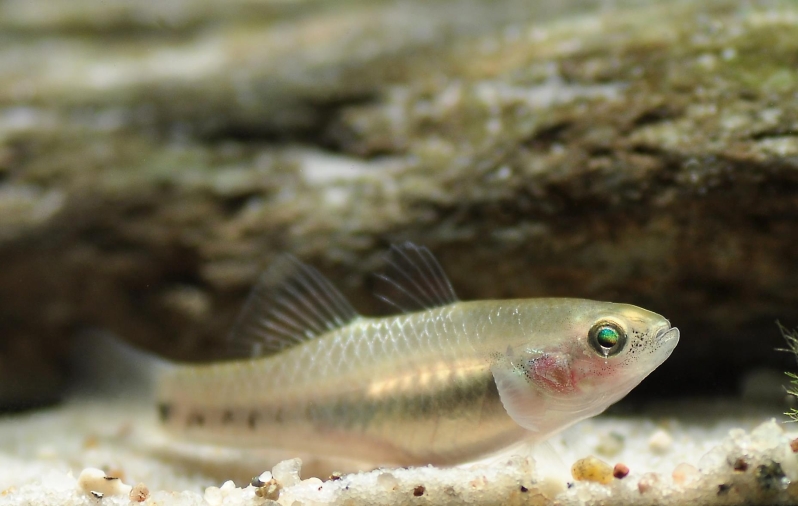
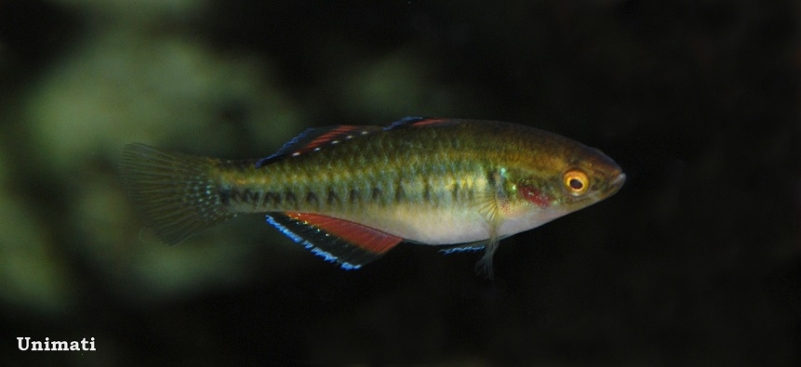
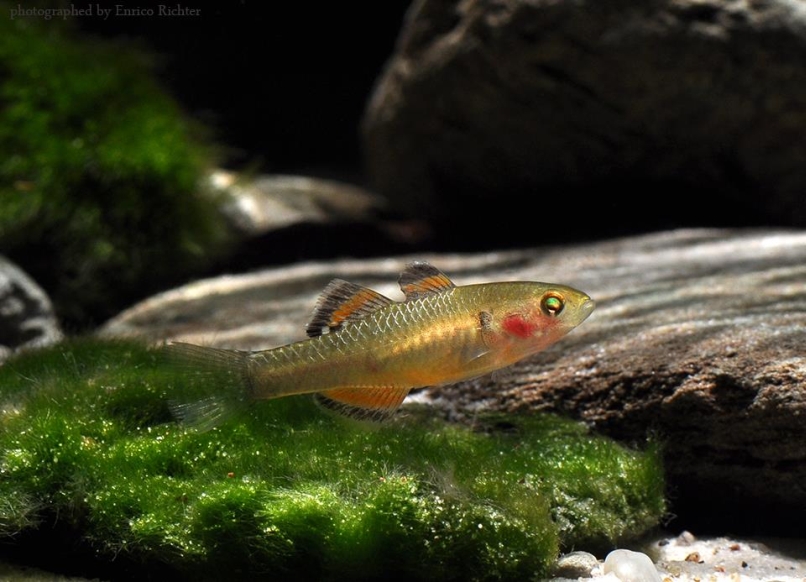
图片
图片来自 SeriouslyFish,版权归各摄影者所有。
English
Overview
Adults of Hypseleotris compressa can spawn in freshwater aquariums, but successful propagation depends on a much harder larval stage. In nature, newly hatched young drift toward the sea and develop in marine conditions. Eggs or larvae alone therefore do not demonstrate a completed captive life cycle.
Distribution & habitat
It occurs in northern and eastern Australia and southern New Guinea. The Australian range extends from the Pilbara and Kimberley around the northern and eastern coasts to the Towamba system in New South Wales.
Adults live and reproduce in freshwater streams. Young develop around coasts and estuaries before returning to freshwater for reproduction.
Aquarium setup
Provide at least about 80 × 30 cm of floor space. Numerous retreats and interrupted sight lines allow weaker individuals to avoid persistent attention from dominant fish.
Strong filtration is unnecessary; an air-driven sponge unit is suitable. Arrange cover so fish can actually evade one another rather than simply adding ornaments.
Diet & feeding
Small invertebrates and crustaceans dominate the natural diet. Offer varied live or frozen bloodworms, mosquito larvae, Artemia, Daphnia, and Mysis. Dry preparations are normally accepted as well.
Breeding
Mature fish spawn readily. Males intensify in color, attract females, and exclude rivals from a cleaned rock, wood, or glass surface. As many as about 3,000 tiny eggs may be deposited.
The female is driven away, leaving the male to guard the clutch. Hatching takes roughly 24 hours. In the natural cycle, the initially pelagic larvae are then carried toward coastal waters.
Newly hatched larvae are extremely small and initially lack a digestive tract and developed fin rays. They cannot yet take even infusoria-sized foods. This early developmental stage, together with marine rearing requirements, makes routine freshwater propagation difficult. Feeding schedules used for other gudgeons should not simply be transferred to this species.
来源
- https://www.seriouslyfish.com/species/hypseleotris-compressa(抓取于 2026-10-10)
hypseleotris-compressa · 文件: data/species/hypseleotris-compressa.md · 状态: 草稿