似鲯高地丽鱼 · Rio Negro Chocolate Cichlid
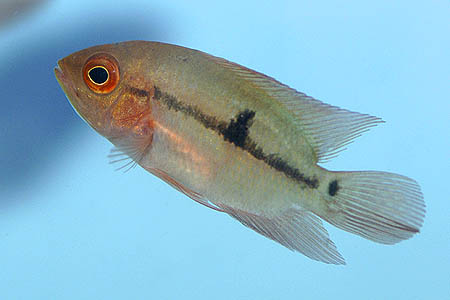
概要
| 字段 | 值 |
|---|---|
| 类别 | 鱼 |
| 学名 | Hypselecara coryphaenoides |
| 别名 | 似鯕高地麗魚 |
| 分类 | 慈鲷目 Cichliformes › 慈鲷科 Cichlidae › Hypselecara |
| 水体 | 淡水 |
| 原产地 | 巴西、委内瑞拉 |
| 成体体长 | 15 cm |
| 饲养难度 | 中等 |
| 最小水体 | 243 L |
| 最小缸长 | 120 cm |
| 外部数据 | seriouslyfish hypselecara-coryphaenoides;fishbase 47067 |
| 食性 | 杂食 |
| 特征 | 翻底砂: 是 |
| 繁殖方式 | 附着产卵 |
水质参数
| 参数 | 耐受范围 | 最适范围 | 单位 |
|---|---|---|---|
| 水温 | 24–30 | — | °C |
| pH | 5–6.5 | — | — |
| 总硬度 | 1–10 | — | dGH |
概述
似鲯高地丽鱼(Hypselecara coryphaenoides)是较少见的南美慈鲷,体形较修长、整体较暗。平时对其他鱼相对温和,但成熟后的同种竞争明显,配对形成后往往只能留下这一对。
分布与栖息地
见于巴西、委内瑞拉多个亚马孙流域河流及奥里诺科上游支流。栖于林区主河道旁的缓流支流,腐殖质把水染深,通常偏酸。
饲养环境
成年雄鱼或一对至少需 120 × 45 × 45 厘米。细沙、沉木、根枝和少量干落叶可形成弱光黑水景观,老叶定期更换以免败坏水质。也可用水草缸,但成熟后会掘底。保持软酸水,不适合碱性条件;严密维护尤其适用于野生进口鱼。
食性与喂食
杂食且易开口。慈鲷颗粒配小蚯蚓、切碎虾、丰年虾、红虫,并加入去皮豌豆、菠菜或含藻干粮。避免牛心等哺乳类红肉。
习性与混养
足够大缸可配需求相似的温和大型鱼,繁殖时会驱逐靠近者。幼鱼同种相容性较好,成熟配对后其他同种常被赶到角落,应及时移走;多数家庭缸只适合一对。
雌雄区分
外表分性别并不容易,雄鱼略大且可能起额瘤。繁殖时两性都会明显变暗,背部从吻至尾出现鲜亮黄橙色带。
繁殖
形成单配偶关系并基面产卵,可由幼鱼群自然配对。软酸水中充分调养,亲鱼会大幅清理、掘开底砂,在石、木、陶罐或玻璃上产卵。约 48 小时孵化,雌鱼主要照卵、雄鱼守区,也可能交换。幼体由双亲转移到浅坑,再约 5~6 天平游,可喂微虫或丰年虾幼体。护幼常再持续 3~4 周,之后再次繁殖前应分开鱼苗,避免被吞食。
补充说明
体侧暗斑通常在侧线上及其上方,可伸入背鳍;颜色会随情绪和地域变化,确认产地比单凭深浅更有帮助。
图片
图片来自 SeriouslyFish,版权归各摄影者所有。
English
Overview
The less frequently traded Hypselecara coryphaenoides has a relatively elongated, dark body. Usually tolerant of other species outside spawning, it can become much less accepting of conspecifics once mature. Established pairs often require the remaining fish to be removed.
Distribution & habitat
Records include Amazonian rivers in Brazil and Venezuela and tributaries of the upper Orinoco. Slow forest tributaries contain dark, often acidic water colored by decomposing organic material.
Aquarium setup
Provide at least 120 by 45 by 45 cm for an adult male or pair. Sand, wood and leaves create a shaded forest-water display. Remove deteriorating leaves as needed to protect water quality. Plants are possible, but mature fish may dig. Maintain soft acidic conditions and a strict maintenance routine.
Diet & feeding
Use quality cichlid pellets alongside varied small animal foods and vegetables. Earthworms, shrimp and other invertebrates can be balanced with greens or algae-containing feeds. Mammalian red meat is unsuitable.
Behaviour & compatibility
Compatible peaceful fishes may share sufficiently large quarters. Juvenile conspecific tolerance decreases with maturity. Once a pair excludes the others, remove those fish rather than leaving them confined to a corner. Breeding pairs defend their immediate area.
Sexual dimorphism
Males may be slightly larger and develop a small forehead hump. Both sexes darken strongly in breeding condition, with a bright yellow-orange dorsal stripe.
Breeding
Natural pairs can form from juveniles. After conditioning in soft acidic water, they clear a large area and spawn on a solid surface. Hatching takes around forty-eight hours, with parents sharing guarding and tending roles. Larvae are moved to shelter before swimming another five or six days later. Offer microworms or brine-shrimp nauplii. Brood care generally continues for several weeks, after which young should be removed before renewed spawning creates predation risk.
Notes
The flank blotch usually lies on and above the lateral line and may extend into the dorsal fin. Locality and body shape are useful because color changes with mood and origin.
来源
- https://www.seriouslyfish.com/species/hypselecara-coryphaenoides(抓取于 2026-10-10)
hypselecara-coryphaenoides · 文件: data/species/hypselecara-coryphaenoides.md · 状态: 草稿