Hyphessobrycon vilmae
概要
| 字段 | 值 |
|---|---|
| 类别 | 鱼 |
| 学名 | Hyphessobrycon vilmae |
| 分类 | 脂鲤目 Characiformes › 脂鲤科 Characidae › Hyphessobrycon |
| 水体 | 淡水 |
| 原产地 | 巴西 |
| 成体体长 | 3 cm |
| 饲养难度 | 入门 |
| 最小水体 | 54 L |
| 最小缸长 | 60 cm |
| 群居方式 | 群游 |
| 性情 | 温和 |
| 外部数据 | seriouslyfish hyphessobrycon-vilmae;fishbase 26464 |
| 繁殖方式 | 散卵 |
水质参数
| 参数 | 耐受范围 | 最适范围 | 单位 |
|---|---|---|---|
| 水温 | 20–26 | — | °C |
| pH | 5–7 | — | — |
| 总硬度 | 1–12 | — | dGH |
概述
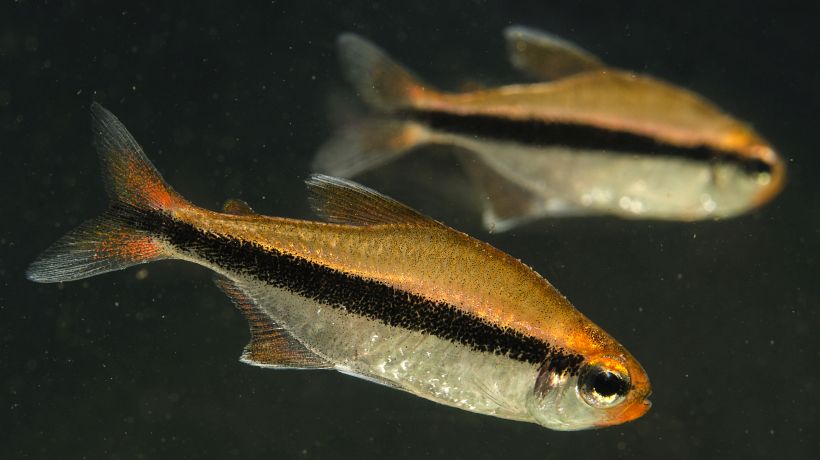
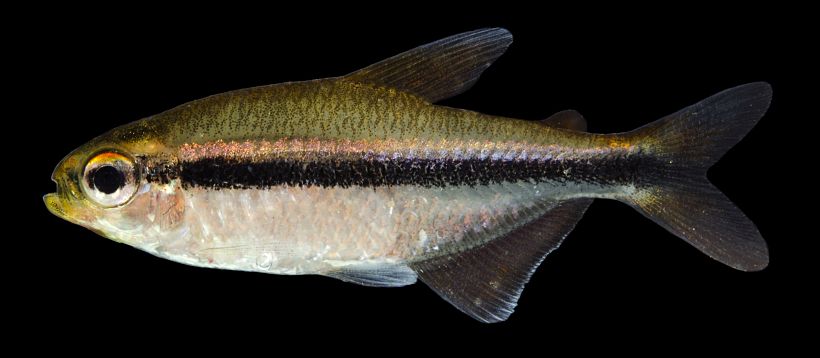
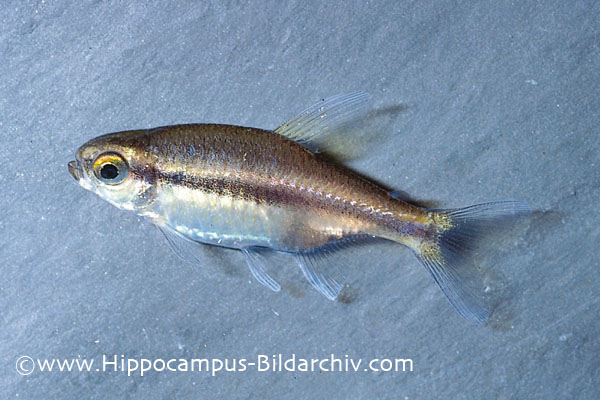
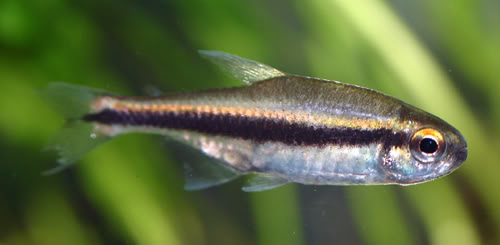
Hyphessobrycon vilmae 是带连续深色体侧纵纹的小型脂鲤,偶尔以 chocolate neon tetra 商品名流通。通常温和,弱光、丰富遮蔽和足够同伴能帮助它表现更自然的颜色与活动。
分布与栖息地
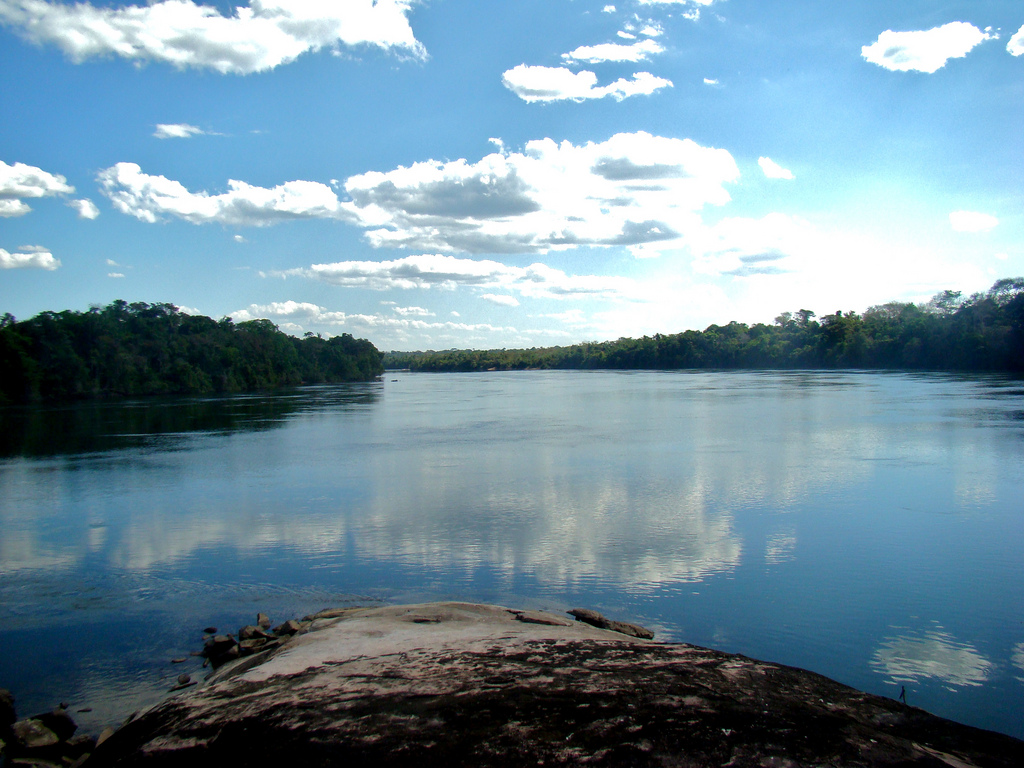
似乎特有于巴西亚马孙州与马托格罗索州的塔帕若斯河上游,模式产地为 Arinos—Juruena 河上游区域。具体栖境细节尚未明确,不应仅凭同地区鱼种名单推断固定水流或底床。
饲养环境
布景要求不苛刻,深色底床和丰富植物通常更利于显色。柔软沙底、沉木根枝可形成阴影和隐蔽处。
干落叶分解后形成的微生物能给鱼苗补充食物,同时染水,帮助营造黑水感觉。落叶可自然分解,也可每隔数周更换,需结合缸内维护安排。
似乎更适合较暗光照,可用爪哇蕨、莫丝、椒草、水榕等耐阴植物,并加入局部浮水遮蔽。
食性与喂食
天然可能机会性摄食水生无脊椎动物和落果等。缸中一般容易进食,优质薄片、颗粒搭配规律的小型活饵或冷冻红虫、水蚤、丰年虾,部分干粮含植物或藻成分较合适。
习性与混养
通常温和,可与体型相近、水质相容的小型脂鲤、铅笔鱼或适合的小型鲶鱼等混养。建议八至十条或更多的雌雄混合群,其他群居鱼也能增加安全感。
雌雄区分
状态好的成年雄鱼颜色略浓,雌鱼通常稍大、更圆,抱卵时尤为明显。
繁殖
以散卵方式繁殖,没有亲代照护。
补充说明
本种体侧深色纵纹连续而实,肩部没有明显独立黑斑。曾被列入按纵纹外观划分的类群,但后来缩小的 Hyphessobrycon heterorhabdus 组具有不同的肩斑、红线和眼色组合。相似条纹不等于已经证实亲缘最近。
图片
图片来自 SeriouslyFish,版权归各摄影者所有。
English
Overview
Occasionally sold as the chocolate neon tetra, Hyphessobrycon vilmae carries a solid dark stripe along the flank. It is generally peaceful, with subdued lighting, ample cover, and conspecific company encouraging its best appearance and activity.
Distribution & habitat
It appears endemic to the upper Tapajós basin in Brazil's Amazonas and Mato Grosso states. The type area is the upper Arinos–Juruena system. Precise habitat details remain unresolved.
Aquarium setup
Decoration is flexible, although dark flooring and generous planting usually improve color. Soft sand and branching wood can create shaded resting spaces.
Dried leaves support microbial growth as they decompose, offering supplementary food for fry and staining the water for a blackwater effect. They may be allowed to break down or replaced every few weeks as part of maintenance.
Relatively dim light seems preferable. Java fern, mosses, Cryptocoryne, and Anubias suit that arrangement, with floating vegetation providing additional shade.
Diet & feeding
An opportunistic diet of aquatic invertebrates and fallen fruit is presumed in nature. Captive fish feed readily. Combine quality flakes or granules with regular small live or frozen bloodworms, water fleas, and Artemia; some dry foods should contain plant or algal ingredients.
Behaviour & compatibility
Its generally peaceful disposition suits similarly sized characins, pencilfishes, and appropriate small catfishes with matching water requirements. Keep a mixed-sex group of eight to ten or more. Other shoaling companions can provide reassurance.
Sexual dimorphism
Well-conditioned adult males show slightly stronger color. Females tend to be a little larger and rounder, especially while carrying eggs.
Breeding
It scatters eggs and provides no parental care.
Notes
The solid lateral stripe lacks an obvious separate humeral blotch. Historical placement in a stripe-based species group differs from the narrower Hyphessobrycon heterorhabdus grouping defined by a particular combination of shoulder mark, red body line, and eye color. Similar stripes alone do not establish the closest evolutionary relationship.
来源
- https://www.seriouslyfish.com/species/hyphessobrycon-vilmae(抓取于 2026-10-10)
hyphessobrycon-vilmae · 文件: data/species/hyphessobrycon-vilmae.md · 状态: 草稿